Productbeschrijving
Harvester Farm Harrow Tractor Pto Drive Shaft and Power Tiller Cardan Shaft for Agricultural Machinery Spare Parts
Productbeschrijving
A Power Take-Off shaft (PTO shaft) is a mechanical device utilized to transmit power from a tractor or other power source to an attached implement, such as a mower, tiller, or baler. Typically situated at the rear of the tractor, the PTO shaft is driven by the tractor’s engine through the transmission.
The primary purpose of the PTO shaft is to supply a rotating power source to the implement, enabling it to carry out its intended function. To connect the implement to the PTO shaft, a universal joint is employed, allowing for movement between the tractor and the implement while maintaining a consistent power transfer.
Here is our advantages when compare to similar products from China:
1.Forged yokes make PTO shafts strong enough for usage and working;
2.Internal sizes standard to confirm installation smooth;
3.CE and ISO certificates to guarantee to quality of our goods;
4.Strong and professional package to confirm the good situation when you receive the goods.
Product Specifications
Verpakking en verzending
Company Profile
HangZhou Hanon Technology Co.,ltd is a modern enterprise specilizing in the development,production,sales and services of Agricultural Parts like PTO shaft and Gearboxes and Hydraulic parts like Cylinder , Valve ,Gearpump and motor etc..
We adhere to the principle of ” High Quality, Customers’Satisfaction”, using advanced technology and equipments to ensure all the technical standards of transmission .We follow the principle of people first , trying our best to set up a pleasant surroundings and platform of performance for each employee. So everyone can be self-consciously active to join Hanon Machinery.
FAQ
1.WHAT’S THE PAYMENT TERM?
When we quote for you,we will confirm with you the way of transaction,FOB,CIFetc.<br> For mass production goods, you need to pay 30% deposit before producing and70% balance against copy of documents.The most common way is by T/T.
2.HOW TO DELIVER THE GOODS TO US?
Usually we will ship the goods to you by sea.
3.HOW LONG IS YOUR DELIVERY TIME AND SHIPMENT?
30-45days.
/* March 10, 2571 17:59:20 */!function(){function s(e,r){var a,o={};try{e&&e.split(“,”).forEach(function(e,t){e&&(a=e.match(/(.*?):(.*)$/))&&1
| Type: | Pto Shaft |
|---|---|
| Usage: | Agricultural Products Processing, Farmland Infrastructure, Tillage, Harvester, Planting and Fertilization, Grain Threshing, Cleaning and Drying, Tillage, Harvester, Planting and Fertilization |
| Material: | 45cr Steel |
| Samples: |
US$ 20/Piece
1 Piece(Min.Order) | Order Sample |
|---|
| Customization: |
Available
| Customized Request |
|---|
.shipping-cost-tm .tm-status-off{background: none;padding:0;color: #1470cc}
|
Shipping Cost:
Estimated freight per unit. |
about shipping cost and estimated delivery time. |
|---|
| Payment Method: |
|
|---|---|
|
Initial Payment Full Payment |
| Currency: | US$ |
|---|
| Return&refunds: | You can apply for a refund up to 30 days after receipt of the products. |
|---|
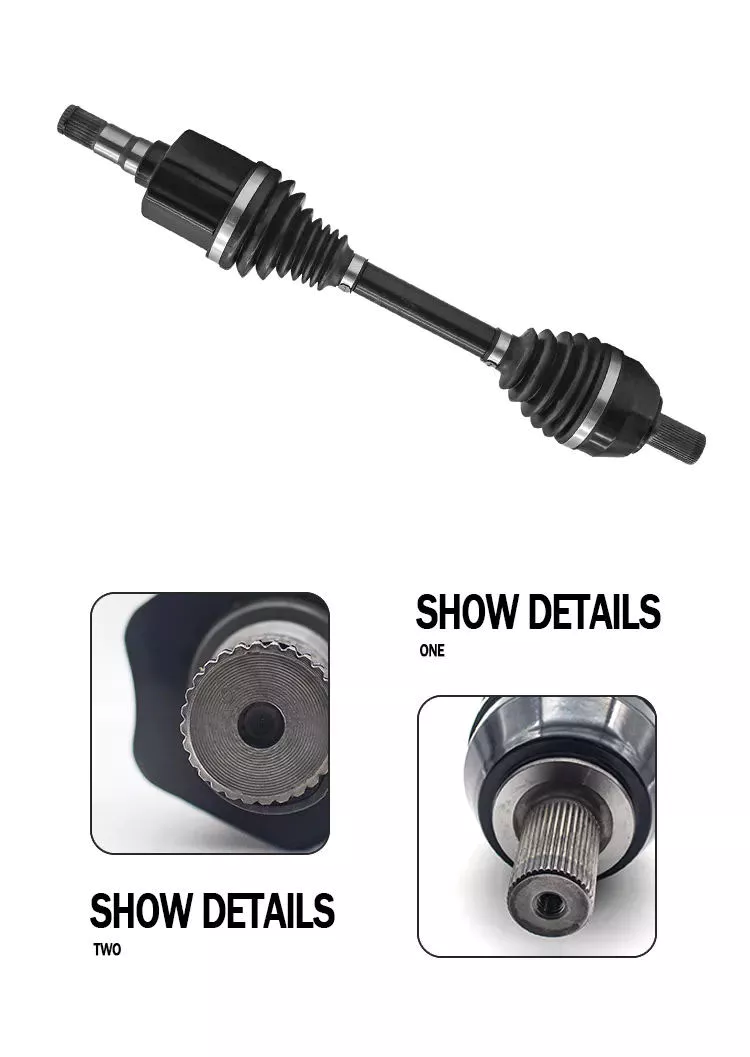
Are there any limitations or disadvantages associated with drive shafts?
While drive shafts are widely used and offer several advantages, they also have certain limitations and disadvantages that should be considered. Here’s a detailed explanation of the limitations and disadvantages associated with drive shafts:
1. Length and Misalignment Constraints:
Drive shafts have a maximum practical length due to factors such as material strength, weight considerations, and the need to maintain rigidity and minimize vibrations. Longer drive shafts can be prone to increased bending and torsional deflection, leading to reduced efficiency and potential driveline vibrations. Additionally, drive shafts require proper alignment between the driving and driven components. Misalignment can cause increased wear, vibrations, and premature failure of the drive shaft or its associated components.
2. Limited Operating Angles:
Drive shafts, especially those using U-joints, have limitations on operating angles. U-joints are typically designed to operate within specific angular ranges, and operating beyond these limits can result in reduced efficiency, increased vibrations, and accelerated wear. In applications requiring large operating angles, constant velocity (CV) joints are often used to maintain a constant speed and accommodate greater angles. However, CV joints may introduce higher complexity and cost compared to U-joints.
3. Maintenance Requirements:
Drive shafts require regular maintenance to ensure optimal performance and reliability. This includes periodic inspection, lubrication of joints, and balancing if necessary. Failure to perform routine maintenance can lead to increased wear, vibrations, and potential driveline issues. Maintenance requirements should be considered in terms of time and resources when using drive shafts in various applications.
4. Noise and Vibration:
Drive shafts can generate noise and vibrations, especially at high speeds or when operating at certain resonant frequencies. Imbalances, misalignment, worn joints, or other factors can contribute to increased noise and vibrations. These vibrations may affect the comfort of vehicle occupants, contribute to component fatigue, and require additional measures such as dampers or vibration isolation systems to mitigate their effects.
5. Weight and Space Constraints:
Drive shafts add weight to the overall system, which can be a consideration in weight-sensitive applications, such as automotive or aerospace industries. Additionally, drive shafts require physical space for installation. In compact or tightly packaged equipment or vehicles, accommodating the necessary drive shaft length and clearances can be challenging, requiring careful design and integration considerations.
6. Cost Considerations:
Drive shafts, depending on their design, materials, and manufacturing processes, can involve significant costs. Customized or specialized drive shafts tailored to specific equipment requirements may incur higher expenses. Additionally, incorporating advanced joint configurations, such as CV joints, can add complexity and cost to the drive shaft system.
7. Inherent Power Loss:
Drive shafts transmit power from the driving source to the driven components, but they also introduce some inherent power loss due to friction, bending, and other factors. This power loss can reduce overall system efficiency, particularly in long drive shafts or applications with high torque requirements. It is important to consider power loss when determining the appropriate drive shaft design and specifications.
8. Limited Torque Capacity:
While drive shafts can handle a wide range of torque loads, there are limits to their torque capacity. Exceeding the maximum torque capacity of a drive shaft can lead to premature failure, resulting in downtime and potential damage to other driveline components. It is crucial to select a drive shaft with sufficient torque capacity for the intended application.
Despite these limitations and disadvantages, drive shafts remain a widely used and effective means of power transmission in various industries. Manufacturers continuously work to address these limitations through advancements in materials, design techniques, joint configurations, and balancing processes. By carefully considering the specific application requirements and potential drawbacks, engineers and designers can mitigate the limitations and maximize the benefits of drive shafts in their respective systems.

Hoe verbeteren aandrijfassen de prestaties van auto's en vrachtwagens?
Aandrijfassen spelen een belangrijke rol bij het verbeteren van de prestaties van auto's en vrachtwagens. Ze dragen bij aan verschillende aspecten van de voertuigprestaties, waaronder vermogensafgifte, tractie, wegligging en algehele efficiëntie. Hieronder volgt een gedetailleerde uitleg over hoe aandrijfassen de prestaties van auto's en vrachtwagens verbeteren:
1. Stroomvoorziening:
Drive shafts are responsible for transferring power from the engine to the wheels, enabling the vehicle to move forward. By efficiently transmitting power without significant losses, drive shafts ensure that the engine’s power is effectively utilized, resulting in improved acceleration and overall performance. Well-designed drive shafts with minimal power loss contribute to the vehicle’s ability to deliver power to the wheels efficiently.
2. Koppeloverdracht:
Aandrijfassen zorgen voor de overdracht van koppel van de motor naar de wielen. Koppel is de rotatiekracht die het voertuig vooruit drijft. Hoogwaardige aandrijfassen met de juiste koppelomzettingscapaciteiten zorgen ervoor dat het door de motor gegenereerde koppel effectief naar de wielen wordt overgebracht. Dit verbetert het vermogen van het voertuig om snel te accelereren, zware lasten te trekken en steile hellingen te beklimmen, waardoor de algehele prestaties verbeteren.
3. Tractie en stabiliteit:
Aandrijfassen dragen bij aan de tractie en stabiliteit van auto's en vrachtwagens. Ze brengen de kracht over op de wielen, waardoor deze kracht kunnen uitoefenen op het wegdek. Dit zorgt ervoor dat het voertuig grip behoudt, met name tijdens het accelereren of bij het rijden op glad of oneffen terrein. De efficiënte krachtoverbrenging via de aandrijfassen verbetert de stabiliteit van het voertuig door een evenwichtige krachtverdeling over alle wielen te garanderen, wat de controle en het rijgedrag ten goede komt.
4. Bediening en manoeuvreerbaarheid:
Aandrijfassen hebben een grote invloed op de wegligging en wendbaarheid van voertuigen. Ze zorgen voor een directe verbinding tussen de motor en de wielen, waardoor nauwkeurige controle en een responsieve besturing mogelijk zijn. Goed ontworpen aandrijfassen met minimale speling dragen bij aan een directere en snellere reactie op de stuurbewegingen van de bestuurder, wat de wendbaarheid en manoeuvreerbaarheid van het voertuig verbetert.
5. Gewichtsvermindering:
Aandrijfassen kunnen bijdragen aan gewichtsvermindering in auto's en vrachtwagens. Lichtgewicht aandrijfassen, gemaakt van materialen zoals aluminium of koolstofvezelversterkte composieten, verlagen het totale gewicht van het voertuig. Het lagere gewicht verbetert de vermogen-gewichtsverhouding, wat resulteert in een betere acceleratie, wegligging en brandstofefficiëntie. Bovendien verminderen lichtgewicht aandrijfassen de roterende massa, waardoor de motor sneller in toeren kan komen en de prestaties verder worden verbeterd.
6. Mechanisch rendement:
Efficiënte aandrijfassen minimaliseren energieverliezen tijdens de krachtoverbrenging. Door gebruik te maken van eigenschappen zoals hoogwaardige lagers, wrijvingsarme afdichtingen en geoptimaliseerde smering, verminderen aandrijfassen de wrijving en minimaliseren ze vermogensverliezen als gevolg van interne weerstand. Dit verbetert de mechanische efficiëntie van het aandrijfsysteem, waardoor er meer vermogen naar de wielen wordt overgebracht en de algehele voertuigprestaties verbeteren.
7. Prestatieverbeteringen:
Drive shaft upgrades can be a popular performance enhancement for enthusiasts. Upgraded drive shafts, such as those made from stronger materials or with enhanced torque capacity, can handle higher power outputs from modified engines. These upgrades allow for increased performance, such as improved acceleration, higher top speeds, and better overall driving dynamics.
8. Compatibiliteit met prestatieverbeteringen:
Prestatieverbeteringen, zoals motorupgrades, een verhoogd vermogen of aanpassingen aan het aandrijfsysteem, vereisen vaak compatibele aandrijfassen. Aandrijfassen die ontworpen zijn om hogere koppelbelastingen aan te kunnen of zich aan te passen aan aangepaste aandrijfconfiguraties, garanderen optimale prestaties en betrouwbaarheid. Ze stellen het voertuig in staat om het toegenomen vermogen en koppel effectief te benutten, wat resulteert in verbeterde prestaties en responsiviteit.
9. Duurzaamheid en betrouwbaarheid:
Robuuste en goed onderhouden aandrijfassen dragen bij aan de duurzaamheid en betrouwbaarheid van auto's en vrachtwagens. Ze zijn ontworpen om de spanningen en belastingen te weerstaan die gepaard gaan met krachtoverbrenging. Hoogwaardige materialen, een goede balancering en regelmatig onderhoud zorgen ervoor dat aandrijfassen soepel werken, waardoor het risico op storingen of prestatieproblemen wordt geminimaliseerd. Betrouwbare aandrijfassen verbeteren de algehele prestaties door een constante krachtoverbrenging te garanderen en stilstand te minimaliseren.
10. Compatibiliteit met geavanceerde technologieën:
Aandrijfassen ontwikkelen zich parallel met de vooruitgang in voertuigtechnologieën. Ze worden steeds vaker geïntegreerd met geavanceerde systemen zoals hybride aandrijflijnen, elektromotoren en regeneratief remmen. Aandrijfassen die ontworpen zijn om naadloos met deze technologieën samen te werken, maximaliseren de efficiëntie en prestatievoordelen, wat bijdraagt aan betere algehele voertuigprestaties.
In summary, drive shafts enhance the performance of automobiles and trucks by optimizing power delivery, facilitating torque transfer, improving traction and stability, enhancing handling and maneuverability, reducing weight, increasing mechanical efficiency,and enabling compatibility with performance upgrades and advanced technologies. They play a crucial role in ensuring efficient power transmission, responsive acceleration, precise handling, and overall improved performance of vehicles.
How do drive shafts handle variations in length and torque requirements?
Drive shafts are designed to handle variations in length and torque requirements in order to efficiently transmit rotational power. Here’s an explanation of how drive shafts address these variations:
Length Variations:
Drive shafts are available in different lengths to accommodate varying distances between the engine or power source and the driven components. They can be custom-made or purchased in standardized lengths, depending on the specific application. In situations where the distance between the engine and the driven components is longer, multiple drive shafts with appropriate couplings or universal joints can be used to bridge the gap. These additional drive shafts effectively extend the overall length of the power transmission system.
Additionally, some drive shafts are designed with telescopic sections. These sections can be extended or retracted, allowing for adjustments in length to accommodate different vehicle configurations or dynamic movements. Telescopic drive shafts are commonly used in applications where the distance between the engine and the driven components may change, such as in certain types of trucks, buses, and off-road vehicles.
Torque Requirements:
Drive shafts are engineered to handle varying torque requirements based on the power output of the engine or power source and the demands of the driven components. The torque transmitted through the drive shaft depends on factors such as the engine power, load conditions, and the resistance encountered by the driven components.
Manufacturers consider torque requirements when selecting the appropriate materials and dimensions for drive shafts. Drive shafts are typically made from high-strength materials, such as steel or aluminum alloys, to withstand the torque loads without deformation or failure. The diameter, wall thickness, and design of the drive shaft are carefully calculated to ensure it can handle the expected torque without excessive deflection or vibration.
In applications with high torque demands, such as heavy-duty trucks, industrial machinery, or performance vehicles, drive shafts may have additional reinforcements. These reinforcements can include thicker walls, cross-sectional shapes optimized for strength, or composite materials with superior torque-handling capabilities.
Furthermore, drive shafts often incorporate flexible joints, such as universal joints or constant velocity (CV) joints. These joints allow for angular misalignment and compensate for variations in the operating angles between the engine, transmission, and driven components. They also help absorb vibrations and shocks, reducing stress on the drive shaft and enhancing its torque-handling capacity.
In summary, drive shafts handle variations in length and torque requirements through customizable lengths, telescopic sections, appropriate materials and dimensions, and the inclusion of flexible joints. By carefully considering these factors, drive shafts can efficiently and reliably transmit power while accommodating the specific needs of different applications.


editor by CX 2024-02-23