Productbeschrijving
Productbeschrijving
1.We are manufacturer of cv drive shaft,cv axle, cv joint and cv boot, we have more than 20-years experience in producing and selling auto parts.
2.We have strict quality control, the quality of our products is very good.
3.We are professional in different market around the world.
4.The reviews our customers given us are very positive, we have confidence in our products.
5.OEM/ODM is available, meet your requirements well.
6.Large warehouse, huge stocks!!! friendly for those customers who want small quantity.
7.Ship products out very fastly, we have stock.
| Product Name | Drive shaft | Material | 42CrMo alloy steel |
| Car fitment | Mitsubishi | Warranty | 12 months |
| Model | M3 BM 1.5 AT 2014 | Place of origin | ZHangZhoug, China |
| Brand | GJF | MOQ | 4 PCS |
| OE number | C-MZ087-8H | Delivery time | 1-7 days |
| OEM/ODM | Yes | Brand | GJF |
| Packing size | 72*23.5*23.5 | Payment | L/C,T/T,western Union,Cash,PayPal |
| Sample service | Depends on the situation of stock | Weight | 6.1KG |
Gedetailleerde foto's
Customer Review
Verpakking en verzending
FAQ
/* March 10, 2571 17:59:20 */!function(){function s(e,r){var a,o={};try{e&&e.split(“,”).forEach(function(e,t){e&&(a=e.match(/(.*?):(.*)$/))&&1
| After-sales Service: | 12 Months |
|---|---|
| Condition: | New |
| Axle Number: | 1 |
| Sollicitatie: | Car |
| Certification: | ASTM, CE, DIN, ISO |
| Material: | Alloy |
| Samples: |
US$ 35/Piece
1 Piece(Min.Order) | |
|---|
| Customization: |
Available
| Customized Request |
|---|
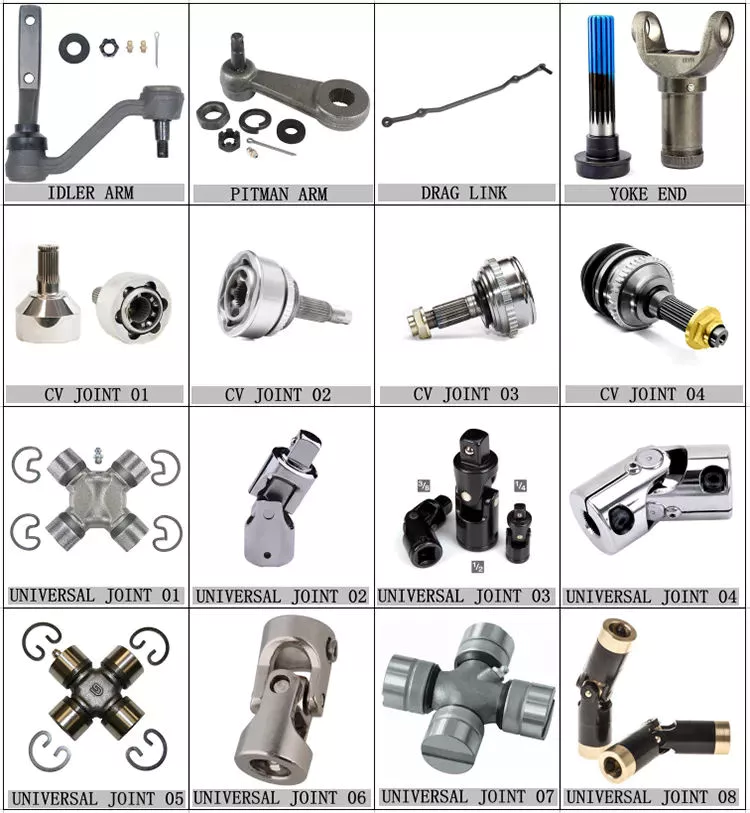
Hoe gaan aandrijfassen om met variaties in snelheid en koppel tijdens gebruik?
Aandrijfassen zijn ontworpen om variaties in snelheid en koppel tijdens bedrijf op te vangen door middel van specifieke mechanismen en configuraties. Deze mechanismen stellen de aandrijfassen in staat om zich aan te passen aan de veranderende eisen van de krachtoverbrenging, terwijl een soepele en efficiënte werking behouden blijft. Hieronder volgt een gedetailleerde uitleg over hoe aandrijfassen variaties in snelheid en koppel verwerken:
1. Flexibele koppelingen:
Aandrijfassen bevatten vaak flexibele koppelingen, zoals kruiskoppelingen (U-koppelingen) of homokinetische koppelingen (CV-koppelingen), om variaties in snelheid en koppel op te vangen. Deze koppelingen bieden flexibiliteit en zorgen ervoor dat de aandrijfas kracht kan overbrengen, zelfs wanneer de aandrijvende en aangedreven componenten niet perfect zijn uitgelijnd. Kruiskoppelingen bestaan uit twee jukken die met elkaar verbonden zijn door een kruisvormig lager, waardoor hoekbeweging tussen de delen van de aandrijfas mogelijk is. Deze flexibiliteit vangt variaties in snelheid en koppel op en compenseert voor uitlijningsfouten. Homokinetische koppelingen, die veelvuldig worden gebruikt in aandrijfassen van auto's, handhaven een constante rotatiesnelheid terwijl ze veranderende werkingshoeken opvangen. Deze flexibele koppelingen maken een soepele krachtoverbrenging mogelijk en verminderen trillingen en slijtage veroorzaakt door variaties in snelheid en koppel.
2. Schuifverbindingen:
In sommige aandrijfasconstructies worden schuifverbindingen toegepast om variaties in lengte op te vangen en veranderingen in de afstand tussen de aandrijvende en aangedreven componenten te compenseren. Een schuifverbinding bestaat uit een binnen- en een buitenbuis met spiebanen of een telescopisch mechanisme. Wanneer de aandrijfas lengteveranderingen ondergaat als gevolg van bewegingen van de ophanging of andere factoren, zorgt de schuifverbinding ervoor dat de as kan uitschuiven of inkrimpen zonder de krachtoverbrenging te beïnvloeden. Door axiale beweging mogelijk te maken, helpen schuifverbindingen vastlopen of overmatige spanning op de aandrijfas te voorkomen bij variaties in snelheid en koppel, waardoor een soepele werking wordt gegarandeerd.
3. Evenwicht vinden:
Aandrijfassen ondergaan balanceerprocedures om hun prestaties te optimaliseren en trillingen als gevolg van snelheids- en koppelvariaties te minimaliseren. Onevenwichtigheden in de aandrijfas kunnen leiden tot trillingen, die niet alleen het comfort van de inzittenden beïnvloeden, maar ook de slijtage van de as en de bijbehorende onderdelen verhogen. Balanceren houdt in dat de massa over de aandrijfas wordt herverdeeld om een gelijkmatige gewichtsverdeling te bereiken, waardoor trillingen worden verminderd en de algehele prestaties verbeteren. Dynamisch balanceren, waarbij doorgaans kleine gewichten worden toegevoegd of verwijderd, zorgt ervoor dat de aandrijfas soepel blijft werken, zelfs bij wisselende snelheden en koppelbelastingen.
4. Materiaalkeuze en ontwerp:
De materiaalkeuze en het ontwerp van aandrijfassen spelen een cruciale rol bij het opvangen van variaties in snelheid en koppel. Aandrijfassen worden doorgaans gemaakt van zeer sterke materialen, zoals staal of aluminiumlegeringen, die worden gekozen vanwege hun vermogen om de krachten en spanningen te weerstaan die gepaard gaan met wisselende bedrijfsomstandigheden. De diameter en wanddikte van de aandrijfas worden ook zorgvuldig bepaald om voldoende sterkte en stijfheid te garanderen. Daarnaast wordt bij het ontwerp rekening gehouden met factoren zoals de kritische snelheid, torsiestijfheid en het voorkomen van resonantie, die bijdragen aan het behoud van stabiliteit en prestaties bij variaties in snelheid en koppel.
5. Smering:
Een goede smering is essentieel voor aandrijfassen om variaties in snelheid en koppel op te vangen. Het smeren van de verbindingen, zoals kruiskoppelingen of homokinetische koppelingen, vermindert wrijving en warmteontwikkeling tijdens gebruik, wat zorgt voor een soepele beweging en minimale slijtage. Voldoende smering voorkomt ook dat onderdelen vastlopen, waardoor de aandrijfas snelheids- en koppelvariaties beter kan opvangen. Regelmatig onderhoud met smering is noodzakelijk om optimale prestaties te garanderen en de levensduur van de aandrijfas te verlengen.
6. Systeemmonitoring:
Het is belangrijk om de prestaties van het aandrijfassysteem te controleren om eventuele problemen met variaties in snelheid en koppel te identificeren. Ongebruikelijke trillingen, geluiden of veranderingen in de krachtoverbrenging kunnen wijzen op potentiële problemen met de aandrijfas. Regelmatige inspecties en onderhoudscontroles maken het mogelijk om problemen vroegtijdig op te sporen en op te lossen, waardoor verdere schade wordt voorkomen en de aandrijfas de variaties in snelheid en koppel effectief blijft verwerken.
Samenvattend kunnen aandrijfassen variaties in snelheid en koppel tijdens bedrijf opvangen door middel van flexibele koppelingen, schuifverbindingen, balanceerprocedures, de juiste materiaalkeuze en -ontwerp, smering en systeemmonitoring. Deze mechanismen en werkwijzen stellen de aandrijfas in staat om uitlijningsfouten, lengteveranderingen en variaties in vermogensbehoefte op te vangen, waardoor een efficiënte krachtoverbrenging, een soepele werking en minder slijtage in diverse toepassingen worden gegarandeerd.

How do drive shafts contribute to the efficiency of vehicle propulsion and power transmission?
Drive shafts play a crucial role in the efficiency of vehicle propulsion and power transmission systems. They are responsible for transferring power from the engine or power source to the wheels or driven components. Here’s a detailed explanation of how drive shafts contribute to the efficiency of vehicle propulsion and power transmission:
1. Power Transfer:
Drive shafts transmit power from the engine or power source to the wheels or driven components. By efficiently transferring rotational energy, drive shafts enable the vehicle to move forward or drive the machinery. The design and construction of drive shafts ensure minimal power loss during the transfer process, maximizing the efficiency of power transmission.
2. Torque Conversion:
Drive shafts can convert torque from the engine or power source to the wheels or driven components. Torque conversion is necessary to match the power characteristics of the engine with the requirements of the vehicle or machinery. Drive shafts with appropriate torque conversion capabilities ensure that the power delivered to the wheels is optimized for efficient propulsion and performance.
3. Constant Velocity (CV) Joints:
Many drive shafts incorporate Constant Velocity (CV) joints, which help maintain a constant speed and efficient power transmission, even when the driving and driven components are at different angles. CV joints allow for smooth power transfer and minimize vibration or power losses that may occur due to changing operating angles. By maintaining constant velocity, drive shafts contribute to efficient power transmission and improved overall vehicle performance.
4. Lightweight Construction:
Efficient drive shafts are often designed with lightweight materials, such as aluminum or composite materials. Lightweight construction reduces the rotational mass of the drive shaft, which results in lower inertia and improved efficiency. Reduced rotational mass enables the engine to accelerate and decelerate more quickly, allowing for better fuel efficiency and overall vehicle performance.
5. Minimized Friction:
Efficient drive shafts are engineered to minimize frictional losses during power transmission. They incorporate features such as high-quality bearings, low-friction seals, and proper lubrication to reduce energy losses caused by friction. By minimizing friction, drive shafts enhance power transmission efficiency and maximize the available power for propulsion or operating other machinery.
6. Balanced and Vibration-Free Operation:
Drive shafts undergo dynamic balancing during the manufacturing process to ensure smooth and vibration-free operation. Imbalances in the drive shaft can lead to power losses, increased wear, and vibrations that reduce overall efficiency. By balancing the drive shaft, it can spin evenly, minimizing vibrations and optimizing power transmission efficiency.
7. Maintenance and Regular Inspection:
Proper maintenance and regular inspection of drive shafts are essential for maintaining their efficiency. Regular lubrication, inspection of joints and components, and prompt repair or replacement of worn or damaged parts help ensure optimal power transmission efficiency. Well-maintained drive shafts operate with minimal friction, reduced power losses, and improved overall efficiency.
8. Integration with Efficient Transmission Systems:
Drive shafts work in conjunction with efficient transmission systems, such as manual, automatic, or continuously variable transmissions. These transmissions help optimize power delivery and gear ratios based on driving conditions and vehicle speed. By integrating with efficient transmission systems, drive shafts contribute to the overall efficiency of the vehicle propulsion and power transmission system.
9. Aerodynamic Considerations:
In some cases, drive shafts are designed with aerodynamic considerations in mind. Streamlined drive shafts, often used in high-performance or electric vehicles, minimize drag and air resistance to improve overall vehicle efficiency. By reducing aerodynamic drag, drive shafts contribute to the efficient propulsion and power transmission of the vehicle.
10. Optimized Length and Design:
Drive shafts are designed to have optimal lengths and designs to minimize energy losses. Excessive drive shaft length or improper design can introduce additional rotational mass, increase bending stresses, and result in energy losses. By optimizing the length and design, drive shafts maximize power transmission efficiency and contribute to improved overall vehicle efficiency.
Overall, drive shafts contribute to the efficiency of vehicle propulsion and power transmission through effective power transfer, torque conversion, utilization of CV joints, lightweight construction, minimized friction, balanced operation, regular maintenance, integration with efficient transmission systems, aerodynamic considerations, and optimized length and design. By ensuring efficient power delivery and minimizing energy losses, drive shafts play a significant role in enhancing the overall efficiency and performance of vehicles and machinery.

What benefits do drive shafts offer for different types of vehicles and equipment?
Drive shafts offer several benefits for different types of vehicles and equipment. They play a crucial role in power transmission and contribute to the overall performance, efficiency, and functionality of various systems. Here’s a detailed explanation of the benefits that drive shafts provide:
1. Efficient Power Transmission:
Drive shafts enable efficient power transmission from the engine or power source to the wheels or driven components. By connecting the engine or motor to the driven system, drive shafts efficiently transfer rotational power, allowing vehicles and equipment to perform their intended functions. This efficient power transmission ensures that the power generated by the engine is effectively utilized, optimizing the overall performance and productivity of the system.
2. Versatility:
Drive shafts offer versatility in their applications. They are used in various types of vehicles, including cars, trucks, motorcycles, and off-road vehicles. Additionally, drive shafts are employed in a wide range of equipment and machinery, such as agricultural machinery, construction equipment, industrial machinery, and marine vessels. The ability to adapt to different types of vehicles and equipment makes drive shafts a versatile component for power transmission.
3. Torque Handling:
Drive shafts are designed to handle high levels of torque. Torque is the rotational force generated by the engine or power source. Drive shafts are engineered to efficiently transmit this torque without excessive twisting or bending. By effectively handling torque, drive shafts ensure that the power generated by the engine is reliably transferred to the wheels or driven components, enabling vehicles and equipment to overcome resistance, such as heavy loads or challenging terrains.
4. Flexibility and Compensation:
Drive shafts provide flexibility and compensation for angular movement and misalignment. In vehicles, drive shafts accommodate the movement of the suspension system, allowing the wheels to move up and down independently. This flexibility ensures a constant power transfer even when the vehicle encounters uneven terrain. Similarly, in machinery, drive shafts compensate for misalignment between the engine or motor and the driven components, ensuring smooth power transmission and preventing excessive stress on the drivetrain.
5. Gewichtsvermindering:
Drive shafts contribute to weight reduction in vehicles and equipment. Compared to other forms of power transmission, such as belt drives or chain drives, drive shafts are typically lighter in weight. This reduction in weight helps improve fuel efficiency in vehicles and reduces the overall weight of equipment, leading to enhanced maneuverability and increased payload capacity. Additionally, lighter drive shafts contribute to a better power-to-weight ratio, resulting in improved performance and acceleration.
6. Durability and Longevity:
Drive shafts are designed to be durable and long-lasting. They are constructed using materials such as steel or aluminum, which offer high strength and resistance to wear and fatigue. Drive shafts undergo rigorous testing and quality control measures to ensure their reliability and longevity. Proper maintenance, including lubrication and regular inspections, further enhances their durability. The robust construction and long lifespan of drive shafts contribute to the overall reliability and cost-effectiveness of vehicles and equipment.
7. Safety:
Drive shafts incorporate safety features to protect operators and bystanders. In vehicles, drive shafts are often enclosed within a protective tube or housing, preventing contact with moving parts and reducing the risk of injury in the event of a failure. Similarly, in machinery, safety shields or guards are commonly installed around exposed drive shafts to minimize the potential hazards associated with rotating components. These safety measures ensure the well-being of individuals operating or working in proximity to vehicles and equipment.
In summary, drive shafts offer several benefits for different types of vehicles and equipment. They enable efficient power transmission, provide versatility in various applications, handle torque effectively, offer flexibility and compensation, contribute to weight reduction, ensure durability and longevity, and incorporate safety features. By providing these advantages, drive shafts enhance the performance, efficiency, reliability, and safety of vehicles and equipment across a wide range of industries.


editor by CX 2024-02-19