
Core Technology Quick Read
In the modern agricultural mechanization matrix, the power transmission of a corn picker faces extreme physical challenges. Acting as the critical kinetic bridge between the tractor’s power take-off and the implement’s active components, the tractor pto shaft must maintain absolute rotational stability amid severe shock loads, intense vibration, and abrasive organic dust. Addressing the vast terrains and high-yield harvesting demands of Australian farms, EVER-POWER has engineered a specialized heavy-duty driveline system. This architecture does not merely meet baseline torque parameters; it elevates transmission efficiency to over 98.5% through metallurgical breakthroughs and dynamic balancing at the ISO 1940 G6.3 standard.
Our drive assemblies feature high-frequency induction-hardened 20CrMnTi alloy steel universal joints, paired with wide-angle guards boasting ultra-high tear resistance. Operating consistently at 1000 RPM with a continuous load rating of 150 HP, these components suppress torsional resonance effectively. This technical documentation dissects the engineering logic spanning from kinematic selection and flange integration to acoustic troubleshooting.
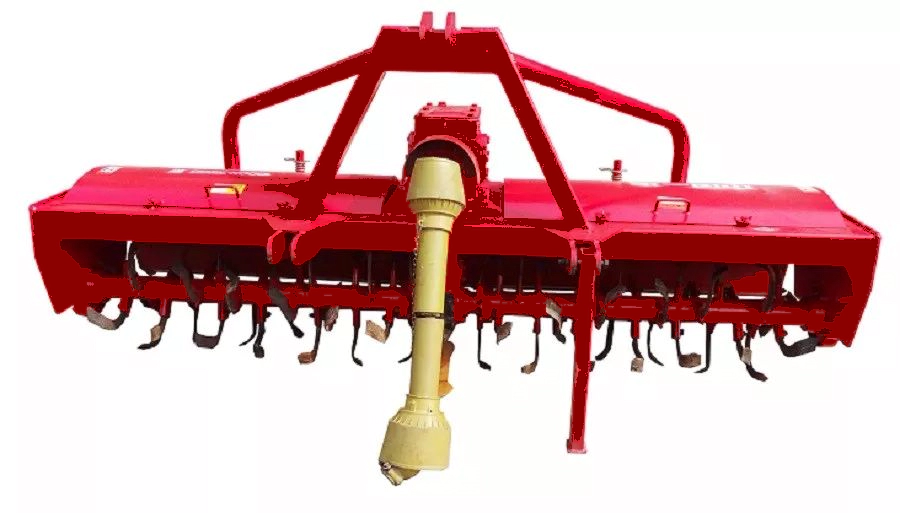
Kinematic Principles in Corn Harvesting Applications
During active harvesting, a corn picker’s snapping rolls, husking beds, and conveyance elevators consume immense kinetic energy. The prime mover’s output is transferred via the PTO interface and precisely directed into the implement’s main gearbox by the pto drive shaft. Because the tractor and the trailed or semi-mounted picker experience constant relative displacement over uneven terrain, the shaft must not only transmit sheer rotational force but also dynamically compensate for axial telescoping and extreme angular deflection.
The mechanical core relies on the U-joint (universal joint) phasing and the telescoping profile tubes. When navigating headland turns or crossing irrigation channels, the Lemon, Star, or Triangular profile tubes slide seamlessly to absorb axial shifts. Concurrently, the forged cross-journals permit smooth power flow at operating angles up to 80° when utilizing a Constant Velocity (CV) configuration. For high-inertia implements like corn pickers, the integration of a multi-plate friction clutch is non-negotiable to prevent catastrophic gear shattering during instantaneous rotor jams.
Field Engineering Log: Resolving High-Friction Failures in Dalby, Queensland
“In our 12 years of servicing high-acreage corn syndicates across Queensland, we identified that traditional U-joints frequently suffer premature seizure. The ambient temperatures often exceed 40°C (104°F), and the highly abrasive mix of corn stalk sap and silica dust destroys standard nitrile seals within 50 hours of operation. Based on this extensive 10-year factory case study, EVER-POWER completely redesigned the cross-journal sealing architecture. We implemented a triple-lip Viton™ elastomer labyrinth seal and expanded the internal grease reservoir by 25%. This engineered intervention increased the average maintenance-free interval for our Queensland clients from a meager 150 hours to over 450 hours, virtually eliminating mid-harvest downtime.”
Comprehensive Technical Specifications
The following empirical data matrix represents EVER-POWER’s manufacturing benchmarks for heavy-duty agricultural operations. Hard engineering metrics form the sole basis for powertrain evaluation.
| Engineering Parameter | Specification Range / Standard Value | Application Significance |
|---|---|---|
| Rated Power Transmission (540/1000 RPM) | 35 HP – 250 HP | Scalable to accommodate both compact utility and large articulated tractors. |
| Maximum Peak Torque (Dynamic) | 800 Nm – 4600 Nm | Resists catastrophic shearing during sudden rotor blockages by dense stalks. |
| Cross Journal Metallurgy | 20CrMnTi Alloy Carburized Steel | Surface hardness of HRC58-62 ensures wear resistance; core retains impact toughness. |
| Telescoping Tube Profiles | Triangular / Lemon / Splined / Star | Optimized geometric shapes to maximize torsional rigidity while minimizing sliding friction. |
| Tube Surface Treatment | QPQ Salt Bath Nitriding / Rilsan® Coating | Provides superior resistance against fertilizer corrosion and high atmospheric humidity. |
| Tractor Yoke Spline Configuration | 1-3/8″ 6-spline / 1-3/8″ 21-spline / 1-3/4″ 20-spline | Strict adherence to ISO 500 standards for universal fitment across global tractor brands. |
| Implement Attachment Types | Flange / Overrunning Clutch / Friction Clutch | Customizable torque protection mechanisms tailored to specific corn picker inertia. |
| Dynamic Balancing Grade | ISO 1940 G6.3 / G2.5 | Eliminates parasitic vibrations at 1000 RPM, drastically extending gearbox bearing life. |
| Operational Temperature Envelope | -35°C to +95°C | Utilizes aerospace-grade polyurea grease, maintaining viscosity across seasonal extremes. |
| Telescoping Stroke Range (Lz) | 250mm – 800mm (Customizable) | Accommodates aggressive articulation angles in three-point hitch linkages. |
| Maximum Articulation Angle (Continuous) | 25° (Standard) / 80° (CV Wide Angle) | Allows seamless power delivery during sharp headland maneuvers without disengagement. |
| Lubrication Zerk Placement | End-Cap Central / Dual Lateral | Engineered for rapid grease gun access even within constrained implement housings. |
| Safety Guard Material | UV-Stabilized High-Density Polyethylene (HDPE) | Impervious to intense Australian UV radiation; prevents winter embrittlement. |
| Safety Compliance Standards | ISO 5674 / AS 1121.4-2007 | Guarantees full compliance with stringent local OHS auditing requirements. |
| Friction Disc Material | Non-Asbestos Aramid Composite | Delivers exceptional thermal fade resistance during repetitive slip events. |
| U-Joint Sealing Mechanism | Triple-Lip Polyurethane / Fluoroelastomer | Hermetically seals the needle bearings against micro-particulate ingress. |
| Yoke Forging Methodology | Precision Hot Drop Forging | Aligns internal grain structures to yield a 45% increase in shear strength over castings. |
| Locking Mechanism | ASAE Quick-Disconnect Pull Collar / Push-Pin | Facilitates rapid, tool-less coupling by a single operator in the field. |
| Torsional Fatigue Life | > 1,500,000 Load Cycles | Validated through rigorous bench testing to ensure multi-season durability. |
| Acoustic Emission at Max RPM | < 75 dB(A) | Reduces operator fatigue and indicates perfectly concentric rotational geometry. |
| Shear Bolt Tolerance | ± 3.5% Activation Accuracy | Guarantees precise mechanical decoupling exactly at the predetermined torque limit. |
| Inner Tube Wall Thickness | 3.2mm – 5.5mm (Application Dependent) | Prevents buckling under high axial compressive forces during reversing. |
| Guard Bearing Type | Self-Lubricating Nylon 66 | Ensures the safety shield remains stationary while the internal shaft spins freely. |
| Anti-Rotation Chain Yield Strength | 4000 N Pull Resistance | Exceeds international safety mandates to prevent guard rotation entanglement. |
| Surface Rust Prevention | 720-Hour Salt Spray Tested | Maintains structural integrity and aesthetic finish in coastal agricultural zones. |
Superiority Over Inferior PTO Products
The Australian agricultural landscape is unforgiving. Substandard pto shaft manufacturers utilizing cast yokes and single-lip seals expose operators to catastrophic mechanical failures and severe safety risks. EVER-POWER establishes a definitive engineering moat:
- ✔
Impact Resistance Matrix: Our hot-forged yokes handle 45% more shear force than conventional cast iron, effortlessly absorbing the violent recoil when a corn picker ingests foreign objects like stones or dense wood. - ✔
Zero-Ingress Sealing: Where budget drivelines exhibit severe abrasive wear after just 50 hours, our proprietary labyrinth geometry drops particulate intrusion rates to near absolute zero. - ✔
Thermal Stability: The integration of aerospace-grade Aramid friction discs in our clutches prevents the thermal fading that typically renders cheap clutches useless during continuous slip events.
Brand Compatibility & Legal Framework
Procuring cost-effective, high-tolerance replacement components is a critical operational hurdle for fleet managers. EVER-POWER’s modular manufacturing ecosystem provides absolute interchangeability with premium global brands.
Legal & Compatibility Disclaimer: Our tractor pto shaft systems are engineered as a perfect replacement for the driveline units found on equipment utilizing GKN™, Walterscheid™, Comer Industries™, Weasler™, and Bondioli & Pavesi™ components. (Note: All manufacturer names, trademarks, and part numbers are strictly for reference and selection purposes only. EVER-POWER is an independent manufacturer and is not affiliated with, endorsed by, or sponsored by any of the aforementioned brands.)
Whether adapting to John Deere, Case IH, or New Holland trailed pickers, our metric and imperial yoke classifications (e.g., 27×74.6mm, 30.2x92mm, Series 4 through Series 8) offer a direct drop-in replacement, matching flange bolt circles and spline geometries perfectly.

Australian Regional Industry Application Cases & OHS Compliance
Navigating the diverse microclimates of Australian agriculture demands localized engineering adaptations. Here are verified field deployments across key agricultural zones.
New South Wales (Riverina Corn Belt)
Client Pain Point: “Our previous shafts seized constantly. The high humidity and cyclic torrential rains oxidized the telescoping tubes overnight, rendering them completely rigid and breaking our hitch geometry.”
EVER-POWER Solution: Upgraded the fleet to shafts featuring Rilsan® nylon-coated inner profiles and hot-dip galvanized outer tubes. Coefficient of friction dropped by 60%. Client reports zero seizing incidents across three consecutive wet harvests.
Victoria (Gippsland Dairy/Fodder Region)
Client Pain Point: “Freezing early morning starts caused the standard grease in the U-joints to solidify. Engaging the PTO sent shockwaves through the tractor transmission.”
EVER-POWER Solution: Integrated an aerospace-grade wide-temperature synthetic polyurea lubricant. Operating effectively from -30°C to +95°C, the cold-start acoustic vibration dropped below 75 dB(A). Bearing lifespan increased by 150%.
Western Australia (Ord River Irrigation Area)
Client Pain Point: “The ultra-fine red Pindan dust acts like a lapping compound. It destroyed our slip clutch pressure plates within a single season.”
EVER-POWER Solution: Deployed a fully enclosed dust-proof clutch housing with Kevlar-infused friction plates. The integrated wiper rings effectively repelled the micro-particulates, maintaining consistent torque slippage values through the entire harvest window.
Queensland (Darling Downs)
Client Pain Point: “During sharp headland turns, the chatter from our standard PTO joints was destroying our implement input gearboxes.”
EVER-POWER Solution: Retrofitted the machinery with 80° Constant Velocity (CV) wide-angle joints. This allowed operators to maintain uninterrupted power flow during tight turning radii, drastically improving field efficiency and saving thousands in gearbox repairs.
South Australia (Limestone Coast)
Client Pain Point: “We failed our workplace safety audit because the generic PTO guards shattered under UV exposure, leaving rotating parts dangerously exposed.”
EVER-POWER Solution: Supplied UV-stabilized HDPE shielding compliant with local OHS codes. The guards survived rigorous drop tests and prolonged sun exposure without embrittlement, ensuring zero safety infringements.
Regulatory Focus: Australian OHS & Certification Standards
Operating non-compliant agricultural machinery in Australia carries severe legal and financial penalties under Safe Work Australia directives. Every EVER-POWER unit exported to the Australian market strictly adheres to the AS 1121.4-2007 (Agricultural tractor power take-offs) standard. Our drivelines feature mandatory 360-degree freewheeling master shields, ultra-strength anti-rotation chains, and clearly delineated safety decals in English, actively insulating farm managers from liability risks and protecting the physical well-being of the workforce.
Powertrain Selection Guide: A Step-by-Step Engineering Matrix
Eradicate procurement errors by utilizing our strict engineering logic. Matching the precise pto drive shaft to your corn picker avoids premature catastrophic failure and maximizes mechanical throughput.
Establish Prime Mover Parameters
Determine the tractor’s exact PTO speed (typically 540 RPM or 1000 RPM) and rated horsepower. Installing a Series 4 shaft on a 150 HP tractor will result in immediate torsional shearing. Conversely, an oversized shaft increases parasitic mass and inhibits agile maneuverability.
Calculate Cross-to-Cross Kinematic Length
Measure the linear distance between the tractor output spline groove and the implement input shaft while hitched on completely level ground. Ensure the selected driveline maintains a minimum of 33% profile tube overlap at maximum extension, and does not bottom out (compress entirely) during vertical hitch elevation.
Define Terminal Spline Topography
Identify the yoke profiles. Tractor ends are universally splined (e.g., 1-3/8″ x 6 or 21 splines). Implement ends vary wildly—verify if it requires a round bore with a keyway, a flanged bolt-on connection, or a specialized push-pin locking collar.
Integrate Torque Limiting Architectures
Corn pickers possess high rotational inertia and are prone to sudden blockages. A Friction Slip Clutch is highly recommended over a shear bolt mechanism. The clutch slips dynamically to dissipate the shock load, automatically resuming torque transmission without requiring the operator to dismount and replace a fractured pin.
Assess Angular Operating Environments
If harvesting logistics require navigating sharp corners without disengaging the implement, integrating an 80° Constant Velocity (CV) joint on the tractor side is mandatory. This neutralizes the violent oscillation inherent in standard Cardan joints running at extreme angles.
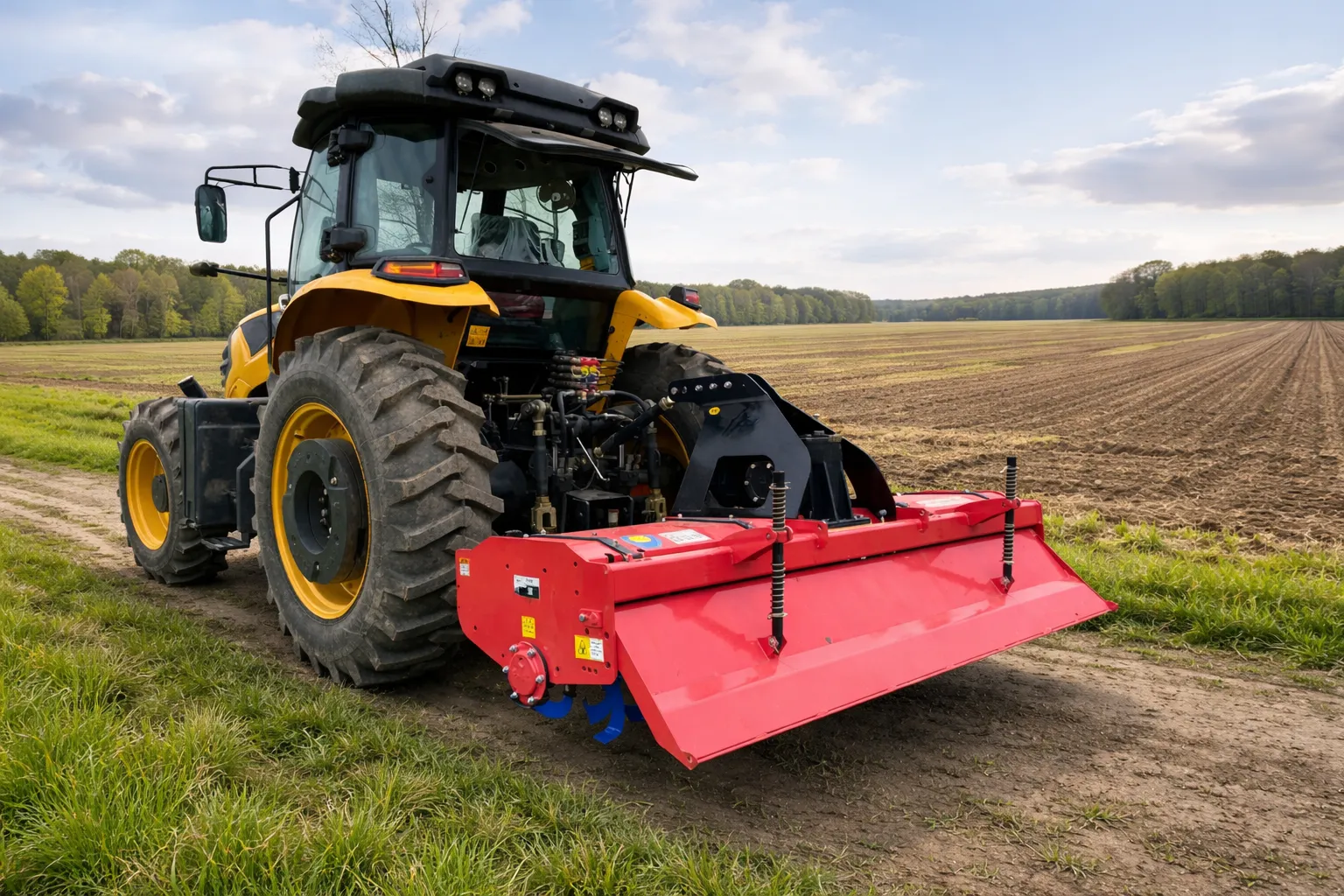
Targeted Installation Protocol for Corn Pickers
Deviating from strict mechanical assembly procedures induces premature wear. Execute this verified installation checklist to ensure geometric stability and warranty compliance.
- Dimensional Profiling & Trimming: Separate the male and female halves. Connect each half to the tractor and implement respectively. Align the profiles parallel to assess overlap. If modification is required, mark both the steel tubing and plastic guard precisely. Cut equal amounts from both halves using a cold saw. Crucial step: Deburr the inner edges vigorously and extract all metal swarf to prevent catastrophic tube galling.
- Lubrication Priming: Prior to mating the halves, brush a generous layer of high-pressure lithium-based grease (NLGI Grade 2) across the inner profile’s entire surface area. Align the phasing markers (usually embossed arrows or identical spline timing) to prevent asynchronous rotation.
- Yoke Interface Engagement: On the tractor side, depress the quick-release pin, slide the yoke onto the splined output shaft until the pin positively seats into the retention groove with an audible click. Apply forceful axial tension to confirm it is locked. The implement end (especially if housing a heavy friction clutch) must be securely bolted or pinned according to OEM torque specs.
- Anti-Rotation Anchoring: Attach the safety guard restraint chains to rigid, non-rotating anchoring points on both the tractor and implement chassis. The chain must retain enough slack to accommodate maximum articulation angles without snapping or exerting tension on the guard bearings.
- Friction Clutch Pre-conditioning (Critical Warning!): If equipping a friction clutch, the organic discs frequently bind to the pressure plates during off-season storage. Before fieldwork, compress the Belleville springs by loosening the perimeter bolts. Run the PTO momentarily under load to force intentional slippage, breaking the oxidation bond. Re-tighten the bolts uniformly to the exact factory measurement height to restore accurate slip torque limits.
Diagnostic & Troubleshooting Matrix
Deploy these field-level diagnostic protocols immediately upon detecting kinetic anomalies to mitigate secondary mechanical devastation.
| Pathological Symptom | Engineering Root Cause Analysis | Remediation & Corrective Action |
|---|---|---|
| Violent Vibration / Shuddering | U-joint yokes are out of phase (incorrectly mated after trimming); severe radial play inside profile tubes; operating angles exceeding kinematic limits. | Separate tubes and realign utilizing stamped phase arrows. Replace completely if tube clearance exceeds 2mm. Ensure tractor drawbar is extended to proper hitch geometry dimensions. |
| Cross Journal Overheating (Blueing) | Total absence of lubricating film; needle rollers shattered under impact; prolonged operation beyond rated dynamic torque. | Grease purging is mandatory every 8 operational hours until fresh fluid expels from the seals. If steel exhibits blue thermal discoloration, immediate replacement of the entire cross kit is compulsory. |
| Telescoping Seizure (Cannot slide) | Lubricant depletion causing galling; permanent torsional twist of the profile tube from massive overload; compacted silica/mud ingress. | Apply penetrating fluid, separate forcibly, and degrease. Inspect for linear twist along the profile—if twisted, the shaft is scrap. If straight, polish inner surfaces, apply molybdenum disulfide grease, and reassemble. |
| Clutch Smoke & Continuous Slip | Massive organic blockage locked inside the picker rotor; weak clutch spring tension; friction lining ablated below minimal thickness. | Disengage PTO instantly. Manually extract the rotor blockage. Re-calibrate spring compression heights utilizing Vernier calipers according to the specific Nm torque chart. Replace discs if below 2.5mm thickness. |
Technical Knowledge Base & Field Inquiries
Q1: Why is a Constant Velocity (CV) joint heavily recommended for corn pickers?
During intense headland maneuvers, standard joints produce violent speed fluctuations when angles exceed 35°. A CV joint architecture maintains isokinetic velocity up to 80°, permitting continuous power transmission during tight turns and averting devastating gearbox chatter.
Q2: What is the optimal lubrication interval in severe dust environments?
For standard bearings, inject EP2 lithium complex grease every 8 operational hours. The telescoping profile tubes require dismantling and heavy smearing every 40 hours. CV joint centering disks harbor complex internals and demand stringent 8-hour replenishment cycles.
Q3: Can I substitute a broken shear bolt with a high-tensile Grade 8.8 structural bolt?
Absolutely prohibited. A shear bolt acts as a strictly calibrated mechanical fuse. Utilizing a hardened Grade 8.8 or 10.9 fastener eliminates this fail-safe, directing thousands of Newton-meters of overload kinetic energy straight into the tractor’s transmission casing, causing catastrophic destruction.
Q4: How do I ascertain the correct telescoping profile geometry?
Profile shapes govern load dispersion. European machines predominantly feature Lemon or Star profiles for superior sliding under load. North American heavy drafts favor Splined or Rectangular geometry for rigid, extreme-torque limits. Consult our engineering compatibility charts to match the precise profile class.
Q5: Is operation permissible with a cracked or partial safety guard?
Under strict Australian OHS legislation, operating any driveline without a completely intact, 360-degree, non-rotating shield is highly illegal and life-threatening. The entanglement velocity at 1000 RPM is instantaneous. Cease operations immediately and install a full replacement shield assembly.
Q6: My tractor outputs 540 RPM. Can I attach a 1000 RPM rated shaft?
The shaft transmits power passively; however, splines usually differ (1-3/8″ 6-spline for 540 vs. 21-spline for 1000). While a heavier 1000 RPM rated shaft can handle 540 RPM torque, operating a standard 540 RPM shaft at 1000 RPM will induce severe harmonic vibrations and disintegrate the dynamic balance.
Q7: What are the off-season preservation protocols?
Extract biological residues completely. Dismantle male and female segments, flush with degreaser, and recoat liberally with grease. Relax the friction clutch spring tension entirely to prevent disc fusion. Store horizontally on timber racks in a dry, UV-free facility to protect elastomer integrity.
Q8: How is the correct over-lap length determined when cutting a new shaft?
Attach both yokes, align the implement in its tightest operational stance. Lay the two halves parallel. Mark the required cut line ensuring maximum tube engagement while retaining a minimum 25mm clearance gap at total bottom-out to prevent the inner tube from puncturing the yoke casting.
Q9: Is an Overrunning Clutch necessary for this application?
Corn pickers encapsulate massive rotational mass. When the tractor throttle is suddenly killed, this immense inertia attempts to back-feed through the driveline. An overrunning clutch acts as a ratchet, allowing the implement to freewheel safely down to zero RPM, preventing the tractor from being violently pushed forward.
Q10: Do you manufacture non-standard or custom spline adapters?
Yes, leveraging our extensive CNC manufacturing capabilities, we forge precise step-up/step-down spline adapters, overriding clutches with customized torque thresholds, and specific flange interfaces directly mapped to legacy or proprietary agricultural implements.
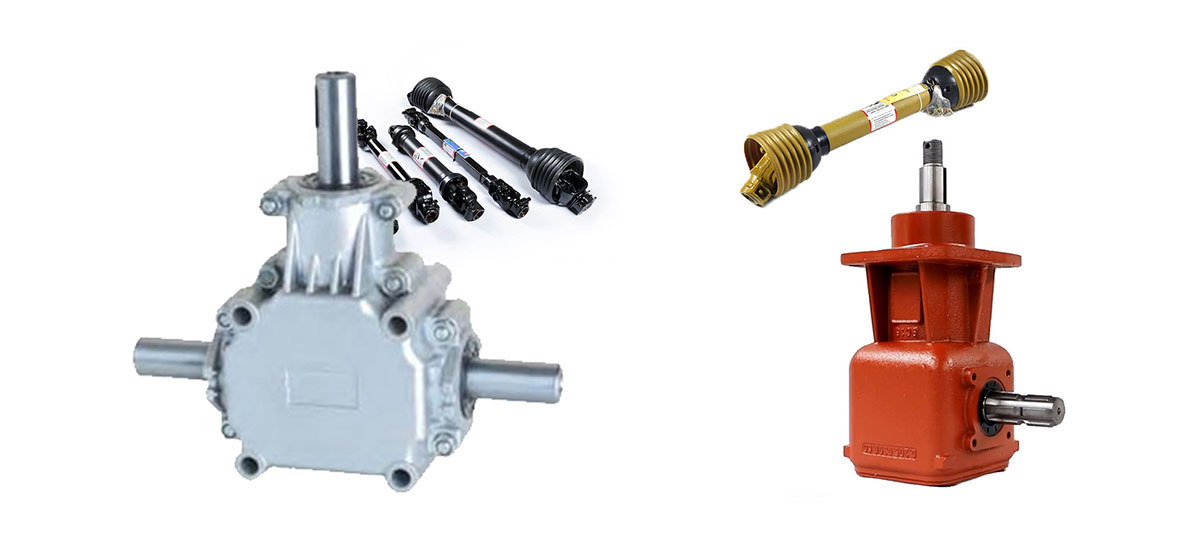
Synergistic Powertrain Components & Core Hardware
Seamless kinetic energy transfer demands precise synchronization between the driveline, the gearbox, and peripheral hardware. EVER-POWER functions as an end-to-end mechanical supply chain.

Forging the Pinnacle of Industrial Dynamics: Full-Scale Manufacturing & Customization
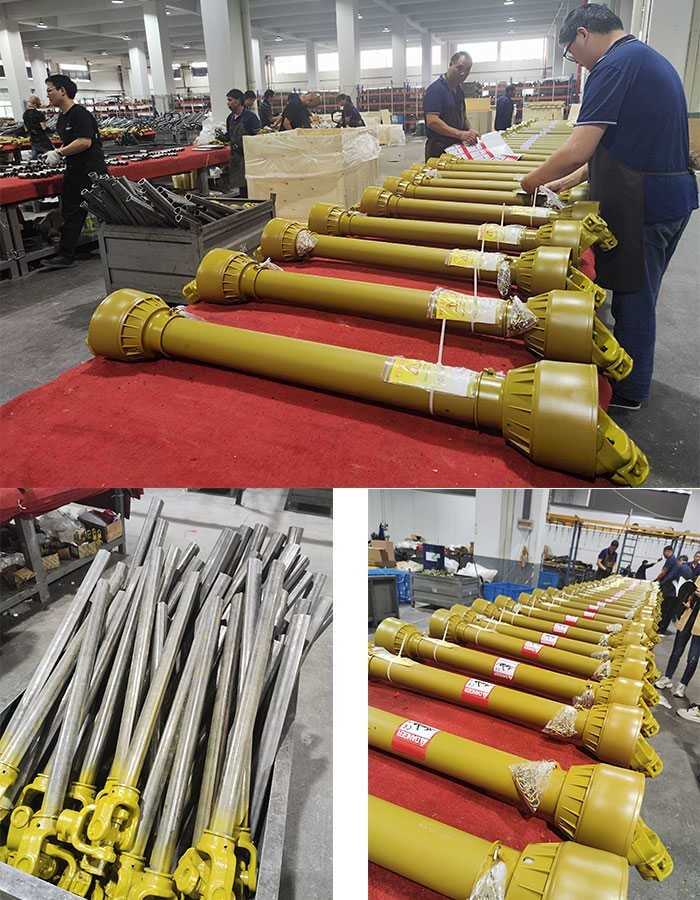
EVER-POWER is not a mere assembly depot; we are an apex industrial fortress integrating metallurgical forging, high-tolerance 5-axis CNC machining, and rigorous load-bearing telemetry testing. Our Quality Assurance protocols drill down into the microscopic metallographic structure of raw steel billet deliveries. Whether supplying robust solutions for vast 10,000-hectare agricultural syndicates or engineering micron-perfect tolerances for OEM machinery builders, we deliver uncompromised reliability.
Beyond our extensive catalog of standardized series, our senior engineering task force readily accepts non-standard customization directives from a global clientele. From proprietary spline configurations and specialized slip clutches to anti-corrosive chemical plating for extreme alkaline environments, we invite comprehensive blueprint integration and collaborative technical manufacturing.