
Advanced PTO Drive Shaft Solutions for Rotary Tillers
Australian Agricultural Machinery Application & Extreme Terrain Adaptation Guide
Engineered by EVER-POWER. Delivering unparalleled torque transmission, vibration control, and operational safety for intensive soil cultivation.
Core Technology Rapid Read: Rotary Tiller Power Dynamics
Rotary tillers operate under some of the most punishing mechanical conditions in modern agriculture. As the primary interface between the tractor’s power take-off (PTO) and the implement’s gearbox, the PTO drive shaft must absorb extreme shock loads, high-frequency vibrations, and severe angular deviations. When the tiller tines strike submerged rocks, compacted clay, or heavy root systems, the instantaneous torque spike travels directly back through the driveline. Our specialized rotary tiller PTO shafts integrate heavy-duty slip clutches and shear bolt mechanisms to instantly decouple these destructive forces, protecting both the tractor transmission and the implement gearbox.
Utilizing advanced metallurgical processes, including carburized cross journals and induction-hardened splines, these drive shafts offer a continuous power rating that exceeds standard agricultural requirements. The telescopic tubing profile—whether lemon, triangular, or star-shaped—is designed to minimize sliding friction under high torque, ensuring seamless length compensation as the implement is raised and lowered through the three-point linkage.
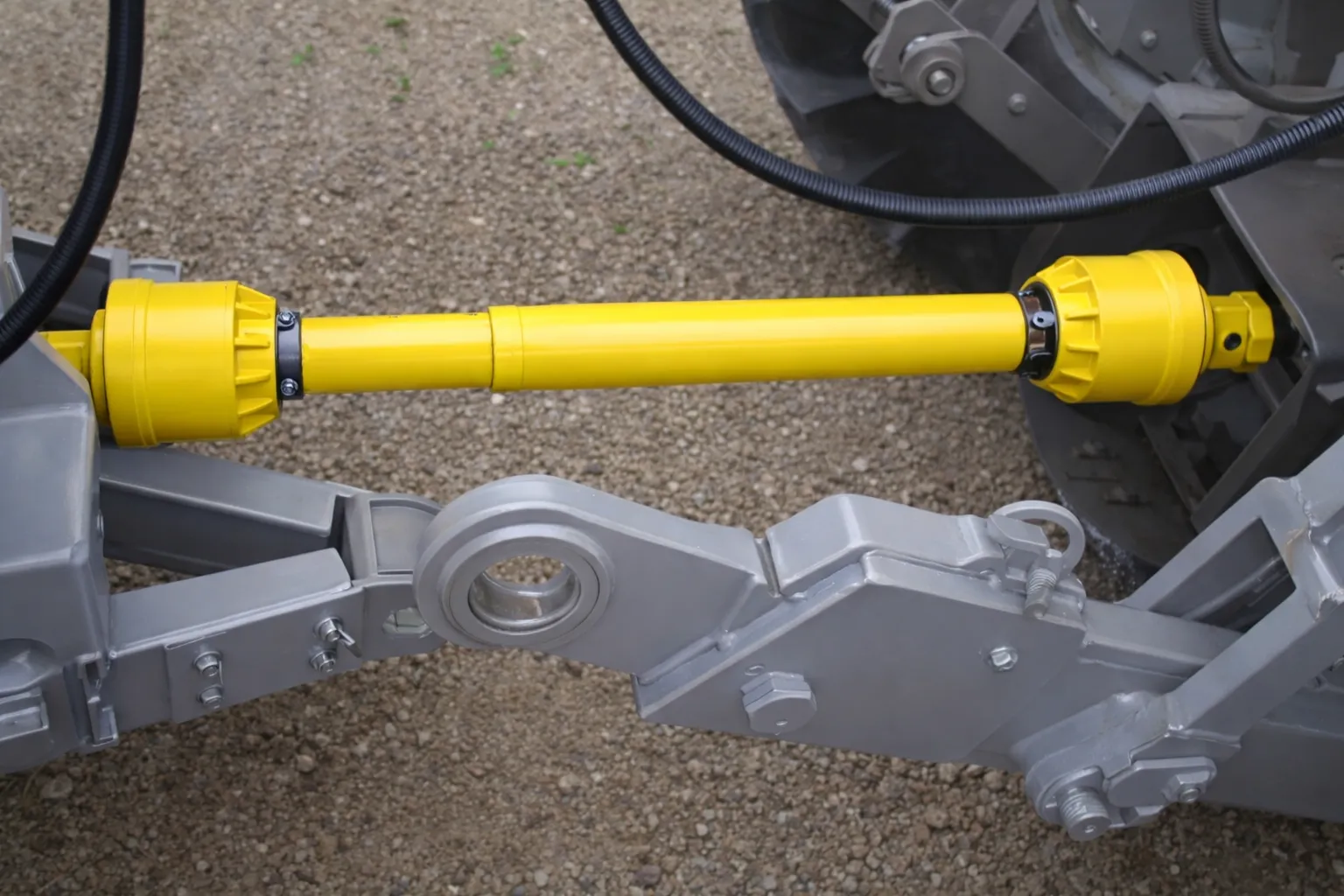
Kinematic Principles in Soil Cultivation
The mechanical linkage between a prime mover and a rotary tiller relies on articulated universal joints functioning in a non-linear spatial plane. As rotational kinetic energy transfers from the tractor’s output stub (typically 540 RPM or 1000 RPM) to the implement, the PTO shaft must accommodate varying operating angles. In a rotary tiller setup, the shaft bridges the horizontal distance from the tractor to the implement’s central input shaft.
Phase 1: Torque Initiation
Upon engaging the tractor’s PTO clutch, kinetic energy flows through the master spline. The primary universal joint translates this rotation through the required drop angle towards the implement. To mitigate torsional vibration, the yokes must remain strictly in phase.
Phase 2: Telescopic Compensation
During operation, as the tiller traverses uneven terrain, the distance between the tractor and implement fluctuates continuously. The internally lubricated profile tubes slide axially to prevent thrust loads from damaging the bearing carriers.
Phase 3: Overload Dissipation
When rotor tines encounter immense resistance, the friction discs within the integrated slip clutch generate controlled slippage. This thermal dissipation mechanism caps the maximum torque limit, preventing catastrophic shearing of structural components.
Engineering Parameters & Material Specifications
For intensive rotary tillage, component sizing and material selection dictate operational lifespan. The following matrix details the critical engineering parameters of EVER-POWER’s Series 4 through Series 8 PTO shafts dedicated to heavy-duty soil preparation.
| Parameter Category | Technical Attribute | Standard Value / Material | Customization Range |
|---|---|---|---|
| Geometric Metrics | Overall Compressed Length | 1000 mm (39.3 inches) | 600 mm – 2500 mm |
| Cross Journal Size (Series 6) | 30.2 mm x 92 mm | From 22x54mm to 42x104mm | |
| Telescopic Tube Profile | Triangular / Lemon shape | Star, Involute Splined | |
| Tractor Yoke Spline | 1-3/8″ 6-Spline (Standard) | 1-3/8″ 21-Sp, 1-3/4″ 20-Sp | |
| Implement Yoke Attachment | Slip Clutch FF2/FF4 | Shear Bolt, Ratchet, Free-wheel | |
| Performance Output | Dynamic Torque Rating (540 RPM) | 830 Nm (Series 6) | 210 Nm to 3800 Nm |
| Power Transmission (540 RPM) | 47 kW (64 HP) | 12 kW to 180 kW | |
| Maximum Rotational Speed | 1000 RPM continuous | Up to 1200 RPM dynamically balanced | |
| Max Intermittent Articulation Angle | 45 Degrees | 80 Degrees (Wide Angle CV Joint) | |
| Continuous Operating Angle | 25 Degrees | N/A | |
| Slip Clutch Torque Setting | 1200 Nm default calibration | 600 Nm to 2500 Nm adjustable | |
| Material Science | Forged Yoke Alloy | 20CrMnTi (Carburized) | 42CrMo for extreme loads |
| Cross Journal Surface Hardness | HRC 58-62 | N/A | |
| Friction Disc Material | Asbestos-free composite | Sintered bronze available | |
| Shield / Guard Construction | UV-Resistant Polyethylene | High-impact PVC, Full coverage | |
| Corrosion Protection | Electrophoretic Coating (Black) | Hot-dip Galvanized, Yellow Zinc | |
| Operational & Safety | Lubrication Interval | 50 Working Hours | 250 Hour Extended Lube Kits |
| Operating Temperature Range | -20°C to +80°C | -40°C Arctic Grade Available | |
| Safety Certifications | CE / ISO 5673-1 | AS 1121.2-2007 Compliant | |
| Vibration Tolerance | Class A Dynamic Balance | Custom Torsional Dampening |
Driveline Integrity: High-Performance vs. Conventional Shafts
The agricultural sector frequently encounters substandard driveline components that lead to catastrophic failures, unplanned downtime, and severe safety hazards. The engineering delta between an EVER-POWER master-crafted shaft and generic aftermarket alternatives is quantifiable.
Micro-Alloyed Forging vs. Cast Iron
Our yokes are hot-forged from structural alloy steel, ensuring the internal grain structure follows the component’s geometry. Inferior products often use brittle cast iron, which shatters instantly under the peak impact loads generated by a rotary tiller striking a submerged obstacle.
Precision Broaching vs. Rough Cut Splines
We utilize multi-pass CNC broaching to achieve zero-backlash spline engagement. Loose tolerances in low-cost shafts cause micro-impacts during rotation, rapidly degrading the tractor’s output PTO stub and leading to expensive transmission overhauls.
Advanced Tribology in Cross Journals
EVER-POWER cross kits feature multi-lip NBR seals and central grease reservoirs. In harsh, dusty environments like the Australian outback, standard single-lip seals fail rapidly, allowing silica ingress that destroys needle bearings within a single operational season.
Calibrated Thermal Dissipation Clutches
Our slip clutches use high-density non-asbestos friction linings engineered for stable friction coefficients at high temperatures. Budget clutches glaze over when slipped, permanently fusing and effectively bypassing the overload protection system entirely.

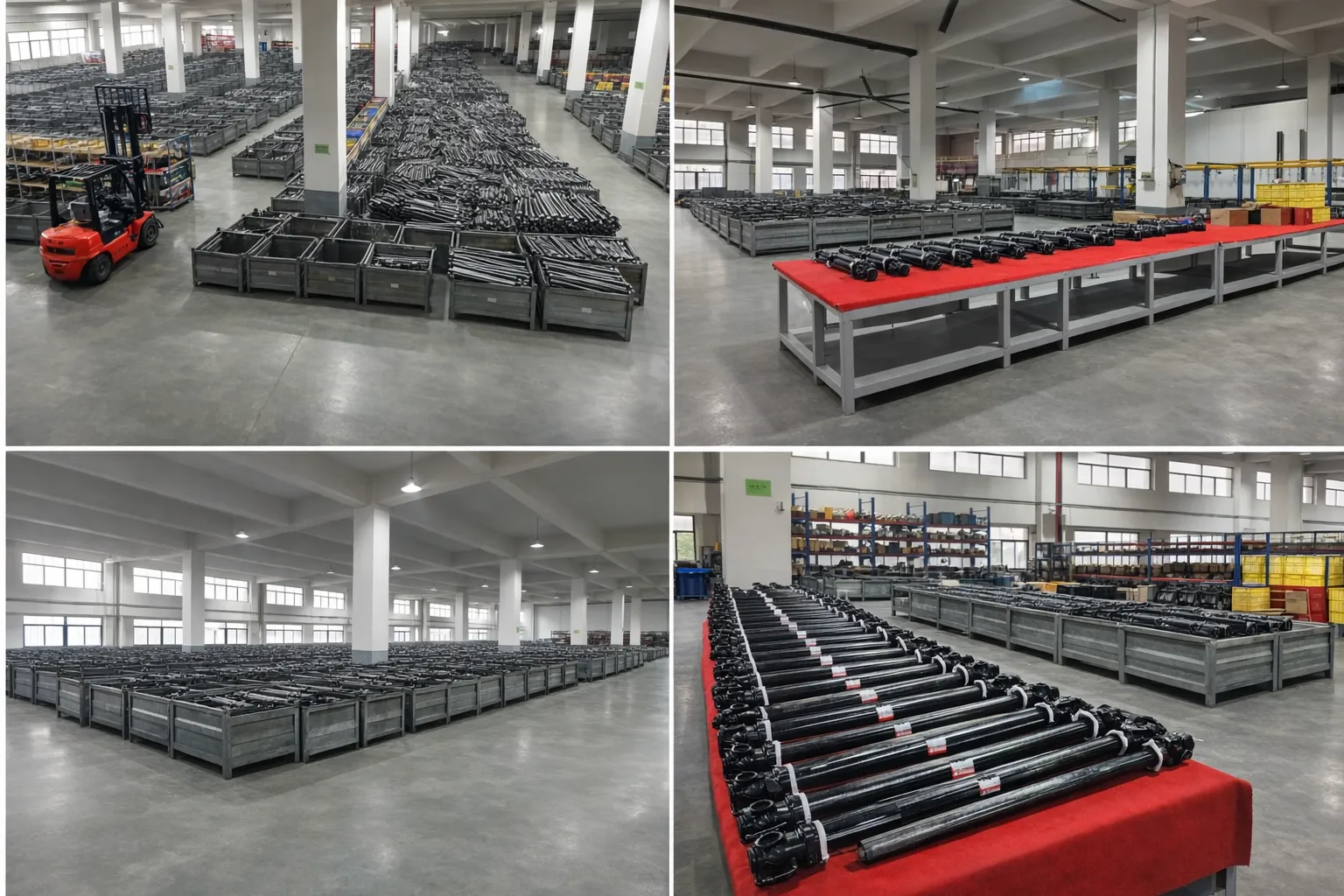
Australian Safety Regulations & Compliance Framework
Operating agricultural machinery across the diverse topographies of Australia—from the dense soils of Tasmania to the broadacre farms of Western Australia—demands strict adherence to workplace health and safety protocols. Farm machinery safety standards in Australia are rigorously governed, and the PTO drive shaft represents one of the most highly scrutinized components due to historical entanglement statistics.
AS 1121.2-2007 Certification & State Directives
EVER-POWER drive shafts align with the stringent requirements of Australian Standard AS 1121.2-2007 (Agricultural tractor power take-offs). This standard mandates comprehensive guarding systems covering the entire driveline, from the tractor master shield to the implement input connection (IIC). In Victoria (WorkSafe Victoria) and New South Wales (SafeWork NSW), operating a rotary tiller with an unguarded or non-compliant U-joint guard carries severe penalties and immediate stop-work orders.
Furthermore, our UV-stabilized polymer guards are specifically formulated to withstand the extreme ultraviolet index found in regions like Queensland and the Northern Territory, preventing the premature embrittlement and shattering common in European-market plastics when exposed to the harsh Australian sun. Restraining chains are load-tested to ensure the protective sheath remains stationary while the internal shaft spins at 1000 RPM.
Cross-Platform Brand Compatibility & Retrofitting
Farmers and mechanics frequently face challenges matching replacement parts to legacy machinery. Our shafts are engineered with dimensional geometry that allows for direct drop-in replacement across global agricultural platforms.
| Target Brand Standard | Profile Type Mapping | EVER-POWER Equivalent | Typical Tiller Compatibility |
|---|---|---|---|
| Italian Standards (Bondioli / Comer) | Triangular Tube | Series 4 / 6 / 8 Triangular | Howard, Celli, Maschio |
| German Standards (Walterscheid) | Lemon Tube / Star Tube | W-Series Profiles | Kuhn, Amazone |
| North American (Weasler) | Rectangular / Splined | AW Series Profiles | John Deere, Bush Hog |
| Australian Market (Bare-Co) | Various | Direct Cross Reference Available | Silvan, Hayes, Digga |
Engineer’s Field Notes: Australian Terrain Implementation
Practical validation through extreme field testing forms the bedrock of our mechanical iterations. Below are direct extracts from our engineering team’s diagnostic logs across five distinct Australian agricultural zones.
Case 1: Queensland (Bundaberg) – Sugarcane Field Bedding
Challenge: Heavy, moisture-laden red clay soils placing immense continuous torque load on a 3-meter rotary tiller. Competitor shafts were suffering from severe torsional twisting on the inner tube.
Engineering Intervention: Deployed an EVER-POWER Series 8 Star-Profile tube with a customized 4-disc slip clutch calibrated to 1800 Nm. The star profile offers superior torsional rigidity over standard triangular tubes.
Client Feedback: “We ran 400 hours continuous through the planting window without a single bearing failure. The heat dissipation on the upgraded clutch saved us three rebuilds.”
Case 2: Western Australia (Perth Surrounds) – Broadacre Hardpan Breakup
Challenge: High-impact subterranean granite strikes. Tillers operating at 1000 RPM were transmitting destructive shockwaves back into the tractor gearboxes.
Engineering Intervention: Retrofitted the drivelines with an overrunning clutch (free-wheel) mechanism combined with an auto-reset ratchet limiter. This isolated the tractor from the massive kinetic inertia of the tiller rotor when the PTO was disengaged or during a strike.
Client Feedback: “The overrunning feature stopped the tractor from being pushed forward by the tiller’s momentum. Brilliant safety upgrade.”
Case 3: Victoria (Yarra Valley) – Vineyard Inter-Row Cultivation
Challenge: Extremely tight turning radii at the end of vineyard rows necessitating sharp PTO angles, leading to violent chatter and U-joint failure.
Engineering Intervention: Installed our 80-Degree Constant Velocity (CV) Wide-Angle joint on the tractor side. This allowed continuous power transmission even during sharp headland turns without disengaging the PTO.
Client Feedback: “Turning time cut by 30%. No more horrible knocking noises from the driveline when swinging around the trellis ends.”
Case 4: New South Wales (Orange) – Orchard Cultivation
Challenge: Offset rotary tillers needing elongated telescoping action while maintaining rigidity.
Engineering Intervention: Utilized our Rilsan-coated splined shafting. The proprietary polyamide coating drastically reduces sliding friction, eliminating the “thrust load” that destroys gearbox input bearings when the shaft is fully extended.
Client Feedback: “The implement floats perfectly now. Gearbox oil seals haven’t leaked since we swapped to this frictionless shaft.”
Case 5: South Australia (Adelaide Hills) – Vegetable Bed Preparation
Challenge: High-speed topsoil pulverization requiring precision balance to prevent frame cracking on the implement.
Engineering Intervention: Supplied Class A dynamically balanced shafts (G16 standard) operating at 1000 RPM. Implemented a shear-bolt torque limiter for clean, binary overload protection in sandy soils.
Client Feedback: “Smoothest running tiller we’ve ever operated. The lack of vibration has actually reduced operator fatigue in the cab.”
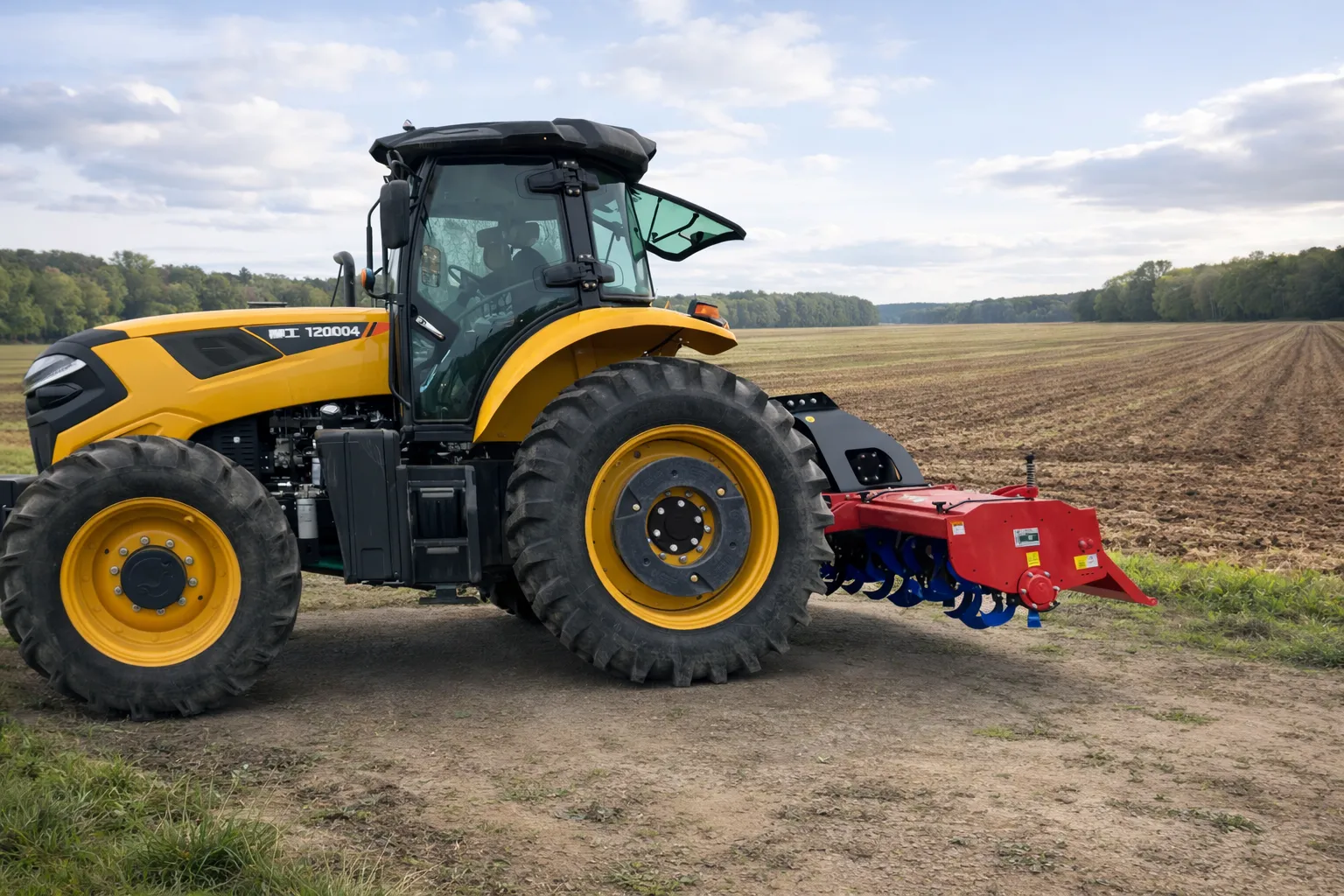
Driveline Selection Protocol: Sizing for Rotary Tillers
Mismatched PTO drivelines account for 60% of premature agricultural gearbox failures. Follow this strict mechanical logic path to specify the correct assembly.
| Step | Diagnostic Action | Engineering Consideration |
|---|---|---|
| 1. Establish HP / Torque | Determine Tractor PTO HP and operational RPM (540 or 1000). | Rotary tillers require a Service Factor (K) of 1.5 to 2.0. If tractor outputs 50HP, the shaft must be rated for at least 75HP dynamic load to survive soil impacts. |
| 2. Measure Closed Length | Measure cross-center to cross-center length with implement raised to its closest horizontal proximity to the tractor. | Must allow a minimum of 50mm (2 inches) clearance from bottoming out. Bottoming out immediately destroys the implement gearbox housing. |
| 3. Define End Yokes | Identify spline dimensions on tractor and implement (e.g., 1-3/8″ z6). | Quick-disconnect pins for the tractor side; tapered pin or clamp bolts for the implement side to ensure rigid connection. |
| 4. Specify Safety Device | Select between Slip Clutch, Shear Bolt, or Cam Clutch. | For rocky soils: Slip Clutch. For predictable loamy soils: Shear Bolt. Set release torque 15% above peak operational torque. |
Implementation & Commissioning Procedure
Incorrect installation geometry induces destructive secondary moments of inertia. Execute the following protocol strictly.
- Safety Lockout: Ensure the prime mover engine is off, key removed, and parking brake engaged.
- Spline Cleansing: Degrease the tractor output shaft and implement input shaft. Inspect for burrs or deformation. Apply a thin film of lithium-based molybdenum grease.
- Length Verification (The 1/3 Rule): Separate the shaft halves. Connect one half to the tractor, the other to the implement. Raise and lower the 3-point linkage to find the shortest possible distance. Ensure tubes overlap by at least 1/3 of their total length, but leave at least 40mm of clearance from completely bottoming out.
- Cutting to Length (If Required): If bottoming out occurs, carefully mark the exact same amount to be cut from both the inner and outer profile tubes, as well as the plastic guard tubes. Deburr all cut edges aggressively.
- Phasing Alignment: When reassembling the halves, ensure the inner and outer yokes are perfectly in phase (aligned parallel to each other). Incorrect phasing causes severe torsional oscillation and immediate bearing failure.
- Clutch Run-in: If utilizing a slip clutch, loosen the tension bolts, engage the PTO at idle, and deliberately slip the clutch for 3-5 seconds to polish the friction plates and remove any atmospheric rust. Re-torque springs to the specified compression height.
- Guard Anchoring: Secure the anti-rotation chains to rigid, non-moving points on the tractor and implement. Ensure chains have enough slack to accommodate turning but prevent the plastic guard from rotating.
Diagnostic Matrix: Operational Fault Resolution
1. Violent Vibration During Operation
Pathology: Driveline out of phase; operating angle exceeds 25 degrees; bent profile tube; worn cross bearings.
Intervention: Separate shaft and check alignment arrows. Re-phase. Drop the implement level to reduce U-joint angle. Check tubes for runout using a dial indicator.
2. Constant Shearing of Shear Bolts
Pathology: Incorrect bolt grade utilized (e.g., Grade 8.8 instead of 10.9); tiller encountering bedrock; PTO engagement too aggressive.
Intervention: Verify bolt metallurgy matches OEM specs. Engage PTO at engine idle before ramping up to 540 RPM. Raise tiller depth by 2 inches.
3. Slip Clutch Overheating / Smoking
Pathology: Spring tension too low; friction discs glazed or worn below minimum thickness; continuous overload from compacted soil.
Intervention: Measure spring compression height with calipers against manual specs. Disassemble and sand friction plates if glazed, or replace if below 3mm thickness.
4. Telescopic Tubes Binding / Seizing
Pathology: Lack of internal lubrication; twisted outer tube; debris ingress.
Intervention: Disconnect and fully separate. Clean profiles with solvent. Apply specialized PTFE or graphite dry lube. Ensure guards are intact to prevent dust entry.
Integrated Kinematic Systems: Agricultural Gearboxes & Transmission Parts
A PTO drive shaft is only one half of the power transmission equation. The kinetic energy delivered by the shaft must be converted into the high-torque, low-speed rotation required by the rotary tiller’s blade rotor. This is achieved through precision-engineered agricultural gearboxes. As a vertically integrated manufacturer, EVER-POWER produces a comprehensive suite of right-angle drives, parallel shaft reducers, and power transmission accessories designed to interface seamlessly with our drivelines.
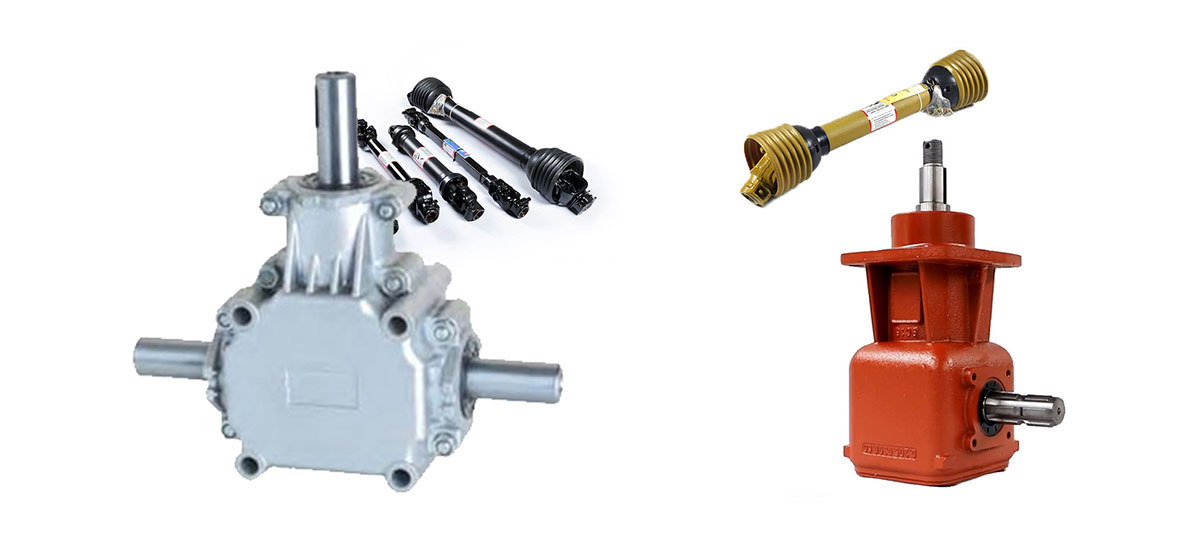
Rotary Tiller Gearboxes
Our tiller gearboxes are cast from high-grade nodular iron (QT450) to absorb the immense impact vibrations of soil engagement. Inside, helical and bevel gears are cut from 20CrMnTi steel, carburized and quenched to a surface hardness of HRC58-62. This rigorous metallurgical process ensures the gear teeth will not spall or chip even when transferring up to 150HP of continuous torque. The input shafts perfectly match our PTO yoke profiles, ensuring zero runout. Featuring SKF/NSK equivalent tapered roller bearings and premium FKM (Viton) oil seals, these gearboxes prevent lubricant leakage even in dusty, 45°C Australian summer conditions.
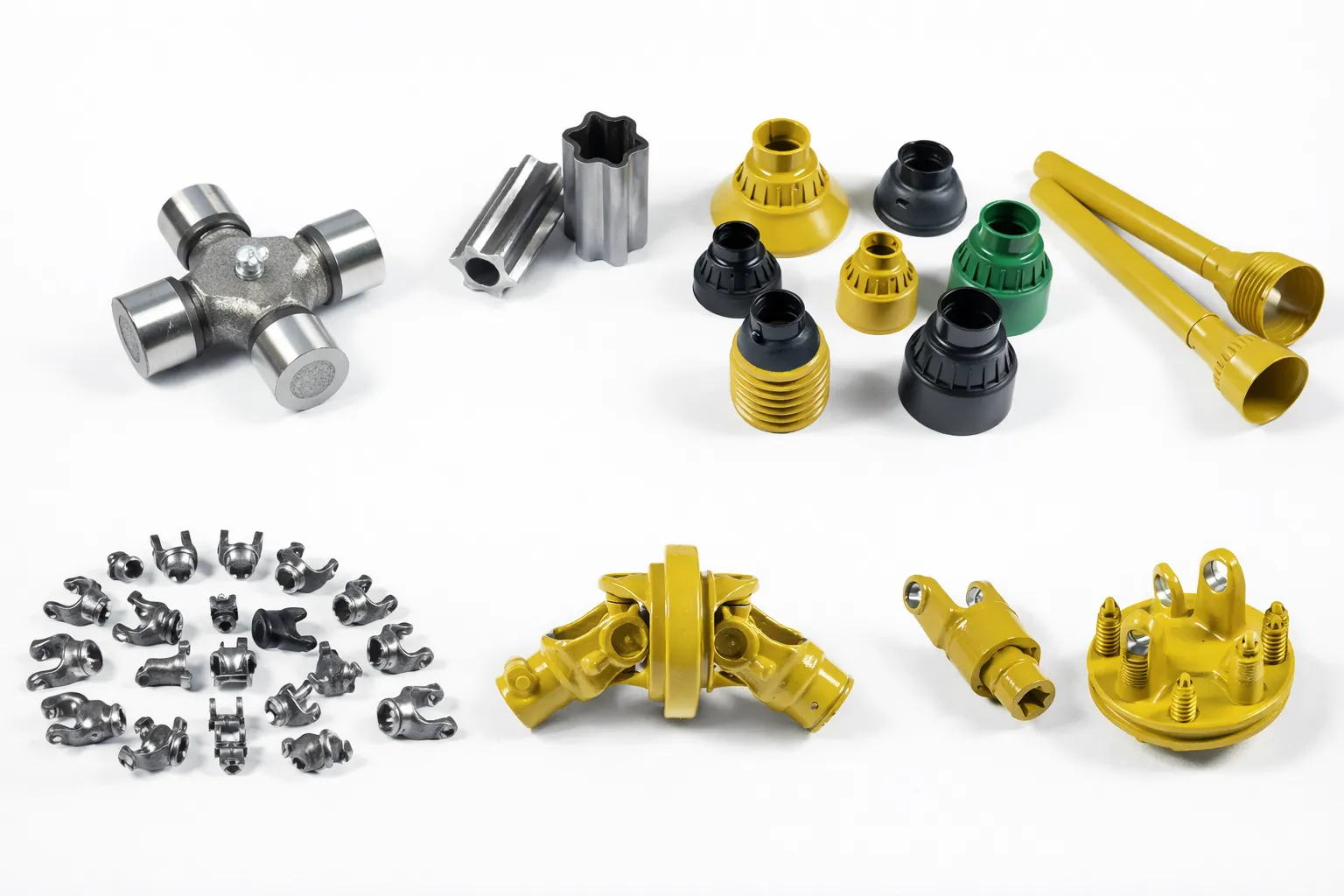
Replacement Yokes & Cross Kits
Driveline maintenance requires access to exact-tolerance replacement parts. We supply forged end yokes (splined, plain bore with keyway, flange yokes), wide-angle CV joint assemblies, and heavy-duty cross and bearing kits. Our universal joint spiders are engineered with specialized central grease channels that direct lubricant precisely to the needle bearings, flushing out contaminants. For machinery operating in corrosive environments (like fertilizer spreaders or coastal farms), we offer components with advanced zinc-nickel plating, exceeding 1000 hours of salt spray resistance.
Comprehensive Driveline Architecture
Beyond the primary PTO linkage and gearbox, agricultural implements rely on secondary drive systems to distribute power to localized mechanisms (e.g., side-drive chains on tillers, belts on flail mowers). We manufacture industrial-grade sprockets tailored for roller chains (ANSI and DIN standards), utilizing induction-hardened teeth to combat rapid wear from abrasive silica soils. Our V-belt pulleys (sheaves) are dynamically balanced to eliminate sympathetic vibrations that can travel back through the implement chassis.
By sourcing the complete power transmission chain—from the tractor’s PTO stub, through the U-joint shaft, into the right-angle gearbox, and down through the side-drive sprockets and chains—agricultural OEMs and repair facilities can eliminate integration headaches. Tolerance stacking is a major cause of mechanical binding; when components are engineered by a single manufacturer like EVER-POWER, dimensional harmony is guaranteed, resulting in smoother operation, lower decibel output, and significantly extended service intervals.
Frequently Asked Engineering & Application Questions
1. What is the difference between a triangular tube and a lemon tube?
Triangular tubes (common in Italian designs) offer excellent torque transfer for medium-duty applications and resist twisting. Lemon tubes (German style) provide thicker wall sections at high-stress points and often slide smoother under moderate load due to reduced surface contact areas.
2. Can I replace a shear bolt with a harder grade bolt?
Absolutely not. The shear bolt is a calibrated mechanical fuse. Replacing an 8.8 grade with a 10.9 grade increases the yield threshold, meaning the destructive torque will bypass the bolt and shatter your gearbox gears or bend the PTO shaft tubes instead.
3. How often should the cross bearings be lubricated?
Standard intervals dictate 50 operating hours. However, in severe Australian dust conditions or wet mud, purge greasing (pumping until clean grease pushes out the seals) should occur every 20-25 hours to prevent abrasive ingress.
4. My slip clutch keeps slipping during normal operation. Why?
Either the implement is oversized for the tractor, you are operating too deep in dense soil, or the clutch springs have lost tension/friction pads have worn down. Recalibrate the spring compression height according to the service manual.
5. What does ‘Wide Angle CV Joint’ mean?
A Constant Velocity (CV) joint utilizes a double-yoke and centering disk setup, allowing the driveline to transmit power smoothly at articulation angles up to 80 degrees, crucial for turning without disengaging the PTO.
6. Are your guards compliant with WorkSafe Australia?
Yes. Our shielding systems meet AS 1121.2-2007 requirements, providing full coverage of universal joints and integrating restraint chains to ensure the master shield remains stationary.
7. How do I determine the right spline size?
Count the splines and measure the outer diameter. The most common standard is 1-3/8″ (approx. 35mm) with 6 splines. Higher horsepower tractors (100HP+) often use 1-3/8″ 21-spline or 1-3/4″ 20-spline configurations.
8. Can I run a 540 RPM shaft at 1000 RPM?
It is highly dangerous unless the shaft is specifically dynamically balanced for 1000 RPM. Running an unbalanced shaft at 1000 RPM induces harmonic resonance that can shatter the yokes or destroy the tractor’s PTO housing.
9. Why is the telescopic tube stuck?
Torsional twisting from a severe shock load can deform the profile. Alternatively, lack of lubrication combined with rust can fuse the tubes. This is a critical failure; a seized tube will destroy the gearbox casing immediately upon raising the linkage.
10. Do you provide custom-length shafts?
Yes, we offer complete OEM engineering services, providing shafts cut to precise closed/open lengths, specific yoke combinations, and calibrated clutch settings based on your exact machine blueprints.
Upgrade Your Implement’s Driveline Today
With over two decades of metallurgical and kinematic expertise, EVER-POWER is at the forefront of agricultural power transmission. We do not just supply standard off-the-shelf components; our engineering team custom-fabricates non-standard configurations, specialized overload protection profiles, and heavy-duty gearboxes tailored precisely to your operational blueprints and CAD models.
Our engineers are ready to analyze your torque requirements and provide a robust, long-lasting solution.