Produktbeskrivning
Produktbeskrivning
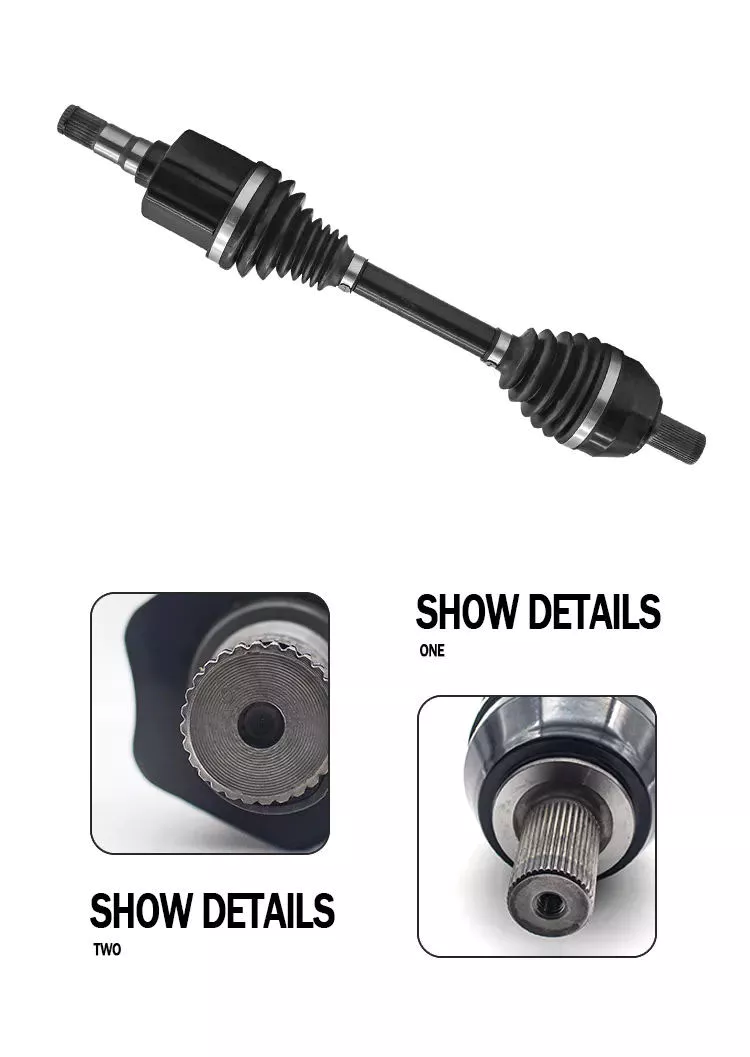
As a professional manufacturer for propeller shaft, we have ;2625719985;26209425909
TYPE
BMW X4 F26 2013-2018
MATERIAL
STEEL
Balance standard
G16, 3200 RPM
/* January 22, 2571 19:08:37 */!function(){function s(e,r){var a,o={};try{e&&e.split(“,”).forEach(function(e,t){e&&(a=e.match(/(.*?):(.*)$/))&&1
| After-sales Service: | 1 Years |
|---|---|
| Condition: | New |
| Color: | Black |
| Customization: |
Available
| Customized Request |
|---|
.shipping-cost-tm .tm-status-off{background: none;padding:0;color: #1470cc}
|
Shipping Cost:
Estimated freight per unit. |
about shipping cost and estimated delivery time. |
|---|
| Payment Method: |
|
|---|---|
|
Initial Payment Full Payment |
| Currency: | US$ |
|---|
| Return&refunds: | You can apply for a refund up to 30 days after receipt of the products. |
|---|
Are there any limitations or disadvantages associated with drive shafts?
While drive shafts are widely used and offer several advantages, they also have certain limitations and disadvantages that should be considered. Here’s a detailed explanation of the limitations and disadvantages associated with drive shafts:
1. Length and Misalignment Constraints:
Drive shafts have a maximum practical length due to factors such as material strength, weight considerations, and the need to maintain rigidity and minimize vibrations. Longer drive shafts can be prone to increased bending and torsional deflection, leading to reduced efficiency and potential driveline vibrations. Additionally, drive shafts require proper alignment between the driving and driven components. Misalignment can cause increased wear, vibrations, and premature failure of the drive shaft or its associated components.
2. Limited Operating Angles:
Drive shafts, especially those using U-joints, have limitations on operating angles. U-joints are typically designed to operate within specific angular ranges, and operating beyond these limits can result in reduced efficiency, increased vibrations, and accelerated wear. In applications requiring large operating angles, constant velocity (CV) joints are often used to maintain a constant speed and accommodate greater angles. However, CV joints may introduce higher complexity and cost compared to U-joints.
3. Maintenance Requirements:
Drive shafts require regular maintenance to ensure optimal performance and reliability. This includes periodic inspection, lubrication of joints, and balancing if necessary. Failure to perform routine maintenance can lead to increased wear, vibrations, and potential driveline issues. Maintenance requirements should be considered in terms of time and resources when using drive shafts in various applications.
4. Noise and Vibration:
Drive shafts can generate noise and vibrations, especially at high speeds or when operating at certain resonant frequencies. Imbalances, misalignment, worn joints, or other factors can contribute to increased noise and vibrations. These vibrations may affect the comfort of vehicle occupants, contribute to component fatigue, and require additional measures such as dampers or vibration isolation systems to mitigate their effects.
5. Weight and Space Constraints:
Drive shafts add weight to the overall system, which can be a consideration in weight-sensitive applications, such as automotive or aerospace industries. Additionally, drive shafts require physical space for installation. In compact or tightly packaged equipment or vehicles, accommodating the necessary drive shaft length and clearances can be challenging, requiring careful design and integration considerations.
6. Cost Considerations:
Drive shafts, depending on their design, materials, and manufacturing processes, can involve significant costs. Customized or specialized drive shafts tailored to specific equipment requirements may incur higher expenses. Additionally, incorporating advanced joint configurations, such as CV joints, can add complexity and cost to the drive shaft system.
7. Inherent Power Loss:
Drive shafts transmit power from the driving source to the driven components, but they also introduce some inherent power loss due to friction, bending, and other factors. This power loss can reduce overall system efficiency, particularly in long drive shafts or applications with high torque requirements. It is important to consider power loss when determining the appropriate drive shaft design and specifications.
8. Limited Torque Capacity:
While drive shafts can handle a wide range of torque loads, there are limits to their torque capacity. Exceeding the maximum torque capacity of a drive shaft can lead to premature failure, resulting in downtime and potential damage to other driveline components. It is crucial to select a drive shaft with sufficient torque capacity for the intended application.
Despite these limitations and disadvantages, drive shafts remain a widely used and effective means of power transmission in various industries. Manufacturers continuously work to address these limitations through advancements in materials, design techniques, joint configurations, and balancing processes. By carefully considering the specific application requirements and potential drawbacks, engineers and designers can mitigate the limitations and maximize the benefits of drive shafts in their respective systems.

Hur förbättrar drivaxlar prestandan hos bilar och lastbilar?
Drivaxlar spelar en viktig roll för att förbättra prestandan hos bilar och lastbilar. De bidrar till olika aspekter av fordonets prestanda, inklusive kraftöverföring, grepp, väghållning och total effektivitet. Här är en detaljerad förklaring av hur drivaxlar förbättrar prestandan hos bilar och lastbilar:
1. Strömförsörjning: Drivaxlar ansvarar för att överföra kraft från motorn till hjulen, vilket gör att fordonet kan röra sig framåt. Genom att effektivt överföra kraft utan betydande förluster säkerställer drivaxlar att motorns kraft utnyttjas effektivt, vilket resulterar i förbättrad acceleration och total prestanda. Väl utformade drivaxlar med minimal effektförlust bidrar till fordonets förmåga att leverera kraft till hjulen effektivt.
2. Momentöverföring: Drivaxlar underlättar överföringen av vridmoment från motorn till hjulen. Vridmoment är den rotationskraft som driver fordonet framåt. Högkvalitativa drivaxlar med korrekt momentomvandlingsförmåga säkerställer att det vridmoment som genereras av motorn överförs effektivt till hjulen. Detta förbättrar fordonets förmåga att accelerera snabbt, dra tunga laster och klättra i branta sluttningar, vilket förbättrar den totala prestandan.
3. Grepp och stabilitet: Drivaxlar bidrar till väggreppet och stabiliteten hos bilar och lastbilar. De överför kraft till hjulen, vilket gör att de kan utöva kraft på vägytan. Detta gör att fordonet kan bibehålla väggreppet, särskilt vid acceleration eller vid körning på halt eller ojämn terräng. Den effektiva kraftleveransen genom drivaxlarna förbättrar fordonets stabilitet genom att säkerställa en balanserad kraftfördelning till alla hjul, vilket förbättrar kontrollen och väghållningen.
4. Hantering och manövrerbarhet: Drivaxlar påverkar fordons väghållning och manövrerbarhet. De hjälper till att skapa en direkt koppling mellan motorn och hjulen, vilket möjliggör exakt kontroll och responsiv väghållning. Väl utformade drivaxlar med minimalt glapp bidrar till en mer direkt och omedelbar respons på förarens insatser, vilket förbättrar fordonets smidighet och manövrerbarhet.
5. Viktminskning: Drivaxlar kan bidra till viktminskning i bilar och lastbilar. Lätta drivaxlar tillverkade av material som aluminium eller kolfiberförstärkta kompositer minskar fordonets totalvikt. Den minskade vikten förbättrar effekt-vikt-förhållandet, vilket resulterar i bättre acceleration, väghållning och bränsleeffektivitet. Dessutom minskar lätta drivaxlar rotationsmassan, vilket gör att motorn kan varva snabbare och ytterligare förbättrar prestandan.
6. Mekanisk effektivitet: Effektiva drivaxlar minimerar energiförluster vid kraftöverföring. Genom att integrera funktioner som högkvalitativa lager, lågfriktionstätningar och optimerad smörjning minskar drivaxlarna friktion och minimerar effektförluster på grund av inre motstånd. Detta förbättrar drivlinans mekaniska effektivitet, vilket gör att mer kraft når hjulen och förbättrar fordonets totala prestanda.
7. Prestandauppgraderingar: Uppgraderingar av drivaxlar kan vara populära prestandaförbättringar för entusiaster. Uppgraderade drivaxlar, till exempel de som är tillverkade av starkare material eller med förbättrad vridmomentkapacitet, kan hantera högre effekt från modifierade motorer. Dessa uppgraderingar möjliggör ökad prestanda, såsom förbättrad acceleration, högre topphastigheter och bättre övergripande kördynamik.
8. Kompatibilitet med prestandamodifieringar: Prestandamodifieringar, såsom motoruppgraderingar, ökad effekt eller ändringar i drivlinan, kräver ofta kompatibla drivaxlar. Drivaxlar som är konstruerade för att hantera högre vridmomentbelastningar eller anpassa sig till modifierade drivlinekonfigurationer säkerställer optimal prestanda och tillförlitlighet. De gör det möjligt för fordonet att effektivt utnyttja den ökade kraften och vridmomentet, vilket resulterar i förbättrad prestanda och respons.
9. Hållbarhet och tillförlitlighet: Robusta och väl underhållna kardanaxlar bidrar till hållbarheten och tillförlitligheten hos bilar och lastbilar. De är konstruerade för att motstå de påfrestningar och belastningar som är förknippade med kraftöverföring. Högkvalitativa material, lämplig balansering och regelbundet underhåll bidrar till att kardanaxlarna fungerar smidigt, vilket minimerar risken för fel eller prestandaproblem. Tillförlitliga kardanaxlar förbättrar den totala prestandan genom att ge jämn kraftleverans och minimera stilleståndstid.
10. Kompatibilitet med avancerade tekniker: Drivaxlar utvecklas i takt med framstegen inom fordonsteknik. De integreras i allt högre grad med avancerade system som hybriddrivlinor, elmotorer och regenerativ bromsning. Drivaxlar som är utformade för att fungera sömlöst med dessa tekniker maximerar deras effektivitet och prestandafördelar, vilket bidrar till förbättrad total fordonsprestanda.
Sammanfattningsvis förbättrar drivaxlar prestandan hos bilar och lastbilar genom att optimera kraftöverföringen, underlätta vridmomentöverföring, förbättra grepp och stabilitet, förbättra väghållning och manövrerbarhet, minska vikt, öka mekanisk effektivitet, möjliggöra kompatibilitet med prestandauppgraderingar och avancerad teknik, samt säkerställa hållbarhet och tillförlitlighet. De spelar en avgörande roll för att säkerställa effektiv kraftöverföring, responsiv acceleration, exakt väghållning och övergripande förbättrad prestanda hos fordon.

What benefits do drive shafts offer for different types of vehicles and equipment?
Drive shafts offer several benefits for different types of vehicles and equipment. They play a crucial role in power transmission and contribute to the overall performance, efficiency, and functionality of various systems. Here’s a detailed explanation of the benefits that drive shafts provide:
1. Efficient Power Transmission:
Drive shafts enable efficient power transmission from the engine or power source to the wheels or driven components. By connecting the engine or motor to the driven system, drive shafts efficiently transfer rotational power, allowing vehicles and equipment to perform their intended functions. This efficient power transmission ensures that the power generated by the engine is effectively utilized, optimizing the overall performance and productivity of the system.
2. Versatility:
Drive shafts offer versatility in their applications. They are used in various types of vehicles, including cars, trucks, motorcycles, and off-road vehicles. Additionally, drive shafts are employed in a wide range of equipment and machinery, such as agricultural machinery, construction equipment, industrial machinery, and marine vessels. The ability to adapt to different types of vehicles and equipment makes drive shafts a versatile component for power transmission.
3. Torque Handling:
Drive shafts are designed to handle high levels of torque. Torque is the rotational force generated by the engine or power source. Drive shafts are engineered to efficiently transmit this torque without excessive twisting or bending. By effectively handling torque, drive shafts ensure that the power generated by the engine is reliably transferred to the wheels or driven components, enabling vehicles and equipment to overcome resistance, such as heavy loads or challenging terrains.
4. Flexibility and Compensation:
Drive shafts provide flexibility and compensation for angular movement and misalignment. In vehicles, drive shafts accommodate the movement of the suspension system, allowing the wheels to move up and down independently. This flexibility ensures a constant power transfer even when the vehicle encounters uneven terrain. Similarly, in machinery, drive shafts compensate for misalignment between the engine or motor and the driven components, ensuring smooth power transmission and preventing excessive stress on the drivetrain.
5. Viktminskning:
Drive shafts contribute to weight reduction in vehicles and equipment. Compared to other forms of power transmission, such as belt drives or chain drives, drive shafts are typically lighter in weight. This reduction in weight helps improve fuel efficiency in vehicles and reduces the overall weight of equipment, leading to enhanced maneuverability and increased payload capacity. Additionally, lighter drive shafts contribute to a better power-to-weight ratio, resulting in improved performance and acceleration.
6. Durability and Longevity:
Drive shafts are designed to be durable and long-lasting. They are constructed using materials such as steel or aluminum, which offer high strength and resistance to wear and fatigue. Drive shafts undergo rigorous testing and quality control measures to ensure their reliability and longevity. Proper maintenance, including lubrication and regular inspections, further enhances their durability. The robust construction and long lifespan of drive shafts contribute to the overall reliability and cost-effectiveness of vehicles and equipment.
7. Safety:
Drive shafts incorporate safety features to protect operators and bystanders. In vehicles, drive shafts are often enclosed within a protective tube or housing, preventing contact with moving parts and reducing the risk of injury in the event of a failure. Similarly, in machinery, safety shields or guards are commonly installed around exposed drive shafts to minimize the potential hazards associated with rotating components. These safety measures ensure the well-being of individuals operating or working in proximity to vehicles and equipment.
In summary, drive shafts offer several benefits for different types of vehicles and equipment. They enable efficient power transmission, provide versatility in various applications, handle torque effectively, offer flexibility and compensation, contribute to weight reduction, ensure durability and longevity, and incorporate safety features. By providing these advantages, drive shafts enhance the performance, efficiency, reliability, and safety of vehicles and equipment across a wide range of industries.


editor by CX 2024-03-09