Описание продукта
Описание продукта
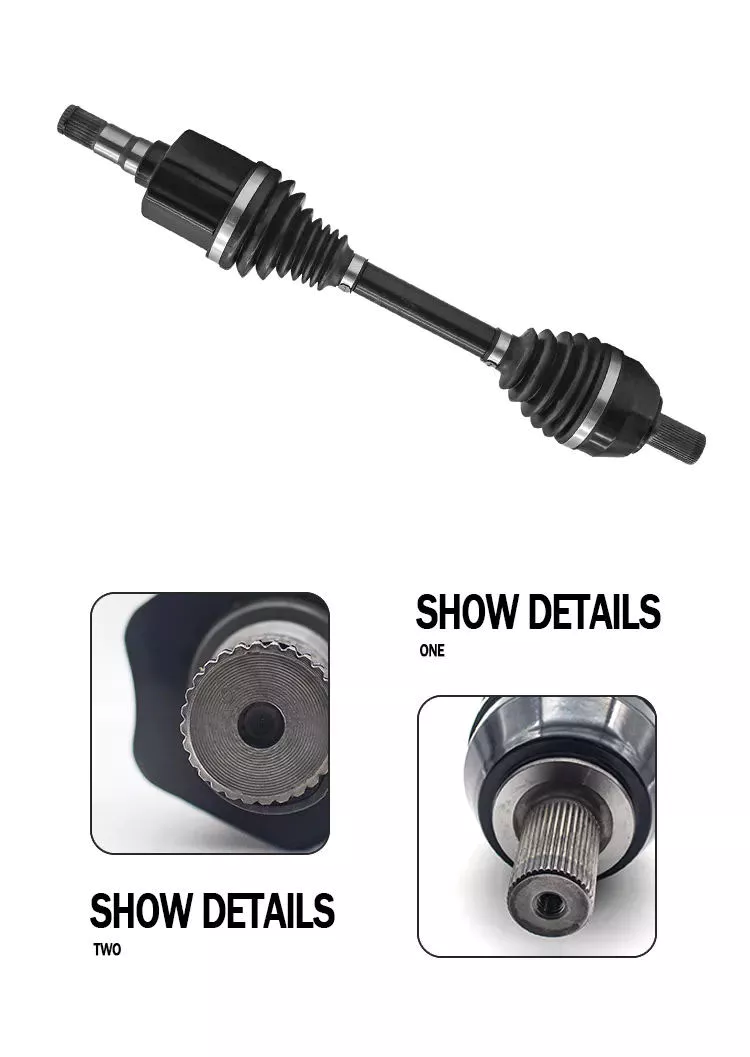
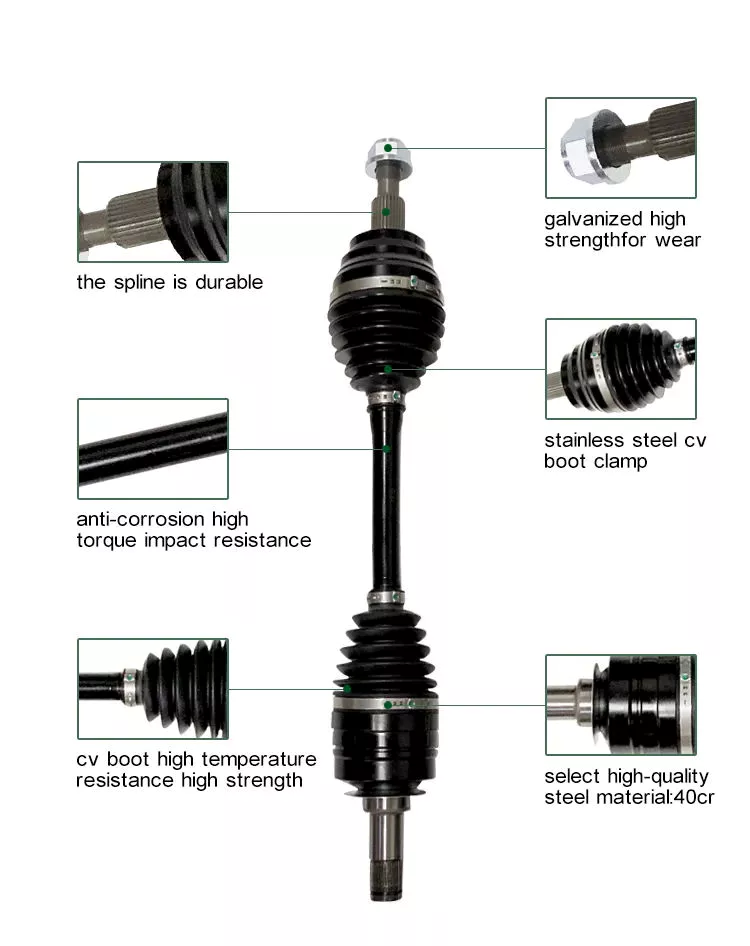
As a professional manufacturer for propeller shaft, we have +1000 items for all kinds of car. At present, our products are mainly sold in North America, Europe, Australia, South Korea, the Middle East and Southeast Asia and other regions, applicable models are European cars, American cars, Japanese and Korean cars, etc.
Our advantage:
1. Full range of products
2. MOQ qty: 1pcs/items
3. Delivery on time
4: Warranty: 1 YEAR
| OE NUMBER | FRC8386;TVB100610 |
| TYPE | LAND ROVER – DISCOVERY |
| MATERIAL | STEEL |
| BALANCE STHangZhouRD | G16 3200RPM |
| After-sales Service: | 1years |
|---|---|
| Condition: | New |
| Color: | Black |
| Certification: | IATF 16949 |
| Type: | Drive Shaft |
| Application Brand: | Land Rover |
| Customization: |
Available
| Customized Request |
|---|
Are there any limitations or disadvantages associated with drive shafts?
While drive shafts are widely used and offer several advantages, they also have certain limitations and disadvantages that should be considered. Here’s a detailed explanation of the limitations and disadvantages associated with drive shafts:
1. Length and Misalignment Constraints:
Drive shafts have a maximum practical length due to factors such as material strength, weight considerations, and the need to maintain rigidity and minimize vibrations. Longer drive shafts can be prone to increased bending and torsional deflection, leading to reduced efficiency and potential driveline vibrations. Additionally, drive shafts require proper alignment between the driving and driven components. Misalignment can cause increased wear, vibrations, and premature failure of the drive shaft or its associated components.
2. Limited Operating Angles:
Drive shafts, especially those using U-joints, have limitations on operating angles. U-joints are typically designed to operate within specific angular ranges, and operating beyond these limits can result in reduced efficiency, increased vibrations, and accelerated wear. In applications requiring large operating angles, constant velocity (CV) joints are often used to maintain a constant speed and accommodate greater angles. However, CV joints may introduce higher complexity and cost compared to U-joints.
3. Maintenance Requirements:
Drive shafts require regular maintenance to ensure optimal performance and reliability. This includes periodic inspection, lubrication of joints, and balancing if necessary. Failure to perform routine maintenance can lead to increased wear, vibrations, and potential driveline issues. Maintenance requirements should be considered in terms of time and resources when using drive shafts in various applications.
4. Noise and Vibration:
Drive shafts can generate noise and vibrations, especially at high speeds or when operating at certain resonant frequencies. Imbalances, misalignment, worn joints, or other factors can contribute to increased noise and vibrations. These vibrations may affect the comfort of vehicle occupants, contribute to component fatigue, and require additional measures such as dampers or vibration isolation systems to mitigate their effects.
5. Weight and Space Constraints:
Drive shafts add weight to the overall system, which can be a consideration in weight-sensitive applications, such as automotive or aerospace industries. Additionally, drive shafts require physical space for installation. In compact or tightly packaged equipment or vehicles, accommodating the necessary drive shaft length and clearances can be challenging, requiring careful design and integration considerations.
6. Cost Considerations:
Drive shafts, depending on their design, materials, and manufacturing processes, can involve significant costs. Customized or specialized drive shafts tailored to specific equipment requirements may incur higher expenses. Additionally, incorporating advanced joint configurations, such as CV joints, can add complexity and cost to the drive shaft system.
7. Inherent Power Loss:
Drive shafts transmit power from the driving source to the driven components, but they also introduce some inherent power loss due to friction, bending, and other factors. This power loss can reduce overall system efficiency, particularly in long drive shafts or applications with high torque requirements. It is important to consider power loss when determining the appropriate drive shaft design and specifications.
8. Limited Torque Capacity:
While drive shafts can handle a wide range of torque loads, there are limits to their torque capacity. Exceeding the maximum torque capacity of a drive shaft can lead to premature failure, resulting in downtime and potential damage to other driveline components. It is crucial to select a drive shaft with sufficient torque capacity for the intended application.
Despite these limitations and disadvantages, drive shafts remain a widely used and effective means of power transmission in various industries. Manufacturers continuously work to address these limitations through advancements in materials, design techniques, joint configurations, and balancing processes. By carefully considering the specific application requirements and potential drawbacks, engineers and designers can mitigate the limitations and maximize the benefits of drive shafts in their respective systems.
Каким образом карданные валы повышают производительность автомобилей и грузовиков?
Карданные валы играют важную роль в повышении производительности легковых и грузовых автомобилей. Они влияют на различные аспекты работы транспортного средства, включая передачу мощности, сцепление с дорогой, управляемость и общую эффективность. Вот подробное объяснение того, как карданные валы повышают производительность легковых и грузовых автомобилей:
1. Подача питания:
Drive shafts are responsible for transferring power from the engine to the wheels, enabling the vehicle to move forward. By efficiently transmitting power without significant losses, drive shafts ensure that the engine’s power is effectively utilized, resulting in improved acceleration and overall performance. Well-designed drive shafts with minimal power loss contribute to the vehicle’s ability to deliver power to the wheels efficiently.
2. Передача крутящего момента:
Карданные валы обеспечивают передачу крутящего момента от двигателя к колесам. Крутящий момент — это вращательная сила, которая приводит автомобиль в движение. Высококачественные карданные валы с надлежащими возможностями преобразования крутящего момента гарантируют эффективную передачу крутящего момента, создаваемого двигателем, на колеса. Это повышает способность автомобиля быстро разгоняться, буксировать тяжелые грузы и преодолевать крутые подъемы, тем самым улучшая общие ходовые характеристики.
3. Сцепление с дорогой и устойчивость:
Карданные валы обеспечивают сцепление с дорогой и устойчивость легковых и грузовых автомобилей. Они передают мощность на колеса, позволяя им оказывать усилие на дорожное покрытие. Это обеспечивает автомобилю сцепление с дорогой, особенно при разгоне или движении по скользкой или неровной местности. Эффективная передача мощности через карданные валы повышает устойчивость автомобиля, обеспечивая сбалансированное распределение мощности на все колеса, улучшая управляемость и маневренность.
4. Управляемость и маневренность:
Карданные валы влияют на управляемость и маневренность автомобилей. Они обеспечивают прямую связь между двигателем и колесами, что позволяет точно контролировать движение и обеспечивает отзывчивость. Хорошо спроектированные карданные валы с минимальным люфтом способствуют более прямой и мгновенной реакции на действия водителя, повышая маневренность и управляемость автомобиля.
5. Снижение веса:
Карданные валы могут способствовать снижению веса автомобилей и грузовиков. Легкие карданные валы, изготовленные из таких материалов, как алюминий или композиты, армированные углеродным волокном, уменьшают общий вес транспортного средства. Снижение веса улучшает соотношение мощности к весу, что приводит к улучшению разгона, управляемости и топливной экономичности. Кроме того, легкие карданные валы уменьшают вращающуюся массу, позволяя двигателю быстрее набирать обороты, что еще больше повышает производительность.
6. Механическая эффективность:
Эффективные карданные валы минимизируют потери энергии при передаче мощности. Благодаря использованию таких элементов, как высококачественные подшипники, уплотнения с низким коэффициентом трения и оптимизированная смазка, карданные валы снижают трение и минимизируют потери мощности из-за внутреннего сопротивления. Это повышает механическую эффективность трансмиссии, позволяя передавать больше мощности на колеса и улучшая общие характеристики автомобиля.
7. Повышение производительности:
Drive shaft upgrades can be a popular performance enhancement for enthusiasts. Upgraded drive shafts, such as those made from stronger materials or with enhanced torque capacity, can handle higher power outputs from modified engines. These upgrades allow for increased performance, such as improved acceleration, higher top speeds, and better overall driving dynamics.
8. Совместимость с модификациями, повышающими производительность:
Модификации, повышающие производительность, такие как модернизация двигателя, увеличение мощности или изменения в трансмиссии, часто требуют совместимых карданных валов. Карданные валы, рассчитанные на более высокие крутящие нагрузки или адаптированные к модифицированным конфигурациям трансмиссии, обеспечивают оптимальную производительность и надежность. Они позволяют автомобилю эффективно использовать возросшую мощность и крутящий момент, что приводит к улучшению характеристик и отзывчивости.
9. Долговечность и надежность:
Прочные и исправно обслуживаемые карданные валы способствуют долговечности и надежности автомобилей и грузовиков. Они рассчитаны на то, чтобы выдерживать нагрузки и напряжения, связанные с передачей мощности. Высококачественные материалы, правильная балансировка и регулярное техническое обслуживание помогают обеспечить бесперебойную работу карданных валов, минимизируя риск поломок или проблем с производительностью. Надежные карданные валы повышают общую производительность, обеспечивая стабильную передачу мощности и минимизируя время простоя.
10. Совместимость с передовыми технологиями:
Карданные валы развиваются параллельно с достижениями в автомобильных технологиях. Они все чаще интегрируются с передовыми системами, такими как гибридные силовые установки, электродвигатели и системы рекуперативного торможения. Карданные валы, разработанные для бесперебойной работы с этими технологиями, максимально повышают их эффективность и производительность, способствуя улучшению общих характеристик автомобиля.
In summary, drive shafts enhance the performance of automobiles and trucks by optimizing power delivery, facilitating torque transfer, improving traction and stability, enhancing handling and maneuverability, reducing weight, increasing mechanical efficiency,and enabling compatibility with performance upgrades and advanced technologies. They play a crucial role in ensuring efficient power transmission, responsive acceleration, precise handling, and overall improved performance of vehicles.
Can you explain the different types of drive shafts and their specific applications?
Drive shafts come in various types, each designed to suit specific applications and requirements. The choice of drive shaft depends on factors such as the type of vehicle or equipment, power transmission needs, space limitations, and operating conditions. Here’s an explanation of the different types of drive shafts and their specific applications:
1. Solid Shaft:
A solid shaft, also known as a one-piece or solid-steel drive shaft, is a single, uninterrupted shaft that runs from the engine or power source to the driven components. It is a simple and robust design used in many applications. Solid shafts are commonly found in rear-wheel-drive vehicles, where they transmit power from the transmission to the rear axle. They are also used in industrial machinery, such as pumps, generators, and conveyors, where a straight and rigid power transmission is required.
2. Tubular Shaft:
Tubular shafts, also called hollow shafts, are drive shafts with a cylindrical tube-like structure. They are constructed with a hollow core and are typically lighter than solid shafts. Tubular shafts offer benefits such as reduced weight, improved torsional stiffness, and better damping of vibrations. They find applications in various vehicles, including cars, trucks, and motorcycles, as well as in industrial equipment and machinery. Tubular drive shafts are commonly used in front-wheel-drive vehicles, where they connect the transmission to the front wheels.
3. Constant Velocity (CV) Shaft:
Constant Velocity (CV) shafts are specifically designed to handle angular movement and maintain a constant velocity between the engine/transmission and the driven components. They incorporate CV joints at both ends, which allow flexibility and compensation for changes in angle. CV shafts are commonly used in front-wheel-drive and all-wheel-drive vehicles, as well as in off-road vehicles and certain heavy machinery. The CV joints enable smooth power transmission even when the wheels are turned or the suspension moves, reducing vibrations and improving overall performance.
4. Slip Joint Shaft:
Slip joint shafts, also known as telescopic shafts, consist of two or more tubular sections that can slide in and out of each other. This design allows for length adjustment, accommodating changes in distance between the engine/transmission and the driven components. Slip joint shafts are commonly used in vehicles with long wheelbases or adjustable suspension systems, such as some trucks, buses, and recreational vehicles. By providing flexibility in length, slip joint shafts ensure a constant power transfer, even when the vehicle chassis experiences movement or changes in suspension geometry.
5. Double Cardan Shaft:
A double Cardan shaft, also referred to as a double universal joint shaft, is a type of drive shaft that incorporates two universal joints. This configuration helps to reduce vibrations and minimize the operating angles of the joints, resulting in smoother power transmission. Double Cardan shafts are commonly used in heavy-duty applications, such as trucks, off-road vehicles, and agricultural machinery. They are particularly suitable for applications with high torque requirements and large operating angles, providing enhanced durability and performance.
6. Composite Shaft:
Composite shafts are made from composite materials such as carbon fiber or fiberglass, offering advantages such as reduced weight, improved strength, and resistance to corrosion. Composite drive shafts are increasingly being used in high-performance vehicles, sports cars, and racing applications, where weight reduction and enhanced power-to-weight ratio are critical. The composite construction allows for precise tuning of stiffness and damping characteristics, resulting in improved vehicle dynamics and drivetrain efficiency.
7. PTO Shaft:
Power Take-Off (PTO) shafts are specialized drive shafts used in agricultural machinery and certain industrial equipment. They are designed to transfer power from the engine or power source to various attachments, such as mowers, balers, or pumps. PTO shafts typically have a splined connection at one end to connect to the power source and a universal joint at the other end to accommodate angular movement. They are characterized by their ability to transmit high torque levels and their compatibility with a range of driven implements.
8. Marine Shaft:
Marine shafts, also known as propeller shafts or tail shafts, are specifically designed for marine vessels. They transmit power from the engine to the propeller, enabling propulsion. Marine shafts are usually long and operate in a harsh environment, exposed to water, corrosion, and high torque loads. They are typically made of stainless steel or other corrosion-resistant materials and are designed to withstand the challenging conditions encountered in marine applications.
It’simportant to note that the specific applications of drive shafts may vary depending on the vehicle or equipment manufacturer, as well as the specific design and engineering requirements. The examples provided above highlight common applications for each type of drive shaft, but there may be additional variations and specialized designs based on specific industry needs and technological advancements.


editor by CX 2023-10-21