⚙️ Core Technology Quick Read
Forage blowers present one of the most demanding operational environments for mechanical power transmission. The instantaneous shock loads generated when heavy, moisture-laden silage hits the blower fan require a driveline system capable of absorbing severe torsional vibration.
- ✔ Dynamic Load Capacity: Operating consistently at 540 or 1000 RPM, translating up to 150 HP directly to the blower flywheel.
- ✔ Overload Protection: Integrated Shear Bolt or Friction Slip Clutch mechanisms calibrated to disengage at 2500 Nm torque peaks, preventing catastrophic implement gearbox failure.
- ✔ Articulation Constraints: Standard joints support 15-degree continuous operational angles, with Wide-Angle Constant Velocity (CV) options accommodating 80-degree headland turns without power interruption.
Working Principle of PTO Shafts in Forage Blowers
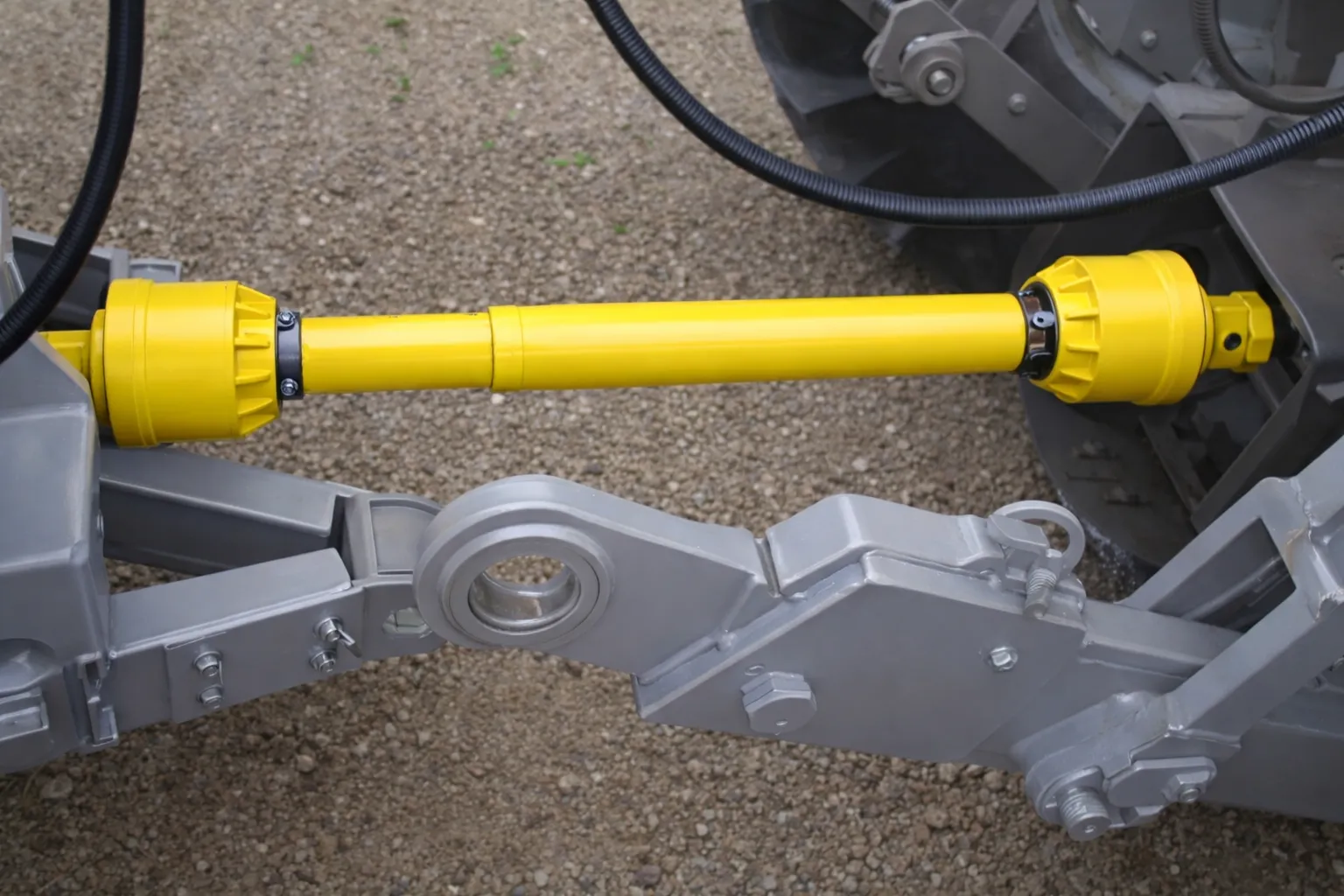
The pto shaft serves as the critical kinetic bridge between the tractor’s power take-off stub and the input shaft of the forage blower. When engaged, rotational energy is transmitted through the front yoke, along the telescoping profile tubes (typically triangular, lemon, or star-profiled to handle high lateral torque without twisting), and into the rear implement yoke.
In forage blowing applications, the material feed is rarely uniform. Wet alfalfa or heavy corn silage creates sudden surges in the blower housing. When a slug of material hits the spinning fan blades, kinetic resistance spikes instantly. The PTO drive shaft must absorb this shock. Our shafts utilize specialized 20CrMnTi alloy cross journals and hardened profile tubes to prevent twisting (plastic deformation) during these micro-second torque spikes.
The slip clutch, positioned at the implement end, acts as the ultimate failsafe. If the blower fan jams, the clutch plates slip against each other, safely dissipating the rotational energy as heat rather than snapping the tractor’s internal PTO gearing or the blower’s main shaft.

Detailed Engineering Specifications
Selecting the correct driveline requires strict adherence to mechanical specifications. The following table outlines the extensive parameters configurable for our heavy-duty series designed for Australian agricultural demands.
| Parameter | Standard Value / Type | Customization Range |
|---|---|---|
| Continuous Torque Rating | 850 Nm – 1200 Nm | Up to 4500 Nm (Series 9/10) |
| Dynamic Shock Load Capacity | 2500 Nm | Specific to Clutch Setting |
| Operating RPM | 540 / 1000 RPM | Dual-speed balanced available |
| Tractor Yoke Profile | 1-3/8″ 6-Spline (Push Pin) | 1-3/4″ 20-Spline, 1-3/8″ 21-Spline |
| Implement Yoke Profile | 1-3/8″ 6-Spline (Clamp) | Keyed bore, Flange, Tapered |
| Cross Journal Size | 30.2mm x 92mm | 22x54mm to 42×104.5mm |
| Telescopic Tube Shape | Triangular / Lemon | Star, Splined, Hexagonal |
| Tube Wall Thickness | 4.0mm (Inner) / 4.5mm (Outer) | Up to 6.5mm for extreme duty |
| Safety Guard Standard | ISO 5674 Compliant Shield | Heavy-duty UV resistant cone |
| Lubrication Interval | 50 Hours (Standard) | 250 Hours (Extended Lube Kits) |
| Max Working Angle (Standard) | 15° – 25° | Dependent on RPM |
| Max Working Angle (CV Joint) | 80° (Intermittent) | 50° Continuous |
| Overload Protection Device | Friction Clutch (4 disc) | Shear bolt, Ratchet clutch, Overrunning |
| Clutch Setting Range | 900 – 1500 Nm | Fully adjustable via spring tension |
| Material (Yoke) | Forged Steel C45 | Ductile Iron options |
| Material (Cross Journal) | Alloy Steel 20CrMnTi | Case hardened 58-62 HRC |
| Bearing Type | Needle Roller | Triple sealed options |
| Retracted Length (Lz) | 1000mm / 1210mm | 600mm to 2500mm |
| Extended Length (Lmax) | 1500mm / 1800mm | Maintain 1/3 overlap rule |
| Operating Temperature | -20°C to +80°C | Extreme cold/heat grease specs |
| Surface Treatment | Black Oxide & Paint | Galvanized, Zinc plated available |
| Dynamic Balancing | G16 Standard | G6.3 for high-speed shafts |
| Guard Bearing Type | Nylon Collar | Teflon coated rings |
| Locking Mechanism | Quick-Disconnect Pin | Ball collar, Slide collar |
| Test Standard Conformity | ISO 500-1 / AS 1121.1 | CE, AS/NZS compliance |
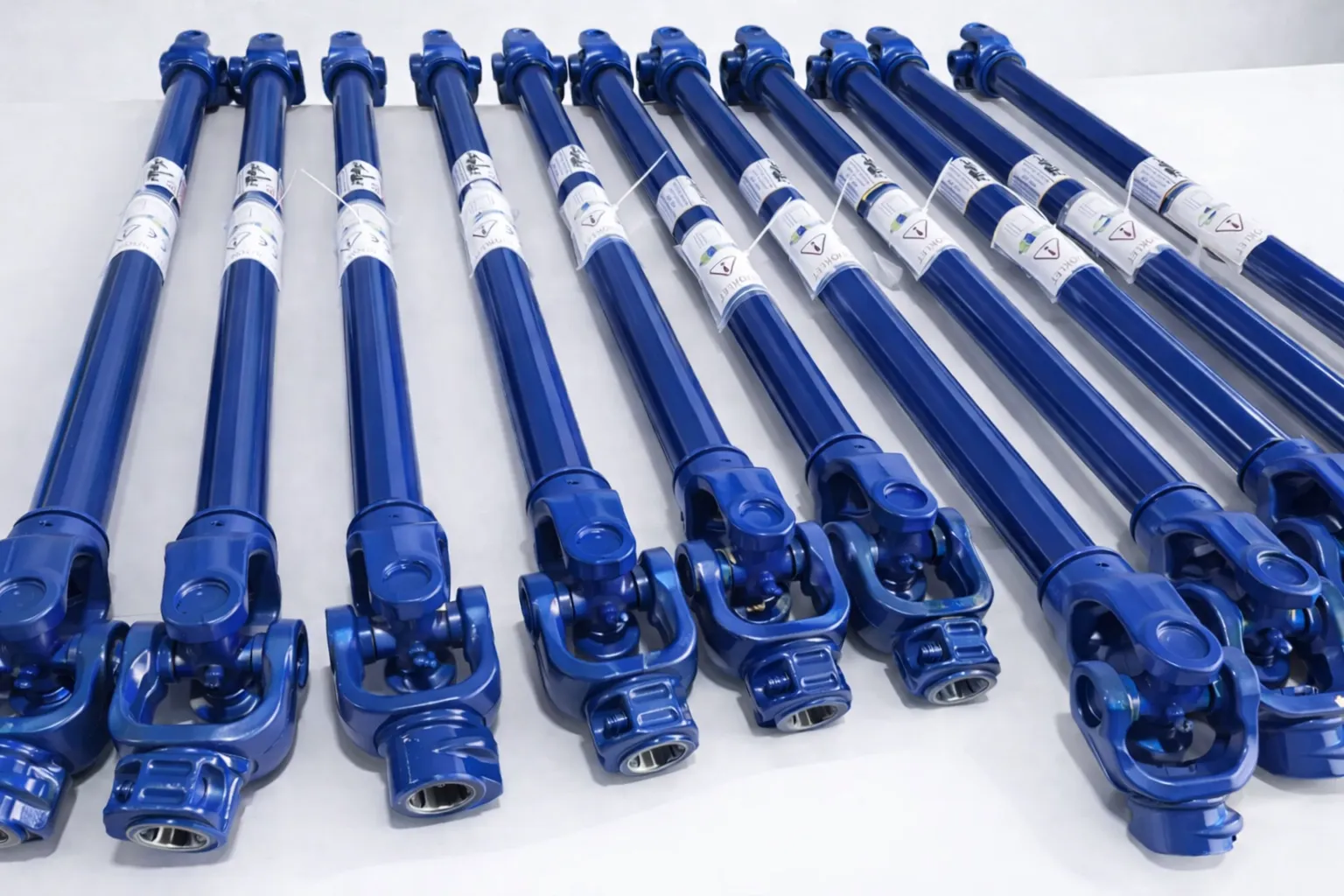
Performance Advantages: EVER-POWER vs. Inferior Alternatives
The Australian agricultural sector cannot afford downtime. When a forage blower jams and snaps an inferior shaft, the cost is not just the replacement part, but the hours of lost harvesting time during critical weather windows. Our engineering focus eliminates these failure points.
- Forged vs. Cast Yokes: Many low-cost shafts utilize cast iron yokes which are brittle and prone to catastrophic shattering under impact loads. EVER-POWER utilizes closed-die forged C45 steel, providing 300% greater tensile strength and superior fatigue resistance.
- Tube Wall Integrity: While standard tubes might measure 3.2mm in thickness, our heavy-duty series implements a minimum 4.0mm to 4.5mm wall. This prevents the “ballooning” or twisting effect that occurs when a high-horsepower tractor suddenly encounters a blocked blower fan.
- Advanced Seal Technology: Dust and chaff are the enemies of universal joints. We employ multi-lip Viton seals on our cross journals, ensuring that the lithium-based extreme pressure grease stays in the needle bearings while aggressively keeping out abrasive silicates common in Australian soils.
New South Wales Extreme Working Condition Research
Engineer’s Field Notes: Overcoming Silage Blockages in Wagga Wagga
“During the 2024 harvest season in the Riverina district, a large-scale dairy contractor was experiencing repeated drive shaft failures on their forage blowers. The problem stemmed from the high moisture content of the lucerne crop, causing rapid blockages in the blower chute. Their existing shafts, lacking proper clutch calibration, were twisting the profile tubes within 48 hours of installation.”
The Implementation: We deployed our Series 8 Heavy-Duty PTO Shaft equipped with an oversized, 4-plate friction slip clutch. We precisely calibrated the spring tension to slip at 1450 Nm—just below the shear threshold of the blower’s input shaft, but high enough to maintain consistent blowing velocity. We also specified a star-profile tube geometry, which offers superior contact area over traditional lemon profiles, distributing the torsional load more effectively.
The Result: Zero driveline failures recorded over the subsequent 800 hours of operation. The clutch engaged correctly during three distinct blockage events, protecting the machinery and requiring only a minor cool-down period before resuming operations.
Queensland High-Temperature Tolerance Testing
In Toowoomba, QLD, ambient temperatures during harvest can exceed 40°C. Standard driveline grease liquefies and escapes the cross journal seals under continuous operation. For a contractor running stationary forage blowers to fill 80-foot upright silos, this led to premature U-joint seizure. We transitioned them to shafts pre-packed with a high-viscosity, moly-fortified synthetic grease, rated for continuous boundary lubrication up to 180°C. Combined with our double-lip seal design, maintenance intervals were extended from daily greasing to weekly checks.
Gippsland, Victoria: Handling Reversing Loads
A dairy operation in VIC utilized a blower setup that required frequent, aggressive reversing to clear minor jams. Standard threaded shear bolts were suffering from metal fatigue and shearing prematurely without an actual overload event. By upgrading the system to a ratcheting radial pin clutch, the driveline could absorb the bidirectional shock pulses while providing an audible warning to the tractor operator when an obstruction occurred, saving hours in shear bolt replacement.
Margaret River, WA: Custom Length Adaptations
In Western Australia, a customer paired an older, imported forage blower with a modern, high-clearance tractor. The geometry resulted in a severely short driveline requirement, but with extreme operating angles during lifting. We manufactured a custom, ultra-short drive shaft incorporating a wide-angle CV joint on the tractor side. This allowed the full 120 HP transfer without the destructive vibration (chatter) normally associated with short shafts operating beyond 15 degrees.
Mount Gambier, SA: High-Yield Dairy Safety Upgrades
In South Australia, safety inspections highlighted aging, unshielded shafts on several farm implements. We supplied a complete fleet upgrade utilizing our fully enclosed, UV-stabilized ISO 5674 compliant safety guards. The unique access collars allowed technicians to grease the U-joints without completely removing the shield—a critical factor in ensuring maintenance is actually performed in the field.
Australian Safety Regulations & Compliance
Operating unguarded or improperly specified PTO drivelines is a major safety hazard and a compliance violation in Australia. Safe Work Australia and individual state regulators (e.g., SafeWork NSW, WorkSafe Victoria) mandate strict adherence to machinery safety standards.
- AS 1121.1: Agricultural tractor power take-offs – standard specifies the dimensions and clearance requirements.
- Guarding Requirements: The PTO shaft must be guarded along its entire length. The guard must remain stationary while the shaft rotates inside it, achieved through high-quality bearing rings connecting the guard to the yokes.
- Master Shield Interlock: The tractor’s master shield and the implement’s Input Connection (PIC) shield must overlap the PTO drive shaft guard to prevent any exposure of the rotating universal joints.
All EVER-POWER agricultural drive shafts supplied to the Australian market are fitted with robust, high-impact polymer guards equipped with anti-rotation chains to ensure absolute compliance and operator safety.
Brand Compatibility & Replacement Guide
Our driveline systems are geometrically and mechanically designed to serve as direct replacements for the world’s most common OEM components. Whether your blower originally came equipped with European or North American standard shafts, we provide precise matching.
| Reference Brand | Common Series Equivalent | Typical Tube Profile | EVER-POWER Replacement Series |
|---|---|---|---|
| Comer Industries | V/T Series, Series 60, Series 80 | Triangular / Star | EP-T Series (Perfect geometry match) |
| Walterscheid (GKN) | W Series (W2300, W2400) | Lemon / Star | EP-W Series |
| Bondioli & Pavesi | SFT Series, Global Series 6/8 | Triangular | EP-B Series |
| Weasler | AW Series, Metric Series | Rectangular / Lemon | EP-M Series |
Dynamics System Selection Guide
Choosing the incorrect shaft leads to either immediate mechanical failure or dangerous operational conditions. Follow this strict engineering protocol when specifying a replacement for your forage processing equipment.
Step 1: Determine Transmitted Power (HP / kW) & RPM
Check your tractor’s PTO output. Is it 540 RPM or 1000 RPM? A shaft designed for 50 HP at 540 RPM can safely handle 75 HP at 1000 RPM due to lower torque at higher speeds. Never mismatch speed ratings.
Step 2: Identify Connection Profiles (Yokes)
Measure the tractor stub (e.g., 1-3/8″ diameter with 6 splines). Then measure the implement input shaft. It may be a matching spline, a smooth bore with a keyway, or a shear-bolt flange.
Step 3: Measure Cross Journal Dimensions
To identify the “Series” or size of the shaft, remove the bearing cups from the cross (U-joint) and measure the diameter of the cup and the overall width of the cross. For example, 30.2mm x 92mm typically indicates a Series 6 metric shaft.
Step 4: Establish the Closed Length (Lz)
Measure from the center of the locking pin on the tractor yoke to the center of the locking mechanism on the implement yoke while the shaft is fully collapsed. Rule of thumb: In the working position, the telescoping tubes must overlap by at least one-third of their total length.
Step 5: Select Safety Implements
For a forage blower, a Friction Slip Clutch or an Overrunning Clutch (Freewheel) is mandatory. The heavy flywheel effect of the blower fan will continue to push the tractor forward if you disengage the PTO clutch without a freewheel device.

Specific Installation Protocol for Blower Applications
Improper installation guarantees premature failure. Technicians must execute the following sequence:
- Preparation: Clean both the tractor PTO stub and the implement input shaft thoroughly with a wire brush to remove rust and debris. Apply a light film of anti-seize compound.
- Length Verification: Attach the two halves of the driveline to the tractor and implement independently. Bring the tractor to the closest possible operating point to the blower (maximum turning angle or maximum lift). Hold the two shaft halves parallel. There must be at least 25mm (1 inch) of clearance between the end of the profile tube and the root of the opposing yoke. If they bottom out, the thrust will destroy the internal tractor bearings.
- Cutting to Length: If the shaft is too long, mark the overlap. Cut equal amounts off both the outer and inner shield tubes, followed by equal amounts off the outer and inner profile steel tubes. Deburr all edges meticulously.
- Clutch Positioning: The heavy slip clutch or shear-bolt mechanism must always be mounted on the implement (blower) side, never on the tractor side. This reduces the spinning mass on the tractor’s output bearing.
- Engagement Check: Depress the locking pin fully, slide the yoke onto the splines until the pin clicks and locks into the annular groove of the stub shaft. Pull back forcefully to verify lock.
- Guard Securing: Attach the anti-rotation chains to a fixed point on the tractor chassis and the implement frame. The chains should have slight slack but not enough to wrap around the shaft.
Operational Troubleshooting & Diagnostics
Rapid diagnosis of vibration or noise can save major driveline components from destruction.
Severe Vibration under Load
Cause: The cross journals are out of phase. If the two-piece shaft was separated and reassembled incorrectly, the yokes are no longer aligned. Alternatively, extreme operating angles exceeding 15° are causing velocity fluctuations.
Solution: Disconnect the shaft, align the indicator marks on the profile tubes, and reassemble ensuring the inner and outer yokes are in the exact same plane. Reduce the operating angle.
Clutch Smoking or Excessive Slipping
Cause: The friction plates have glazed over, or the tension springs have lost their compressive force due to age or overheating. Alternatively, the blower housing is permanently jammed.
Solution: Completely disassemble the clutch. Sand the friction plates to remove glazing. Check the free length of the compression springs against factory specifications. Re-torque the bolts sequentially to the exact specified length to achieve the correct slipping torque.
Rapid Cross Journal (U-Joint) Wear
Cause: Insufficient lubrication, contaminated grease, or continuous operation at angles greater than 25 degrees causing needle bearing brinelling.
Solution: Replace the cross journal kit. Ensure purge-greasing is performed every 50 hours until fresh grease is visible exiting all four bearing seals. Purge dirt outward.
Telescopic Tubes Seizing
Cause: Lack of lubrication between the inner and outer profile tubes, leading to galling or twisting deformation.
Solution: Separate the halves, inspect for twisting. If straight, thoroughly clean, apply high-pressure lithium grease to the entire length of the inner tube, and reassemble.
Frequently Asked Technical Questions
1. What is the difference between a shear bolt and a slip clutch for a forage blower?
A shear bolt acts as a mechanical fuse; it physically snaps under high torque, disconnecting power immediately. It requires manual replacement after every overload. A friction slip clutch allows the plates to slip during a torque spike and automatically re-engages when the load normalizes, making it far superior for high-blockage implements like blowers.
2. How often should I grease the universal joints?
Standard operational protocol dictates greasing the U-joints every 50 hours of operation. However, in extremely dusty conditions or heavy continuous load (like blowing wet silage), daily greasing or every 8-10 hours is strongly recommended to flush out contaminants.
3. Can I use a 540 RPM shaft on a 1000 RPM output?
No. Shafts are balanced and engineered for specific rotational dynamics. Operating a 540 RPM shaft at 1000 RPM can induce severe harmonic vibrations, leading to catastrophic failure of the shaft and potential damage to the tractor.
4. Why do the telescopic tubes need to overlap so much?
A minimum overlap of 1/3 of the total length is required to distribute the lateral torque forces. If the overlap is too short, the tubes will act as a lever against each other, causing them to bend, jam, or break apart during rotation.
5. What does ‘out of phase’ mean?
Phasing refers to the alignment of the inner yokes on the two ends of the shaft. They must be perfectly parallel (in the same plane). If they are misaligned, the non-constant velocity nature of standard U-joints will cause severe rotational vibrations, shaking the implement violently.
6. Is an overrunning clutch necessary?
Yes, highly recommended for forage blowers. The large, heavy fan acts like a flywheel. When you disengage the tractor PTO, the kinetic energy of the fan will try to drive the tractor forward through the driveline. An overrunning clutch (freewheel) allows the fan to spin down safely without transferring energy back to the tractor.
7. What profile tube shape is strongest?
Star and splined profiles offer the highest torque transmission due to multiple contact faces, followed closely by triangular profiles. Lemon profiles are standard for medium duties, but triangular and star are preferred for heavy, shock-loading applications like silage processing.
8. How do I know if my slip clutch is working properly?
Prior to each season, you should “slip” the clutch intentionally. Loosen the tension springs, run the implement to induce slipping for a few seconds to clean the rust off the plates, then re-tighten the springs to the exact factory measurement length.
9. Why is the plastic guard chained?
The chains hold the safety shield stationary while the metal shaft spins inside at 540/1000 RPM. Without the chains, friction would cause the shield to spin with the shaft, defeating the safety purpose entirely and creating an entanglement hazard.
10. Can I replace just the cross journal, or do I need a whole new shaft?
You can replace individual cross journals (U-joints) provided the yokes are not worn out or stretched. If the yoke “ears” have ovalized holes, a new U-joint will not fit tightly and will fail immediately. In that case, the yoke or entire shaft must be replaced.
Complete Power Transmission Systems: Agricultural Gearboxes
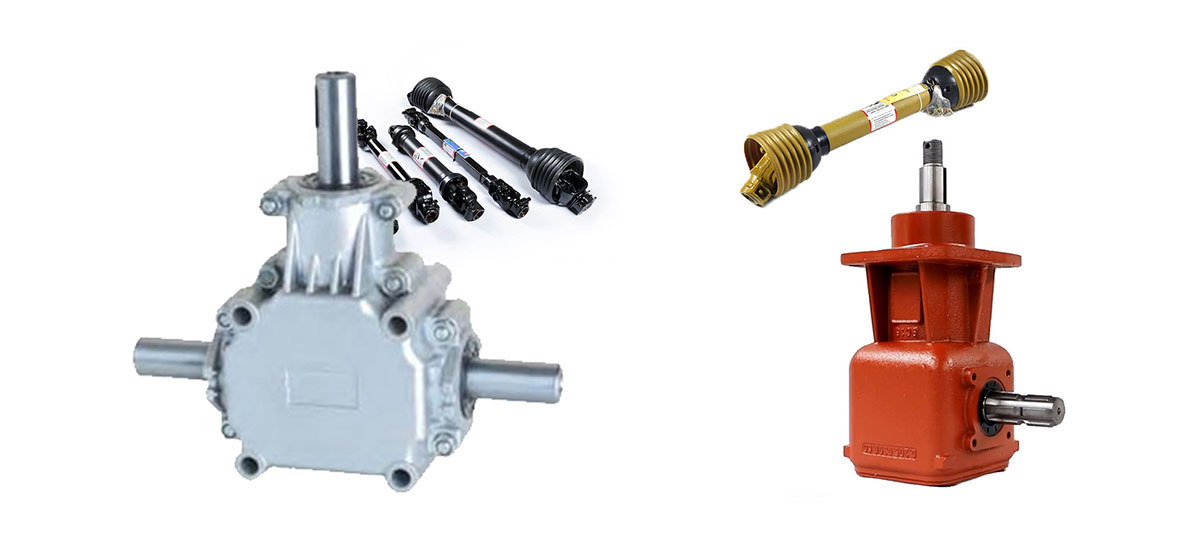
At EVER-POWER, we understand that the driveline is only one half of the kinetic equation. The power delivered by our heavy-duty shafts must be safely and efficiently reduced, redirected, and applied by the implement’s gearbox. A robust drive shaft connected to an inferior gearbox simply shifts the point of mechanical failure. This is why we are a leading global manufacturer of premium agricultural gearboxes, designing holistic power transmission systems perfectly matched in torque capacity and operational lifecycle.
Engineering the Perfect Match
Agricultural gearboxes, whether Bevel, Parallel-Shaft, or Planetary designs, operate under the same brutal conditions as the PTO shafts. When a forage blower encounters a severe blockage, the kinetic shockwave travels instantaneously from the blower fan, through the gearbox output shaft, across the gear teeth, out the input shaft, and into the PTO driveline. If the system is not engineered holistically, gear teeth will shear.
Metallurgy & Heat Treatment
Our gearboxes utilize crown-wheel and pinion gears forged from 20CrMnTi alloy steel. The critical engineering differentiator lies in our proprietary heat treatment process. Through precision carburizing and quenching in CNC-controlled atmospheric furnaces, we achieve a case hardness of 58-62 HRC on the gear teeth surface to withstand extreme friction, while maintaining a ductile core of 35-40 HRC. This softer core allows the gear tooth to flex microscopically under impact loads—like a wet clump of silage hitting the fan—preventing the tooth from snapping under brittle fracture.
Precision Machining & Assembly
Gear backlash (the microscopic space between meshing gear teeth) is critical. Too tight, and the gearbox overheats due to extreme friction; too loose, and the gears slam together during reversing loads, causing rapid wear. EVER-POWER utilizes multi-axis CNC milling centers to ensure gear housing tolerances are held to within 0.01mm. We assemble our T-Box and L-Box configurations using premium Tapered Roller Bearings capable of handling massive radial and axial thrust loads.
Furthermore, housing integrity is paramount. We cast our gearbox housings from high-grade nodular iron (ductile iron), which absorbs vibration far better than standard grey cast iron or aluminum, minimizing harmonic resonance during high-speed 1000 RPM operation.
Sealing the System: The Australian agricultural environment is unforgiving. Fine red dust acts as a lapping compound if it enters a gearbox. We utilize double-lip, spring-loaded Viton oil seals running against micro-polished shaft surfaces. This ensures that the EP90 gear oil remains pure and inside the housing, while dirt, water, and chaff remain outside. Whether you are building rotary slashers, flail mowers, post-hole diggers, or high-capacity forage blowers, integrating an EVER-POWER agricultural gearbox with our premium drivelines guarantees a power transmission system capable of outlasting the implement itself.
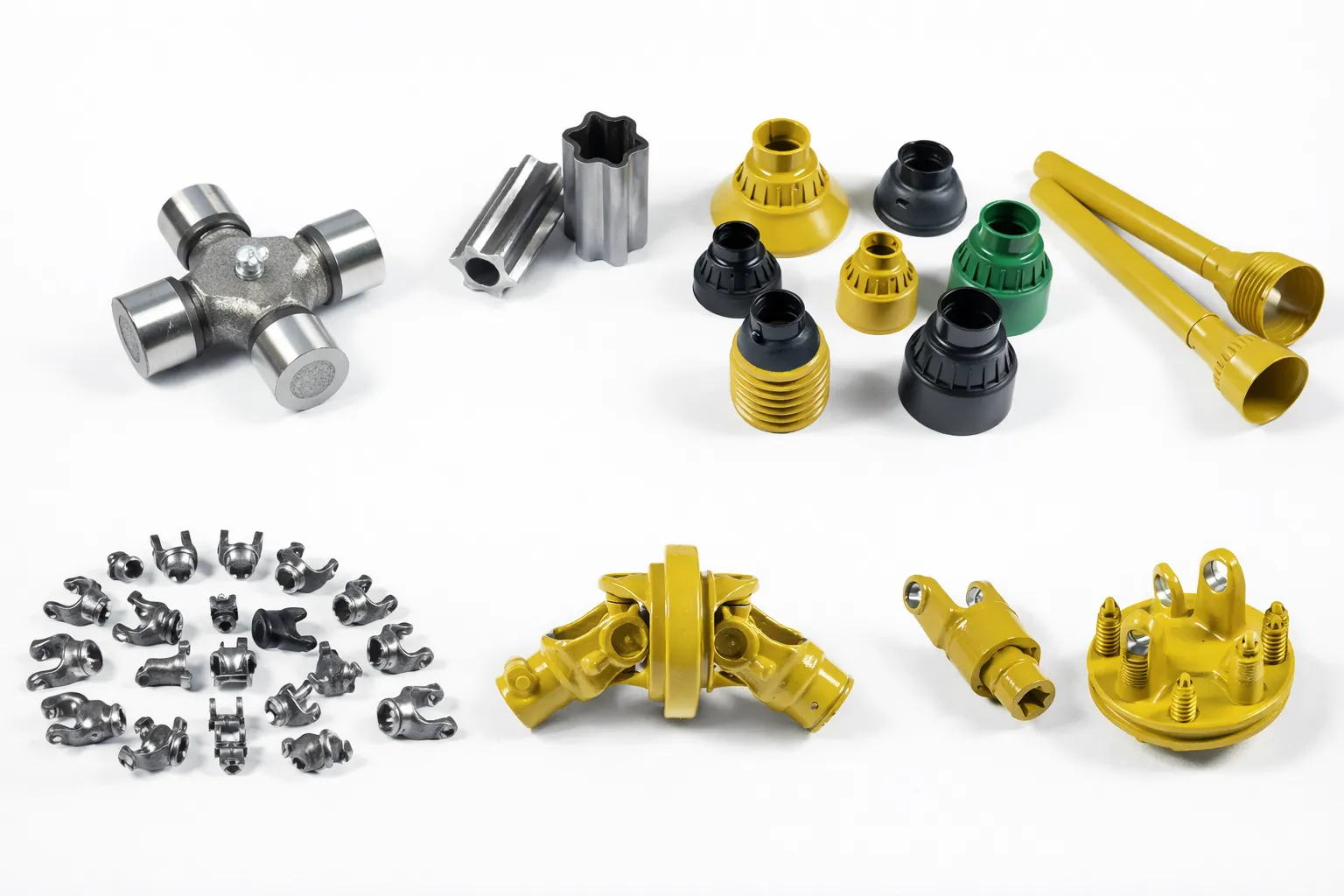
Complementary Mechanical Components & Spare Parts
To support OEM manufacturing and heavy maintenance operations, we produce a comprehensive catalog of power transmission hardware.

Manufacturing Excellence & Custom Engineering
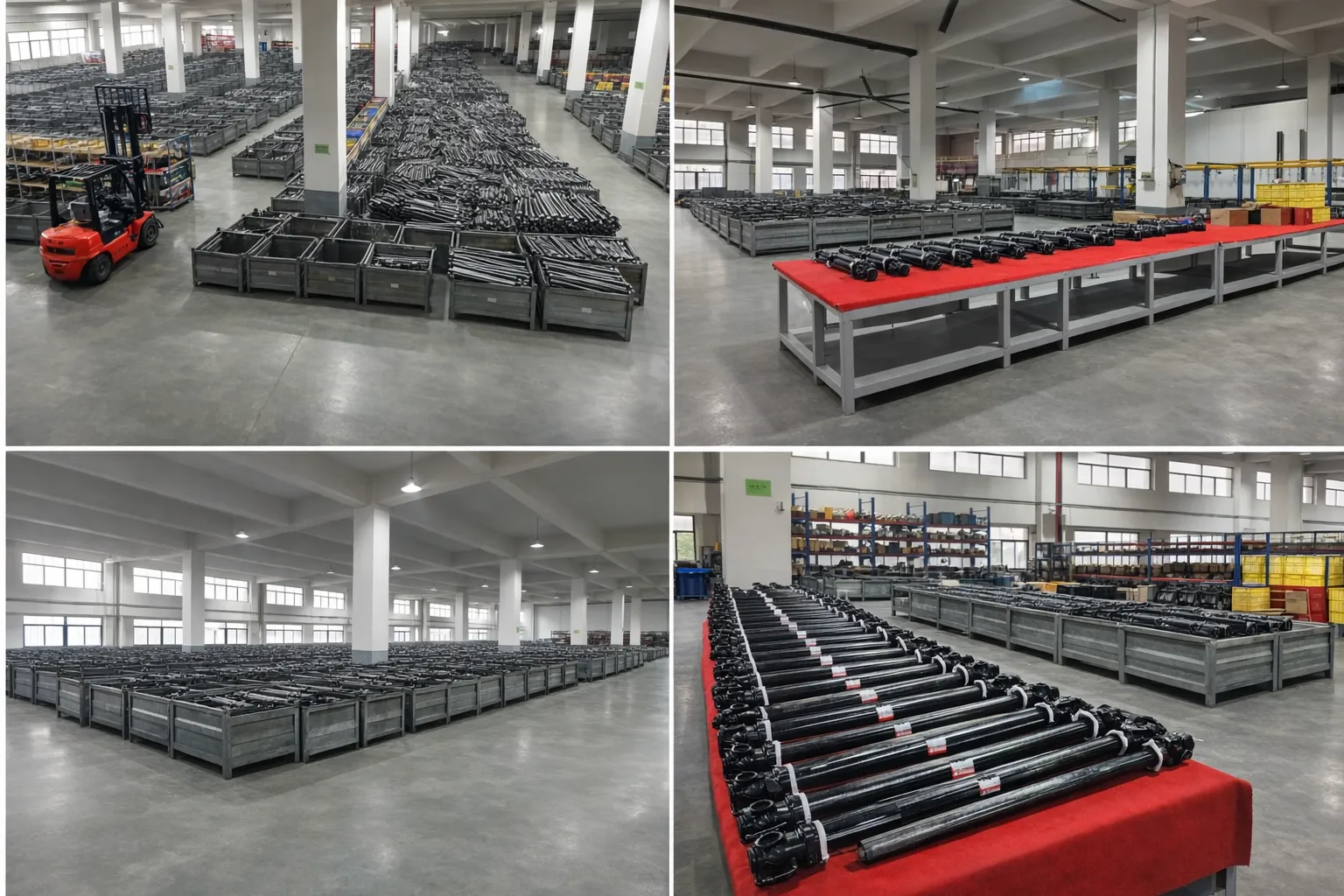
EVER-POWER is not merely an assembly plant; we are a primary metallurgical and mechanical engineering facility. Operating over 300,000 square feet of advanced CNC machining, forging, and dynamic balancing lines, we control the quality of every component from raw steel billet to the final coat of protective paint.
While we maintain massive inventories of standardized shafts compatible with global brands, our true strength lies in Non-Standard Customization. Do you require a unique splined yoke? A specific high-torque ratchet clutch? An extended-length shaft for a specialized trailed implement? We invite OEM manufacturers, large-scale agricultural contractors, and specialized dealers to provide drawings, specifications, or samples.