Przewodnik techniczny dotyczący wału odbioru mocy w sadzarce do ziemniaków
Zaprojektowany z myślą o środowisku australijskiej lotnej czerwonej ferrozoli i piaszczystej gliny. Zapewnia maksymalne przenoszenie momentu obrotowego i wyjątkową ochronę przed wibracjami dla Twojego ciągnika i sprzętu do sadzenia.
Podsumowanie wyboru podstawowego układu napędowego: Wymagania dotyczące WOM w sadzarce do ziemniaków
W operacjach sadzenia ziemniaków wałek odbioru mocy ciągnika odpowiada za napędzanie mechanizmów dozujących nasiona, zbiorników na nawóz i tarcz okrywowych. Proces ten wymaga absolutnej stabilności operacyjnej; każda chwilowa zmiana obrotów może spowodować przeskakiwanie nasion lub podwójne wysiewanie. Po przeanalizowaniu ponad 500 punktów danych z gospodarstw w Tasmanii i Wiktorii odkryliśmy, że tradycyjne wały napędowe charakteryzują się gwałtownym wzrostem zużycia czopów poprzecznych w przypadku zetknięcia z ubitą glebą z powodu nagłych wzrostów oporu.
Ever-power gruntownie przeprojektował wał napędowy WOM Aby przeciwdziałać tym specyficznym warunkom, wykorzystujemy kute, poprzeczne czopy ze stali stopowej 20CrMnTi w połączeniu z opatentowanym procesem obróbki cieplnej (osiągającym twardość powierzchniową HRC 58-62). Dzięki temu, niezależnie od prędkości obrotowej 540 obr./min, czy 1000 obr./min, skoki momentu obrotowego spowodowane uderzeniami twardych brył są bezpiecznie absorbowane przez zintegrowane sprzęgło poślizgowe, precyzyjnie chroniąc przekładnie ciągnika i narzędzia przed katastrofalną awarią.
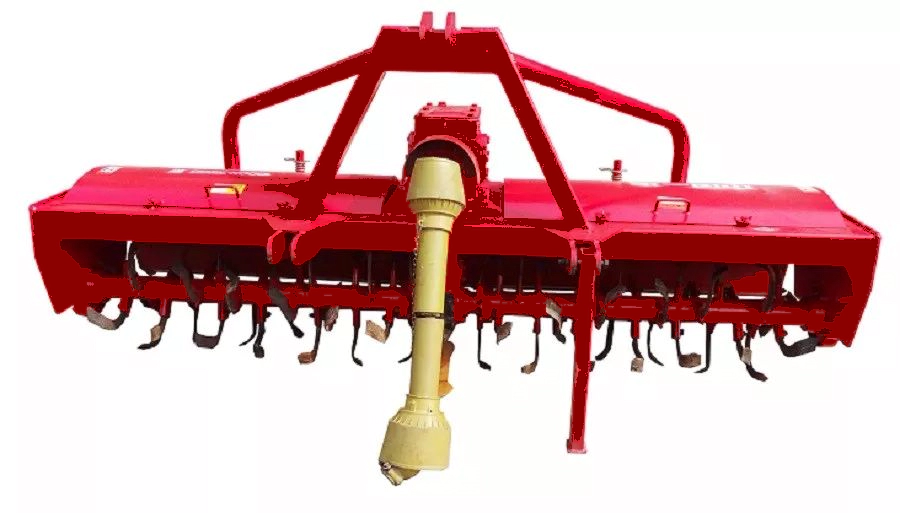
Przykłady zastosowań w lokalnym przemyśle australijskim i notatki inżynierów terenowych
📍 Ballarat, Victoria: Wyzwanie z ciężkimi glinianymi nawierzchniami i dużym momentem obrotowym
Problem klienta: Sadzarka do ziemniaków klienta z czterema rzędami była często narażona na ścinanie wału napędowego podczas pracy na bardzo lepkiej glinie po ulewnych deszczach, co skutkowało poważnymi przestojami.
📍 Devonport, Tasmania: ciągła praca 24/7
Problem klienta: Okres sadzenia wymagał nieprzerwanej pracy przez 24 godziny na dobę, co powodowało zatarcie się standardowych łożysk przegubów uniwersalnych z powodu braku środka smarującego i przegrzania.
📍 Bundaberg, Queensland: Wysoka wilgotność i korozja solna
Problem klienta: Działalność rolnicza na wybrzeżu wiązała się z intensywnym działaniem soli. Wałki odbioru mocy i osłony zabezpieczające konkurencji rdzewiały i stawały się kruche w ciągu zaledwie dwóch miesięcy.
📍 Manjimup, Australia Zachodnia: Wnikanie mikropyłu
Problem klienta: Sadzenie w porze suchej wygenerowało ogromne chmury pyłu. Cząsteczki piasku kwarcowego ominęły standardowe uszczelki, blokując rury teleskopowe.
📍 Mount Gambier, Australia Południowa: Precyzyjne sadzenie antywibracyjne
Problem klienta: Drgania układu napędowego o prędkości 540 obr./min. przenoszone były na płyty rozprowadzające nasiona, co powodowało nierównomierne rozmieszczenie nasion ziemniaków i zmniejszoną gęstość plonu.
Specyfikacja techniczna rdzenia wału odbioru mocy sadzarki do ziemniaków
| Nazwa parametru | Specyfikacja standardowa | Zakres niestandardowy / opcjonalny |
|---|---|---|
| 1. Prędkość nominalna | 540 obr./min | Kompatybilny z 1000 obr./min |
| 2. Dynamiczna nośność momentu obrotowego | 830 Nm (odpowiednik serii 6) | 460 Nm – 2400 Nm (seria 4 do 8) |
| 3. Maksymalny moment obrotowy amortyzatora | 1250 Nm | Do 3600 Nm (kucie o dużej wytrzymałości) |
| 4. Jarzmo końcowe ciągnika (wielowypustowe) | 1-3/8″ 6-spline (szybkozłącze) | 1-3/8″ 21-rowkowy, 1-3/4″ 20-rowkowy |
| 5. Wdrożenie połączenia końcowego | Zacisk 6-spline 1-3/8″ | Otwór prosty z rowkiem wpustowym (30 mm/35 mm) |
| 6. Wymiary poprzecznego czopu | 30,2 mm x 92 mm | 23,8×61,3 mm do 34,9×106 mm |
| 7. Materiał złącza U | Stal nawęglana 20CrMnTi | Specjalny stop do temperatur poniżej zera |
| 8. Profil rury teleskopowej | Rurka profilowana cytrynowa | Wał trójkątny, gwiaździsty lub wielowypustowy |
| 9. Grubość ścianki rury wewnętrznej | 4,0 mm | 3,0 mm – 5,5 mm |
| 10. Grubość ścianki rury zewnętrznej | 3,5 mm | 3,0 mm – 5,0 mm |
| 11. Minimalna długość po zamknięciu (Lz) | 1000 mm | Dostępne 600 mm – 1500 mm |
| 12. Maksymalne wydłużenie robocze | + 350 mm | Zaprojektowane tak, aby zachować 1/3 nakładek |
| 13. Typ urządzenia zabezpieczającego | Sprzęgło cierne poślizgowe (FF) | Śruba ścinająca, sprzęgło jednokierunkowe, wałek rozrządu |
| 14. Moment obrotowy zwolnienia sprzęgła | 1000 Nm ustawione wstępnie | Sprężyny skalibrowane fabrycznie i regulowane przez użytkownika |
| 15. Kąt stałej prędkości (CV) | N/A (Standardowy łącznik U maks. 25°) | Przegub homokinetyczny pojedynczy lub podwójny do 80° |
| 16. Materiał osłony zabezpieczającej | Polietylen o wysokiej gęstości (HDPE) | Polimery odporne na promieniowanie UV i zimno do -40°C |
| 17. Mechanizm blokujący osłonę | Podwójne łańcuchy zabezpieczające przed obrotem | Łańcuchy ze stali nierdzewnej do obszarów korozyjnych |
| 18. Interwał smarowania | 50 godzin | Opcje rozszerzonej konserwacji 250 godzin |
| 19. Obróbka antykorozyjna | Farba emaliowa przemysłowa (60μm) | Kąpiel solna QPQ, cynkowanie ogniowe |
| 20. Ocena dynamicznego równoważenia | G 16 (norma ISO 1940) | G 6.3 do precyzyjnego sadzenia przy wysokich obrotach na minutę |
| 21. Zakres temperatur roboczych | -20°C do +80°C | -40°C do +120°C z uszczelkami Viton |
| 22. Obróbka powierzchni ślizgowych | Zanurzenie w oleju antykorozyjnym | Powłoka Rilsan® lub suchy smar teflonowy |
| 23. Zgodność z przepisami | CE, ISO 5673-1/2 | Wbudowana zgodność z normą AS/NZS 2153 |
| 24. Poziom hałasu operacyjnego | < 85 dB(A) przy prędkości nominalnej | Zespoły tłumiące do redukcji akustycznej |
| 25. Oczekiwany okres eksploatacji (MTBF) | > 3000 godzin operacyjnych | Ulepszenia o dużej wytrzymałości rozszerzone o 50% |

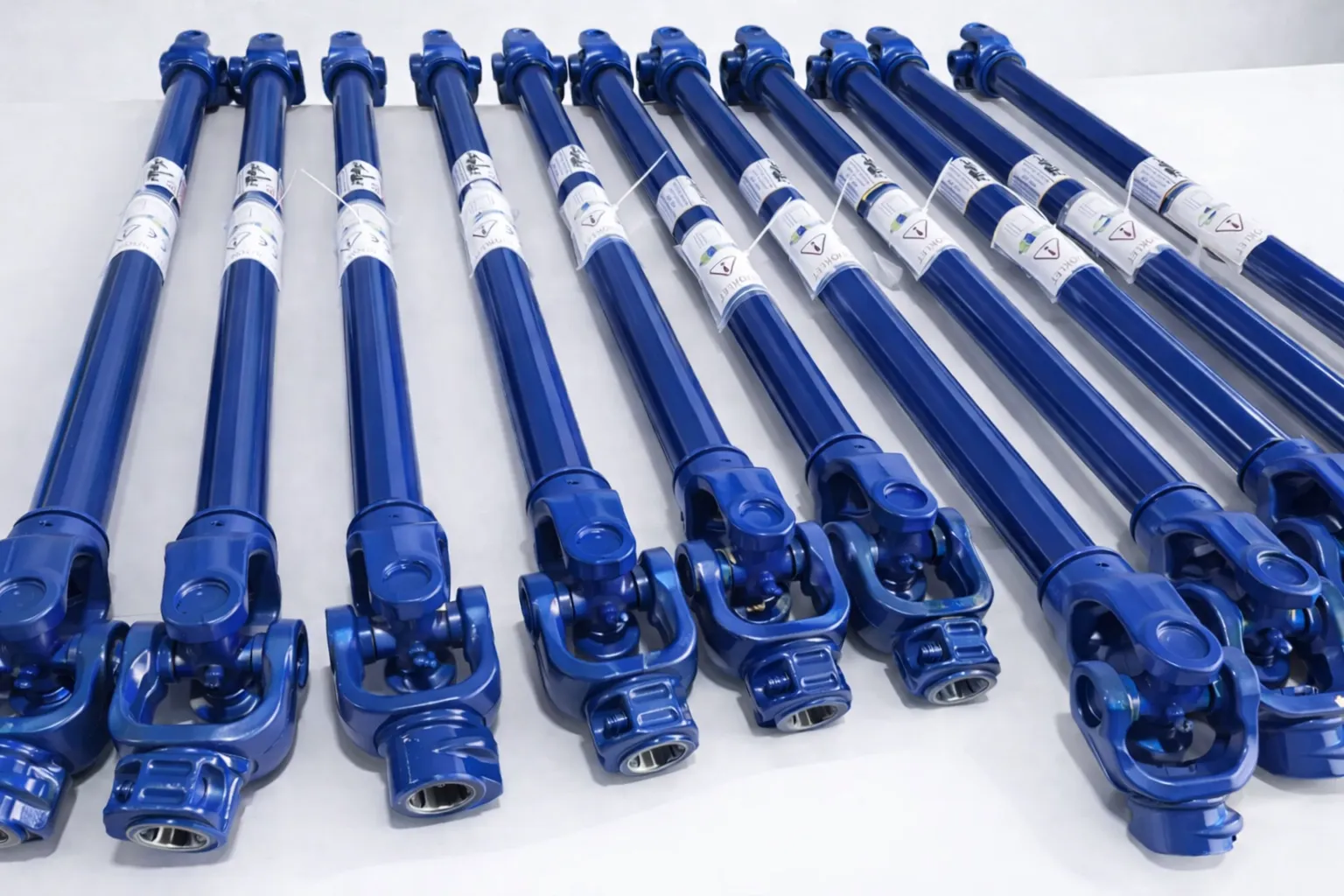
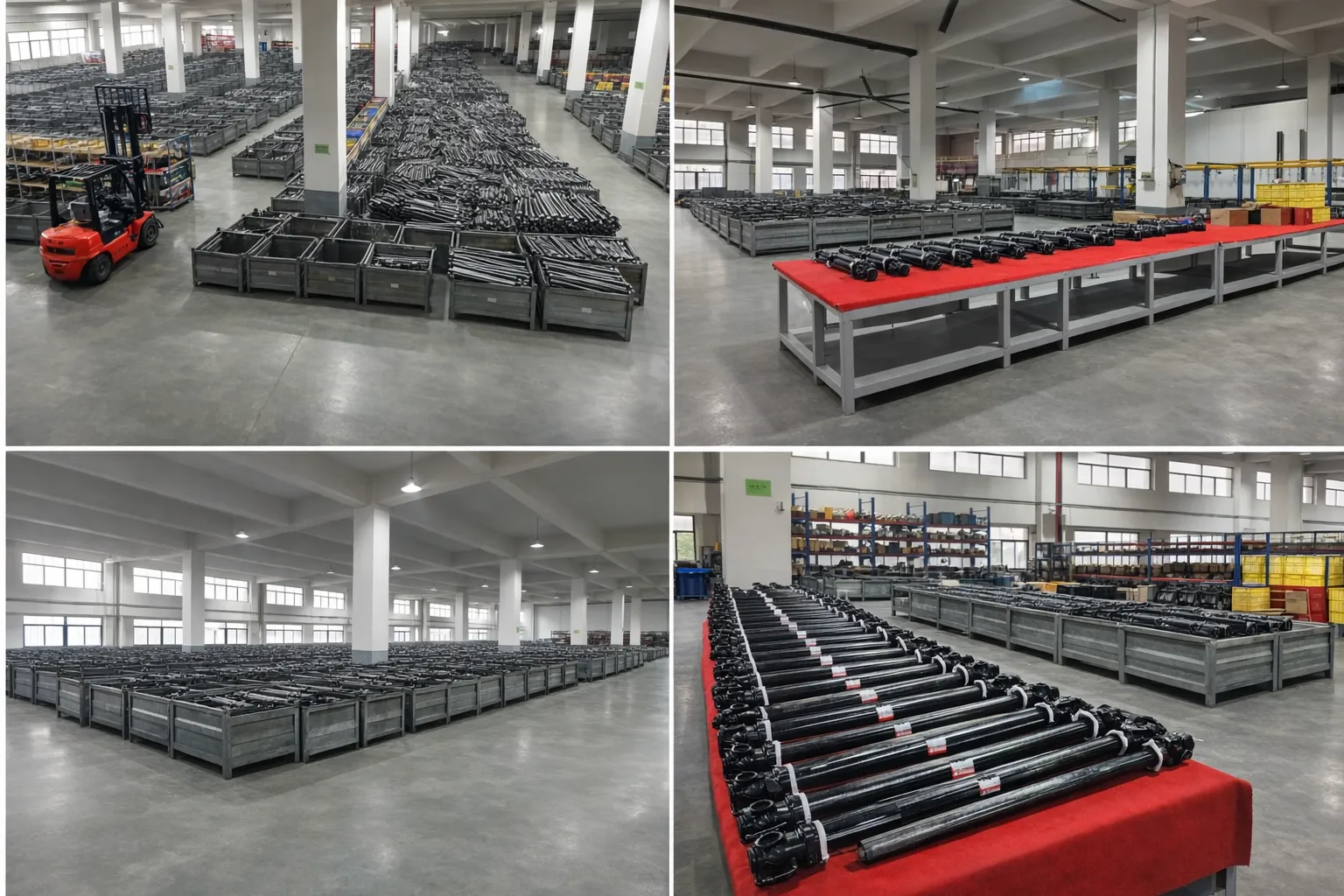
Globalna zgodność marki i walidacja rynku wtórnego
W konserwacji sprzętu rolniczego uniwersalność i szybka wymiana części to główne czynniki obniżające koszty operacyjne. wałki napędowe WOM Elementy układu napędowego są projektowane ściśle według międzynarodowych norm geometrycznych. Dzięki temu mogą służyć jako wysokiej jakości zamienniki układów napędowych głównych maszyn do sadzenia ziemniaków produkowanych przez producentów OEM.
| Marka zamienna Target | Seria polecana Ever-power | Dopasowanie geometrii profilu podstawowego | Zakres mocy odpowiedniego ciągnika |
|---|---|---|---|
| Comer Industries (tylko odniesienie) | Odpowiedniki serii T / serii V | Profile trójkątne / cytrynowe | 30 KM – 150 KM |
| GKN Walterscheid (tylko dla referencji) | Odpowiednik serii W o dużej wytrzymałości | Star Profile Tube / Precision cross | 50 HP – 250 HP |
| Bondioli & Pavesi (Ref Only) | SFT / Global Series Compatible | Multi-tooth Spline / Triangle | 20 HP – 200 HP |
Australian Agricultural Driveline Safety Regulations & Compliance
In Australia, agricultural workplace safety is heavily monitored. According to the strict guidelines mandated by Safe Work Australia, any exposed rotating component—especially tractor power take-off shafts driving implements—constitutes a high-risk fatality zone. Every dostawca wału odbioru mocy must ensure their equipment mitigates entanglement risks.
Ever-power drivelines are manufactured to strictly adhere to both local and international safety frameworks:
- 🛡️ AS/NZS 2153 Series Compliance: Our guards for tractor and agricultural machinery power take-off drive shafts meet the stringent design and testing protocols of the joint Australian/New Zealand standards.
- 🛡️ Full-Enclosure Shielding: Whether in maximum extension or fully compressed state, the HDPE master shield provides 100% coverage of the cross journals and telescopic tubes, preventing clothing entanglement.
- 🛡️ Mandatory Restraint Chains: Each driveline is factory-fitted with high-tensile check chains to anchor the safety guard to a stationary point on both the tractor and the potato planter.
- 🛡️ Audible & Visual Warnings: Clear “DANGER – DO NOT OPERATE WITHOUT SHIELD” pictograms and texts are permanently embossed on the outer tube, meeting local machinery inspectorate requirements.
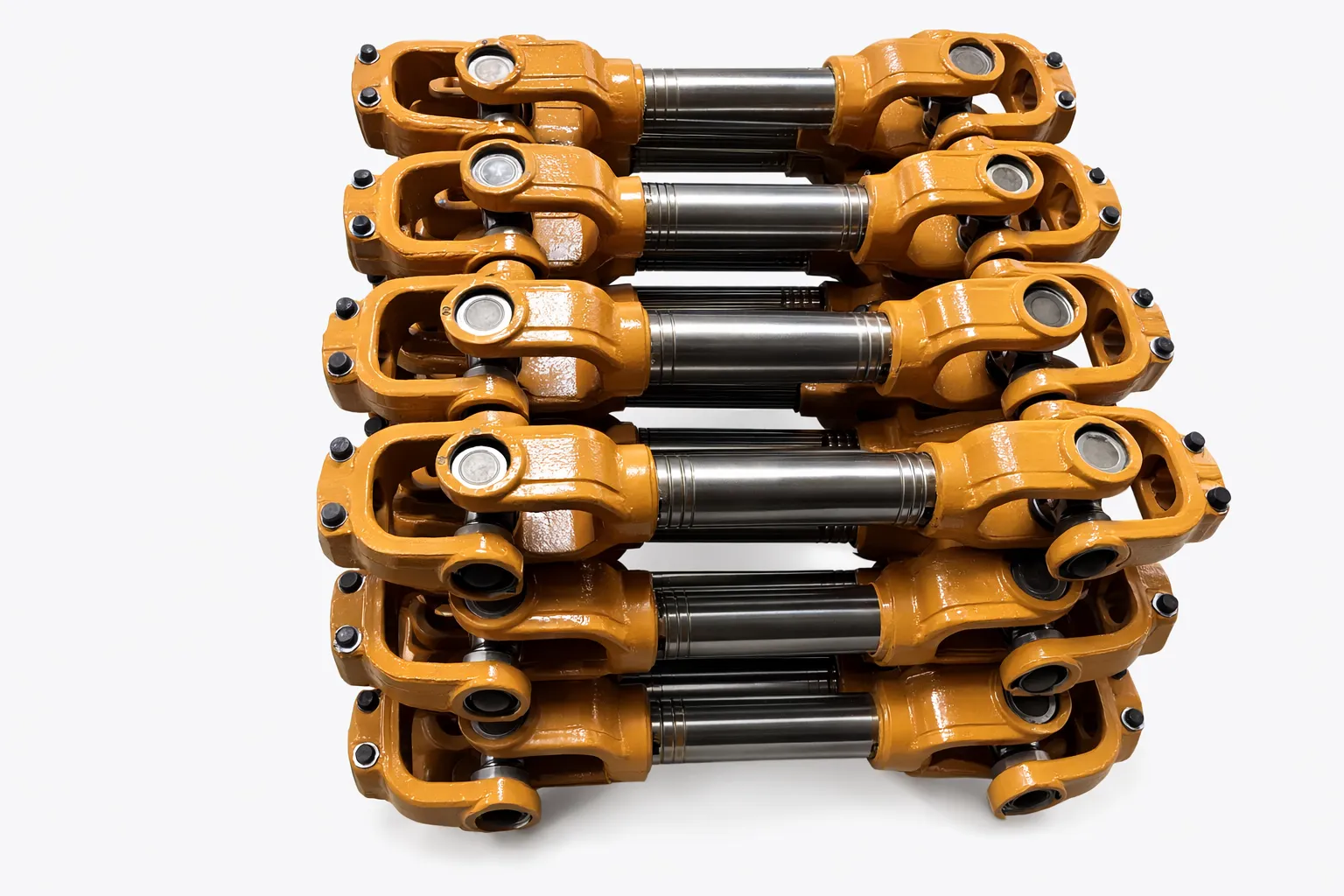
Quick Selection Guide: Specify Your Potato Planter Driveline
Prevent catastrophic mechanical failures caused by mismatched torque ratings or incorrect lengths. Validate these 5 crucial parameters before procuring your replacement:
Step 1: Tractor Output Specs
Identify the nominal RPM (540 or 1000) and the spline dimensions. Common Australian standard sizes are 1-3/8″ 6-spline or the higher torque 21-spline.
Step 2: Implement Input
Measure the input shaft diameter on the planter’s gearbox. Note whether it requires a clamp-style splined yoke, a shear pin, or a plain bore with a keyway.
Step 3: Measure Length (Lz)
Park the tractor and implement on level ground in a straight line. Measure the distance between the locking grooves on both shafts to find the exact closed length.
Step 4: Profile & HP Rating
Match the tube profile to your tractor’s horsepower. A Series 6 is typical for 60-80 HP applications, while heavier planters require Star profile Series 8.
Step 5: Clutch Mechanism
For potato planters prone to jamming on large rocks, a friction slip clutch is mandatory. Hard connections will cause immediate shear or gearbox rupture.
🔧 Implement Specific Installation
- Length Customization: If the driveline is too long, separate the inner and outer halves. Attach to the tractor and implement at their closest possible turning point. Mark and cut equal lengths from both the steel tubing and the plastic safety guards.
- Deburring & Lubrication: Use a flat file to remove all steel burrs from the cut ends. Generously apply Extreme Pressure (EP) lithium grease over the entire surface of the inner sliding profile.
- Tractor Connection: Depress the quick-release pin on the yoke. Slide it onto the 540/1000 RPM output spline until a distinct ‘click’ confirms the pin is seated in the locking groove.
- Planter Connection: Mount the slip clutch end directly to the planter’s input shaft. Tighten the clamp bolts or lock-nuts to the specified torque setting.
- Kotwiczenie łańcuchowe: Fasten the anti-rotation chains to a static, non-rotating bracket on both machines. Leave enough slack to accommodate full articulation during headland turns.
⚠️ Operational Troubleshooting
Vibration: Severe Shaking During Operation
Root Cause: The yokes on the inner and outer tubes are out of phase (not aligned on the same plane), or the tubing has been bent by an external impact.
Rozwiązanie: Separate the halves and align the factory-stamped timing marks. If the tubes are bent, the entire shaft assembly must be replaced to prevent bearing destruction.
Clutch: Smoking or Excessive Heat
Root Cause: The potato planter has jammed (likely a rock in the metering mechanism), causing continuous slippage. Alternatively, the compression spring tension is set too low.
Rozwiązanie: Disengage PTO immediately. Clear the obstruction from the implement. If slipping continues under normal loads, evenly tighten the clutch spring tension nuts per the manual.
Telescoping: Tubes Seized or Hard to Slide
Root Cause: Lack of regular lubrication, or a breached safety guard has allowed mud and abrasive sand to enter the profile gap.
Rozwiązanie: Dismantle the tubes. Thoroughly clean with a heavy degreaser. Inspect for deep galling or scoring. Reapply high-viscosity grease. Replace the damaged plastic guards immediately.
Real Talk: Addressing Grower Frustrations
“Our previous drivelines were a maintenance nightmare. The crosses would overheat during the summer planting window, and we lost days waiting for custom lengths to be fabricated, killing our seasonal margins.”
“By switching to our precision-balanced shafts with extended 250-hour greasing intervals, a major farm co-op in South Australia reduced maintenance downtime by 60% in their first quarter. Furthermore, our modular component inventory ensures that if you need a specific CV joint or custom length, we dispatch exactly what you need within 24 hours, keeping your planters moving.”
Complete Powertrain Synergy: Agricultural Gearboxes & Accessories
A high-performance wałek odbioru mocy is only half the equation. The rotational energy must be cleanly transferred and stepped down via a robust terminal receiver. Ever-power is a distinguished manufacturer of heavy-duty Przekładnie rolnicze. We engineer the complete power loop, ensuring perfectly matched torque curves from the tractor to the soil. Explore our comprehensive gearbox solutions.
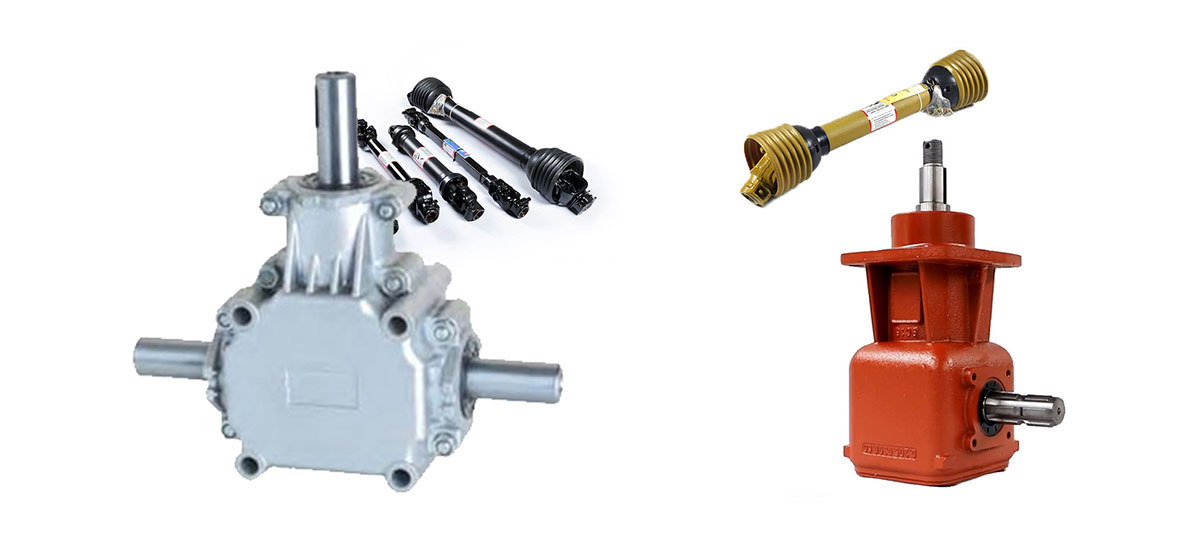
Bevel Gearboxes for Potato Planters
In planting equipment, longitudinal rotary motion must be converted at 90 degrees to drive the transverse seed belts and fertilizer augers. This requires incredibly resilient bevel gear configurations:
- Metallurgy & Lapping: Gears are forged from high-carbon alloy steel, subjected to induction hardening, and then precision-lapped to eliminate micro-pitting and reduce acoustic noise under heavy loads.
- Housing Integrity: Cast from ductile iron (nodular cast iron), our gearbox housings provide three times the impact resistance of standard aluminum casting, surviving heavy field debris and stone strikes.
- Seal Technology: Equipped with dual-lip NBR oil seals, keeping aggressive soil contaminants out while locking gear oil inside, effectively extending service fluid intervals to 1000 hours.
- Custom Ratios: We provide bespoke speed reducer or increaser ratios (e.g., 1:1, 1:1.47, 1:1.93) to perfectly synchronize implement belt speeds with tractor ground velocity.
Genuine Aftermarket Driveline Components
Mechanical reliability relies on the integrity of the smallest component. We supply a massive inventory of ready-to-ship replacement parts to eliminate harvest bottlenecks.
Universal Cross Journals
Equipped with premium needle roller bearings and accessible grease zerk fittings. Stocked in all metric and imperial sizes.
Sprockets & Chains
High-wear resistance drive sprockets with hardened teeth, paired with heavy-duty roller chains for secondary power distribution.
Drive Pulleys
Dynamically balanced cast-iron V-belt pulleys engineered to prevent lateral belt slippage under sudden high-torque demand.
Safety Guard Kits
Complete UV-resistant HDPE housing assemblies, cones, and retaining chains ensuring full local AS/NZS workplace compliance.
Często zadawane pytania
1. For a heavy 4-row potato planter, what spline specification should I select?
We highly recommend transitioning to a 1-3/8″ 21-spline or 1-3/4″ 20-spline interface. Compared to the standard 6-spline, multi-spline connections drastically increase the surface contact area, virtually eliminating spline strip-out under massive torque loads.
2. Which is better for rocky soil: a Friction Slip Clutch or a Shear Bolt?
For potato planters operating in soil with hidden rocks, a friction slip clutch is superior. It allows the system to slip temporarily upon impact and instantly resume power once the obstacle passes. A shear bolt will snap, requiring immediate manual downtime for replacement.
3. Dust in Western Australia seizes our telescopic tubes. How do you solve this?
We utilize Star-profile tubes coated with a dry Teflon (PTFE) layer paired with multi-lip wiper seals. This prevents micro-dust from bonding with traditional grease, maintaining smooth telescopic action even in severe dust bowls.
4. Why does the driveline make a knocking sound during headland turns?
Standard universal joints max out at approximately 25 degrees. If you take sharp headland turns without disengaging the PTO, the yokes will bind and knock. Upgrading to a Wide Angle (CV) joint allows smooth power transfer at up to 80-degree angles.
5. Can the greasing interval be extended?
Yes. While the standard schedule is 50 hours, Ever-power offers maintenance-free or 250-hour extended maintenance crosses, engineered with premium synthetic lithium complexes and fortified dual-lip bearing seals.
6. Will your equipment pass Australian farm safety audits?
Absolutely. Our guard systems are manufactured strictly in accordance with AS/NZS machinery directives. They feature full coverage, secure check chains, and compliant warning labels that satisfy Safe Work Australia inspectors.
7. How do I measure the exact length I need to order?
With your equipment hitched and sitting level, measure the straight-line distance from the locking groove of the tractor’s output shaft to the locking groove of the implement’s input shaft. This measurement is the required “Closed Length” (Lz).
8. Can your parts replace my broken Walterscheid or Comer components?
Yes. Our components are geometrically designed to international standards. U-joints, yokes, and tubing can serve as high-quality drop-in replacements for major European and American brands (Note: brand names are referenced for compatibility identification only).
9. How frequently should the plastic safety shields be replaced?
Shields should be replaced immediately if they are cracked, brittle, or if the restraining chain breaks. In the high-UV Australian environment, we recommend a proactive replacement every 2 to 3 years to maintain structural integrity.
10. Do you offer non-standard custom fabrication?
Yes. Ever-power commands robust in-house R&D and CNC manufacturing capabilities. Provide us with your target torque, dimensional constraints, and environmental data, and our engineering team will produce a customized CAD blueprint within 48 hours.
Forge Unbreakable Connections with Ever-power
With over 20 years of relentless innovation in mechanical power transmission, we understand that in modern agriculture, even a minute of mechanical failure translates directly to lost yields. Operating a 50,000+ square meter state-of-the-art facility equipped with precision CNC machining and dynamic balancing centers, we don’t just assemble parts—we engineer confidence.
Beyond Standard Production! We provide profound OEM-level customization from conceptual design to field-ready products. Whether you are battling extreme peak torques in clay soils or require specialized anti-corrosive treatments for coastal farming, we formulate the perfect Wał odbioru mocy I Agricultural Gearbox synergy.
Contact Our Engineering Team for Immediate Pricing
Meta Description Ready: Maximize your planting efficiency with Ever-power’s heavy-duty PTO drivelines. Get a quote today to secure non-stop performance. Explore our main hub: https://pto-drive-shaft.com/