제품 설명
회사 소개
—–ABOUT US—–
Focuses on the research, development, production, sales and service of fasteners, precision hardware parts and various metal products.
HangZhou CZPT CZPT Technology Co., Ltd. was established on March 1, 2016. It is located in Xihu (West Lake) Dis.ang District, HangZhou City, ZheJiang Province. It covers an area of 5600 square CZPT and focuses on the research, development, production, sales and service of fasteners, precision hardware parts and various metal products. The processed products are mainly cold heading, forging, precision turning, milling, assembly, stamping, supplemented by extrusion, upsetting and casting. In addition, we also have rich experience in anodizing, electroplating and heat treatment.
Product Parameters
| No. | Item | Specifications |
| 1 | Materials | Carbon steel: 12L15, 45#, 42CrMo; Stainless steel: 303, 304, 316, 420, 630; Aluminum alloy: 6061, 6063, 5052, 7075; Copper alloy: brass H58-H63, phosphor bronze, beryllium copper; Pure copper: T0 oxygen-free copper, T2 red copper; Plastics: nylon, bakelite, POM, PEEK; |
| 2 | Diameter | Ø0.3-Ø50 |
| 3 | Diameter tolerance | 0.005mm |
| 4 | Hardness: | HRC/HV |
| 5 | Length | 0.5mm-500mm |
| 6 | Heat treatment | Oil Quenching High frequency quenching Carburization Vacuum Heat treatment Mesh belt CZPT heat treatment |
| 7 | Surface treatment | Electrolytic plating (barrel plating, rack plating); Electroless plating (nickel plating); Ordinary sandblasting and anodizing (black, silver, gray, gold, red) Plastic spraying, spraying metal paint, etc.; |
Work Shop
인증
Research & Development
Development intervention
Development ability
Cost accounting
Quality control
Production feasibility assessment
Project landing
Assembly service
Complex project decomposition & optimization capabilities
Quick sample
Optimization of the mold plan for mass products
Product Category
Precision turning parts
Precision machining parts
Special requirements appearance parts
Presentative Brand
Why Choose Us?
Create value for customers
Support + Service + Made in China + Technological Innovation = Solution
★ Project management, solutions
★ Quickly designing and sampling
★ New product development, technological breakthrough
★ Component and machine assembly service
Engineering capabilities
★Development intervention
★Development ability
Cost accounting
Quality control
Production feasibility assessment
Project landing
Assembly service
★Complex project decomposition & optimization capabilities
★Quick sample
★Optimization of the mold plan for mass products /* March 10, 2571 17:59:20 */!function(){function s(e,r){var a,o={};try{e&&e.split(“,”).forEach(function(e,t){e&&(a=e.match(/(.*?):(.*)$/))&&1
| 재료: | Alloy Steel |
|---|---|
| Load: | Drive Shaft |
| Stiffness & Flexibility: | Stiffness / Rigid Axle |
| Journal Diameter Dimensional Accuracy: | IT6-IT9 |
| Axis Shape: | Straight Shaft |
| Shaft Shape: | Stepped Shaft |
| 맞춤 설정: |
사용 가능
| 맞춤형 요청 |
|---|
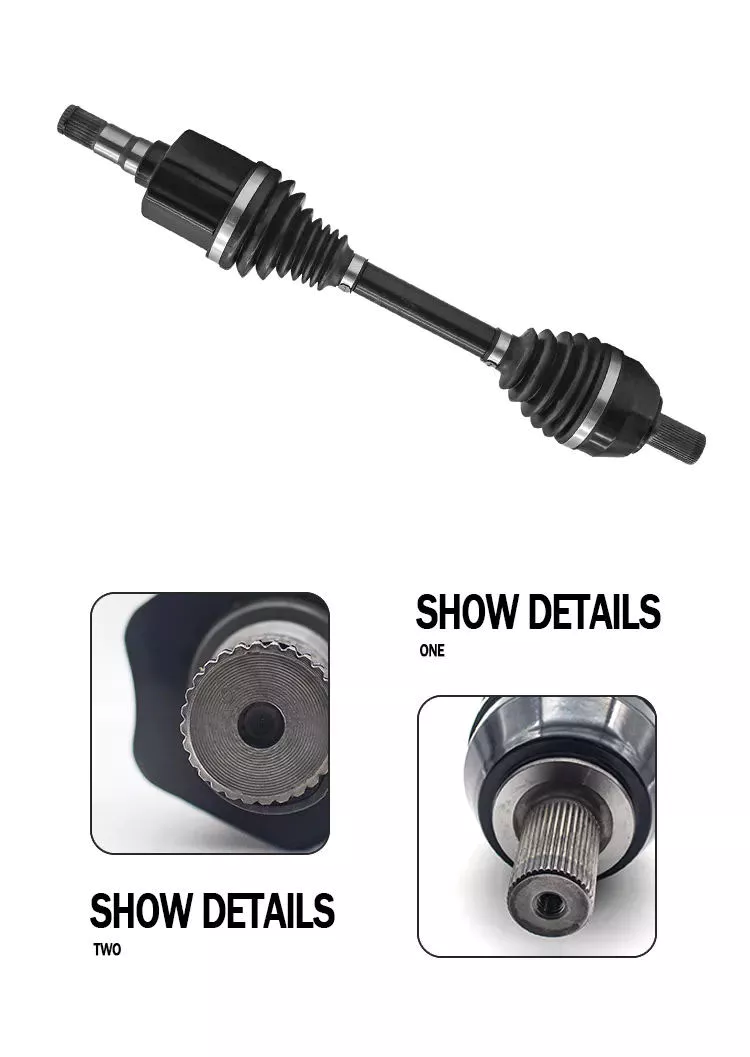
구동축과 관련된 제한 사항이나 단점이 있습니까?
구동축은 널리 사용되며 여러 장점을 제공하지만, 고려해야 할 몇 가지 한계와 단점도 있습니다. 구동축과 관련된 한계 및 단점에 대한 자세한 설명은 다음과 같습니다.
1. 길이 및 정렬 불량 제약 조건:
구동축은 재질 강도, 무게, 강성 유지 및 진동 최소화 등의 요인으로 인해 실질적인 최대 길이가 정해져 있습니다. 구동축이 길어지면 굽힘 및 비틀림 변형이 증가하여 효율이 저하되고 구동계통에 진동이 발생할 수 있습니다. 또한, 구동축은 구동부와 피구동부 사이의 정확한 정렬이 필수적입니다. 정렬이 어긋나면 마모, 진동이 증가하고 구동축 또는 관련 부품의 조기 고장이 발생할 수 있습니다.
2. 제한된 작동 각도:
구동축, 특히 유니버설 조인트(U-joint)를 사용하는 구동축은 작동 각도에 제한이 있습니다. 유니버설 조인트는 일반적으로 특정 각도 범위 내에서 작동하도록 설계되었으며, 이러한 한계를 벗어나 작동할 경우 효율 저하, 진동 증가 및 마모 가속화를 초래할 수 있습니다. 큰 작동 각도가 필요한 경우, 일정한 속도를 유지하고 더 큰 각도를 수용하기 위해 등속 조인트(CV joint)가 자주 사용됩니다. 그러나 등속 조인트는 유니버설 조인트에 비해 구조가 더 복잡하고 비용이 더 많이 들 수 있습니다.
3. 유지보수 요구사항:
구동축은 최적의 성능과 신뢰성을 보장하기 위해 정기적인 유지보수가 필요합니다. 여기에는 주기적인 점검, 연결부 윤활, 필요시 밸런싱 작업이 포함됩니다. 정기적인 유지보수를 소홀히 하면 마모, 진동이 증가하고 구동계통에 문제가 발생할 수 있습니다. 다양한 용도에 구동축을 사용할 때는 유지보수에 필요한 시간과 자원을 고려해야 합니다.
4. 소음 및 진동:
구동축은 특히 고속 주행 시 또는 특정 공진 주파수에서 작동할 때 소음과 진동을 발생시킬 수 있습니다. 불균형, 정렬 불량, 마모된 조인트 또는 기타 요인이 소음과 진동 증가에 영향을 미칠 수 있습니다. 이러한 진동은 차량 탑승자의 편안함을 저해하고 부품 피로를 증가시키며, 그 영향을 완화하기 위해 댐퍼 또는 진동 차단 시스템과 같은 추가 조치가 필요할 수 있습니다.
5. 무게 및 공간 제약 조건:
구동축은 전체 시스템의 무게를 증가시키므로 자동차나 항공우주 산업과 같이 무게에 민감한 분야에서는 중요한 고려 사항이 될 수 있습니다. 또한 구동축은 설치를 위한 물리적 공간을 필요로 합니다. 소형 장비나 차량의 경우, 필요한 구동축 길이와 여유 공간을 확보하는 것이 어려울 수 있으므로 신중한 설계 및 통합 고려가 필요합니다.
6. 비용 고려 사항:
구동축은 설계, 재질, 제조 공정에 따라 상당한 비용이 발생할 수 있습니다. 특정 장비 요구 사항에 맞춰 제작된 맞춤형 또는 특수 구동축은 더 높은 비용을 초래할 수 있습니다. 또한, CV 조인트와 같은 고급 연결 구조를 통합하면 구동축 시스템이 더욱 복잡해지고 비용이 증가할 수 있습니다.
7. 본질적인 전력 손실:
구동축은 구동원에서 피구동 부품으로 동력을 전달하지만, 마찰, 굽힘 및 기타 요인으로 인해 본질적인 동력 손실을 발생시킵니다. 이러한 동력 손실은 특히 긴 구동축이나 높은 토크가 요구되는 응용 분야에서 전체 시스템 효율을 저하시킬 수 있습니다. 따라서 적절한 구동축 설계 및 사양을 결정할 때는 동력 손실을 고려하는 것이 중요합니다.
8. 제한된 토크 용량:
구동축은 광범위한 토크 부하를 견딜 수 있지만, 토크 용량에는 한계가 있습니다. 구동축의 최대 토크 용량을 초과하면 조기 고장이 발생하여 가동 중단은 물론 다른 구동계 부품의 손상으로 이어질 수 있습니다. 따라서 사용 목적에 맞는 충분한 토크 용량을 갖춘 구동축을 선택하는 것이 매우 중요합니다.
이러한 한계와 단점에도 불구하고, 구동축은 다양한 산업 분야에서 널리 사용되는 효과적인 동력 전달 수단입니다. 제조업체들은 재료, 설계 기술, 연결부 구성 및 밸런싱 공정의 발전을 통해 이러한 한계를 극복하기 위해 끊임없이 노력하고 있습니다. 엔지니어와 설계자는 특정 적용 분야의 요구 사항과 잠재적인 단점을 신중하게 고려함으로써 구동축의 한계를 완화하고 각 시스템에서 구동축의 이점을 극대화할 수 있습니다.

Can drive shafts be customized for specific vehicle or equipment requirements?
Yes, drive shafts can be customized to meet specific vehicle or equipment requirements. Customization allows manufacturers to tailor the design, dimensions, materials, and other parameters of the drive shaft to ensure compatibility and optimal performance within a particular vehicle or equipment. Here’s a detailed explanation of how drive shafts can be customized:
1. Dimensional Customization:
Drive shafts can be customized to match the dimensional requirements of the vehicle or equipment. This includes adjusting the overall length, diameter, and spline configuration to ensure proper fitment and clearances within the specific application. By customizing the dimensions, the drive shaft can be seamlessly integrated into the driveline system without any interference or limitations.
2. Material Selection:
The choice of materials for drive shafts can be customized based on the specific requirements of the vehicle or equipment. Different materials, such as steel alloys, aluminum alloys, or specialized composites, can be selected to optimize strength, weight, and durability. The material selection can be tailored to meet the torque, speed, and operating conditions of the application, ensuring the drive shaft’s reliability and longevity.
3. Joint Configuration:
Drive shafts can be customized with different joint configurations to accommodate specific vehicle or equipment requirements. For example, universal joints (U-joints) may be suitable for applications with lower operating angles and moderate torque demands, while constant velocity (CV) joints are often used in applications requiring higher operating angles and smoother power transmission. The choice of joint configuration depends on factors such as operating angle, torque capacity, and desired performance characteristics.
4. Torque and Power Capacity:
Customization allows drive shafts to be designed with the appropriate torque and power capacity for the specific vehicle or equipment. Manufacturers can analyze the torque requirements, operating conditions, and safety margins of the application to determine the optimal torque rating and power capacity of the drive shaft. This ensures that the drive shaft can handle the required loads without experiencing premature failure or performance issues.
5. Balancing and Vibration Control:
Drive shafts can be customized with precision balancing and vibration control measures. Imbalances in the drive shaft can lead to vibrations, increased wear, and potential driveline issues. By employing dynamic balancing techniques during the manufacturing process, manufacturers can minimize vibrations and ensure smooth operation. Additionally, vibration dampers or isolation systems can be integrated into the drive shaft design to further mitigate vibrations and enhance overall system performance.
6. Integration and Mounting Considerations:
Customization of drive shafts takes into account the integration and mounting requirements of the specific vehicle or equipment. Manufacturers work closely with the vehicle or equipment designers to ensure that the drive shaft fits seamlessly into the driveline system. This includes adapting the mounting points, interfaces, and clearances to ensure proper alignment and installation of the drive shaft within the vehicle or equipment.
7. Collaboration and Feedback:
Manufacturers often collaborate with vehicle manufacturers, OEMs (Original Equipment Manufacturers), or end-users to gather feedback and incorporate their specific requirements into the drive shaft customization process. By actively seeking input and feedback, manufacturers can address specific needs, optimize performance, and ensure compatibility with the vehicle or equipment. This collaborative approach enhances the customization process and results in drive shafts that meet the exact requirements of the application.
8. Compliance with Standards:
Customized drive shafts can be designed to comply with relevant industry standards and regulations. Compliance with standards, such as ISO (International Organization for Standardization) or specific industry standards, ensures that the customized drive shafts meet quality, safety, and performance requirements. Adhering to these standards provides assurance that the drive shafts are compatible and can be seamlessly integrated into the specific vehicle or equipment.
In summary, drive shafts can be customized to meet specific vehicle or equipment requirements through dimensional customization, material selection, joint configuration, torque and power capacity optimization, balancing and vibration control, integration and mounting considerations, collaboration with stakeholders, and compliance with industry standards. Customization allows drive shafts to be precisely tailored to the needs of the application, ensuring compatibility, reliability, and optimal performance.

Are there variations in drive shaft designs for different types of machinery?
Yes, there are variations in drive shaft designs to cater to the specific requirements of different types of machinery. The design of a drive shaft is influenced by factors such as the application, power transmission needs, space limitations, operating conditions, and the type of driven components. Here’s an explanation of how drive shaft designs can vary for different types of machinery:
1. Automotive Applications:
In the automotive industry, drive shaft designs can vary depending on the vehicle’s configuration. Rear-wheel-drive vehicles typically use a single-piece or two-piece drive shaft, which connects the transmission or transfer case to the rear differential. Front-wheel-drive vehicles often use a different design, employing a drive shaft that combines with the constant velocity (CV) joints to transmit power to the front wheels. All-wheel-drive vehicles may have multiple drive shafts to distribute power to all wheels. The length, diameter, material, and joint types can differ based on the vehicle’s layout and torque requirements.
2. Industrial Machinery:
Drive shaft designs for industrial machinery depend on the specific application and power transmission requirements. In manufacturing machinery, such as conveyors, presses, and rotating equipment, drive shafts are designed to transfer power efficiently within the machine. They may incorporate flexible joints or use a splined or keyed connection to accommodate misalignment or allow for easy disassembly. The dimensions, materials, and reinforcement of the drive shaft are selected based on the torque, speed, and operating conditions of the machinery.
3. Agriculture and Farming:
Agricultural machinery, such as tractors, combines, and harvesters, often requires drive shafts that can handle high torque loads and varying operating angles. These drive shafts are designed to transmit power from the engine to attachments and implements, such as mowers, balers, tillers, and harvesters. They may incorporate telescopic sections to accommodate adjustable lengths, flexible joints to compensate for misalignment during operation, and protective shielding to prevent entanglement with crops or debris.
4. Construction and Heavy Equipment:
Construction and heavy equipment, including excavators, loaders, bulldozers, and cranes, require robust drive shaft designs capable of transmitting power in demanding conditions. These drive shafts often have larger diameters and thicker walls to handle high torque loads. They may incorporate universal joints or CV joints to accommodate operating angles and absorb shocks and vibrations. Drive shafts in this category may also have additional reinforcements to withstand the harsh environments and heavy-duty applications associated with construction and excavation.
5. Marine and Maritime Applications:
Drive shaft designs for marine applications are specifically engineered to withstand the corrosive effects of seawater and the high torque loads encountered in marine propulsion systems. Marine drive shafts are typically made from stainless steel or other corrosion-resistant materials. They may incorporate flexible couplings or dampening devices to reduce vibration and mitigate the effects of misalignment. The design of marine drive shafts also considers factors such as shaft length, diameter, and support bearings to ensure reliable power transmission in marine vessels.
6. Mining and Extraction Equipment:
In the mining industry, drive shafts are used in heavy machinery and equipment such as mining trucks, excavators, and drilling rigs. These drive shafts need to withstand extremely high torque loads and harsh operating conditions. Drive shaft designs for mining applications often feature larger diameters, thicker walls, and specialized materials such as alloy steel or composite materials. They may incorporate universal joints or CV joints to handle operating angles, and they are designed to be resistant to abrasion and wear.
These examples highlight the variations in drive shaft designs for different types of machinery. The design considerations take into account factors such as power requirements, operating conditions, space constraints, alignment needs, and the specific demands of the machinery or industry. By tailoring the drive shaft design to the unique requirements of each application, optimal power transmission efficiency and reliability can be achieved.


editor by CX 2023-12-25