
High-Torque PTO Shafts for Hose Reel Irrigation Systems
Engineered for Australian Agricultural Extremes: From the Riverina to the Darling Downs
Powertrain Selection Summary
The mechanical demands placed on a tractor PTO shaft driving a hose reel irrigator are uniquely severe. Unlike constant-load implements, hose reels involve variable torque spikes, especially during the initial retraction phase of a water-filled polyethylene pipe across saturated terrain. A standard agricultural driveline will suffer accelerated fatigue under these conditions. Our specifically engineered PTO drive shafts integrate wide-angle constant velocity (CV) joints capable of up to 80° articulation during headland turns, combined with robust shear bolt or friction slip clutches to dissipate kinetic shock. By matching the spline geometry (e.g., 1-3/8″ 6-spline or 21-spline) with specific dynamic load profiles, we ensure seamless power transmission to the turbine or gearbox-driven retraction drum, drastically reducing downtime during critical watering windows.

📋 Queensland Extreme Condition Field Study
During a 2025 deployment in the Burdekin region, we observed that conventional drivelines were experiencing cross bearing failures within 150 hours of operation. The primary catalyst was the retraction of 110mm diameter, 400m long PE pipes through dense, muddy sugarcane fields. The initial pull sequence generated transient torque spikes exceeding 2,800 Nm, overloading standard Series 6 shafts.
EVER-POWER Solution Engineering: We upgraded the fleet to our Series 8 CV PTO shafts featuring an 80-degree wide-angle joint on the tractor side and an integrated cam-type torque limiter set precisely to 3,000 Nm. The cross bearing journals were upsized from 30.2mm to 34.9mm, utilizing high-temperature lithium-complex grease. This specific intervention extended the mean time between failures (MTBF) to over 1,200 hours, virtually eliminating mid-season drivetrain breakdowns.
Technical Specification for Hose Reel Applications
| Parameter Category | Specification / Designation | Customization Range & Tolerance |
|---|---|---|
| Series Classification | Series 6 / Series 8 / Series 9 | Available from Series 1 to Series 10 depending on HP |
| Dynamic Torque Rating (540 RPM) | 830 Nm (Series 6) / 1450 Nm (Series 8) | Max tolerance up to 2100 Nm for Heavy Duty variants |
| Tractor End Yoke | 1-3/8″ Z6 or 1-3/8″ Z21 Spline | 1-3/4″ Z20 available for >150HP tractors |
| Implement End Yoke | 1-3/8″ Z6 with Shear Bolt (SB) or Friction Clutch (FF) | Cam clutches, Overrunning clutches available |
| Cross Bearing Dimension (Series 6) | 30.2 mm x 92.0 mm | ± 0.05 mm grinding tolerance, precision fit |
| Tube Profile Geometry | Lemon Profile / Triangular / Star Profile | High Carbon Steel 20Cr or 45#, Rilsan coated optional |
| Max Working Length (Lz) | 1210 mm (Standard) | Expandable from 800mm to 2000mm |
| Telescopic Travel | Up to 350 mm safe overlap | Minimum 1/3 tube overlap required during operation |
| Wide Angle Joint Articulation | 80 Degrees (CV Joint type) | Standard U-Joint max 35 degrees |
| Safety Guarding Standard | CE / ISO 5674 Compliant Shielding | UV stabilized polymer, anti-rotational chains included |
| Operating Temperature Range | -25°C to +85°C | High temp grease optional for prolonged load periods |
| Dynamic Balancing | G6.3 ISO 1940 standard | Vibration < 2.5 mm/s at 1000 RPM |
| Surface Treatment | Anti-corrosion powder coating / Electrophoresis | Yokes painted, tubes treated for sliding friction |
| Slip Clutch Torque Setting | Adjustable 900 Nm – 1800 Nm | Factory preset based on hose reel turbine specs |
| Shear Bolt Material | Grade 8.8 or Grade 10.9 | M8/M10/M12 specified by break load |
| Push Pin / Quick Release | Spring-loaded forged collar | Tapered pin option available for semi-permanent mount |
| Maintenance Interval | 50 hours standard cross bearing | Extended lube configurations (250h) available |
| Hose Reel Speed Ratio Compatibility | 1:1.5 to 1:4 reduction gearboxes | Matches standard irrigator input speeds |
| Torsional Stiffness | > 45,000 Nm/rad | Critical for preventing resonance in long shafts |
| Weight (Average Series 6) | 18.5 kg | Depends on cut-to-length requirements |
Function in Hose Reel Systems
In modern hose reel irrigation systems, the driveline acts as the primary vascular system for kinetic energy. The tractor’s Power Take-Off (typically operating at 540 RPM or 1000 RPM) engages the primary yoke. The rotational force is transmitted through the telescopic profile tubes, accommodating the varying distance between the tractor drawbar and the irrigator chassis.
Upon reaching the implement end, the power enters the agricultural gearbox or the turbine drive bypass mechanism of the hose reel. During the rewinding process, immense tension builds on the drum as the heavy, water-filled pipe is dragged. If a snag occurs—such as the sprinkler cart catching on a deep furrow or stump—the implement-end safety device (friction clutch or shear bolt) instantaneously severs or slips the mechanical connection. This engineered failure prevents catastrophic twisting of the inner tubes or explosive failure of the tractor’s internal transmission gears.
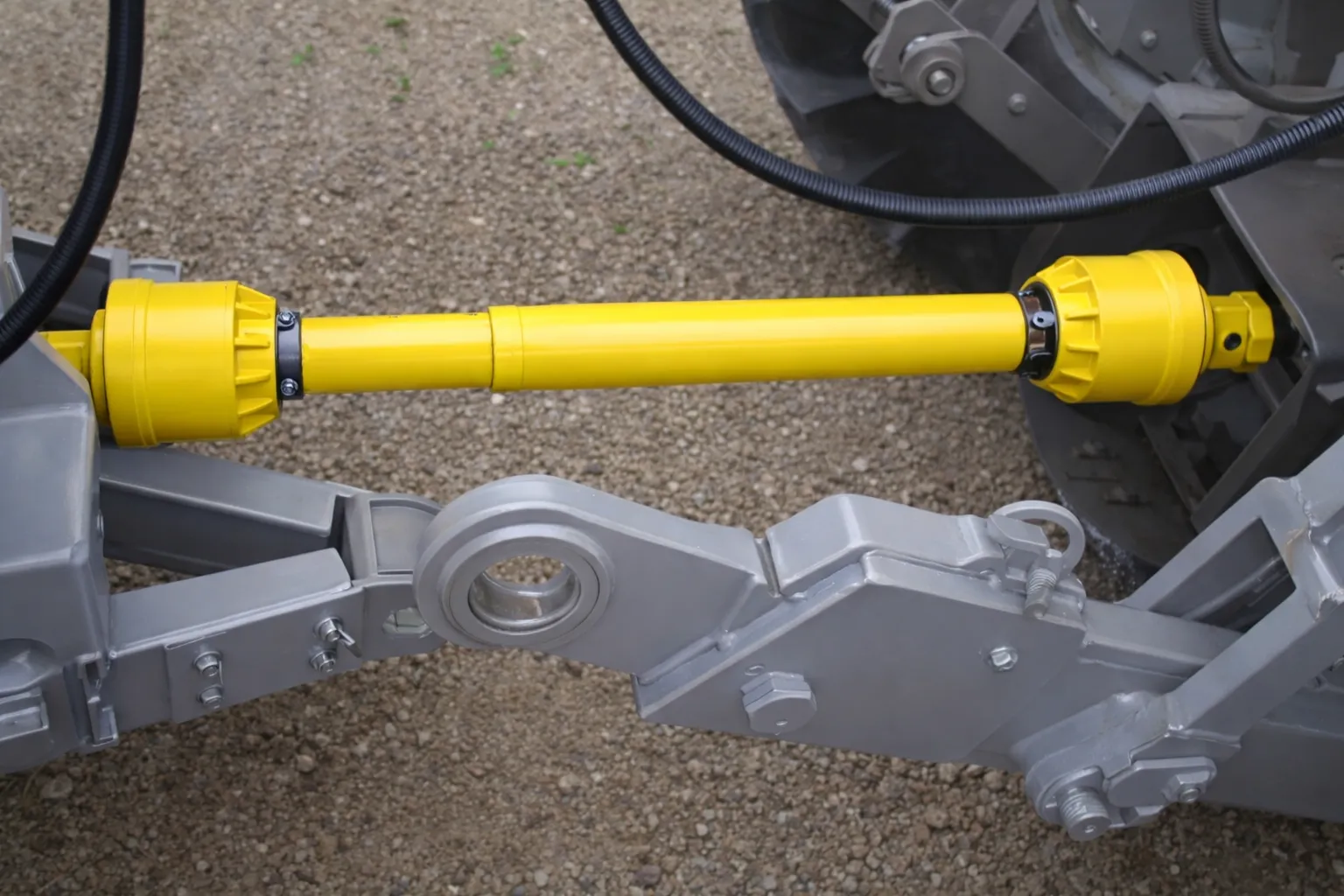
OEM Compatibility & Mechanical Interchangeability
Australian agricultural operations often inherit a mixed fleet of machinery. Our power transmission components are reverse-engineered to strictly align with global dimensional standards (ISO, DIN, and ASAE).
Legal & Compatibility Declaration: Our PTO shafts and related components are engineered as direct mechanical replacements for OEM parts found on machinery utilizing Comer Industries™, GKN Walterscheid™, Bondioli & Pavesi™, and Weasler™ driveline systems. All original equipment manufacturer (OEM) names, trademarks, and part numbers mentioned herein are strictly for technical reference, dimensional comparison, and compatibility identification only. EVER-POWER is an independent manufacturer and is not affiliated with, endorsed by, or sponsored by these trademark holders.
Regional Deployment Footprint: Australia
📍 Toowoomba, Queensland
Application: Cotton Irrigation (140mm Hose Reel)
Heavy black clay soils caused severe drag on sprinkler carts. We supplied Series 8 shafts with pre-calibrated 4-disc friction clutches.
“The slip clutch engages perfectly during mud hangups, saving our gearboxes.” – Farm Manager
📍 Shepparton, Victoria
Application: Dairy Pasture Hydration
Frequent headland turning without disengaging the PTO led to U-joint fractures. Upgraded to 80° Wide-Angle CV joints.
“Eliminated the chatter and vibration when turning the tractor at the end of the paddock.” – Operations Lead
📍 Griffith, New South Wales
Application: Orchard Under-Canopy Reel
Compact spacing required ultra-short driveshafts with high torque capacity. Custom-cut Series 6 with star profile tubing provided.
“Perfect fit for our narrow-track orchard tractors. Shielding is top-notch.” – Maintenance Engineer
📍 Margaret River, Western Australia
Application: Vineyard Drip Line Flushing
High-speed pump operations required precision balancing. Provided G6.3 dynamically balanced shafts to prevent harmonic resonance.
“Smooth operation at 1000 RPM, no bearing heat-up after 8 hours of continuous running.” – Vineyard Tech
📍 Mount Gambier, South Australia
Application: Potato Crop Pivot Supplement
Extreme dust and abrasive soil. Implemented shafts with specific wiper seals on the telescopic tubes and reinforced Rilsan coating.
“The telescopic action remains smooth even after a full season in volcanic ash soil.” – Agronomist
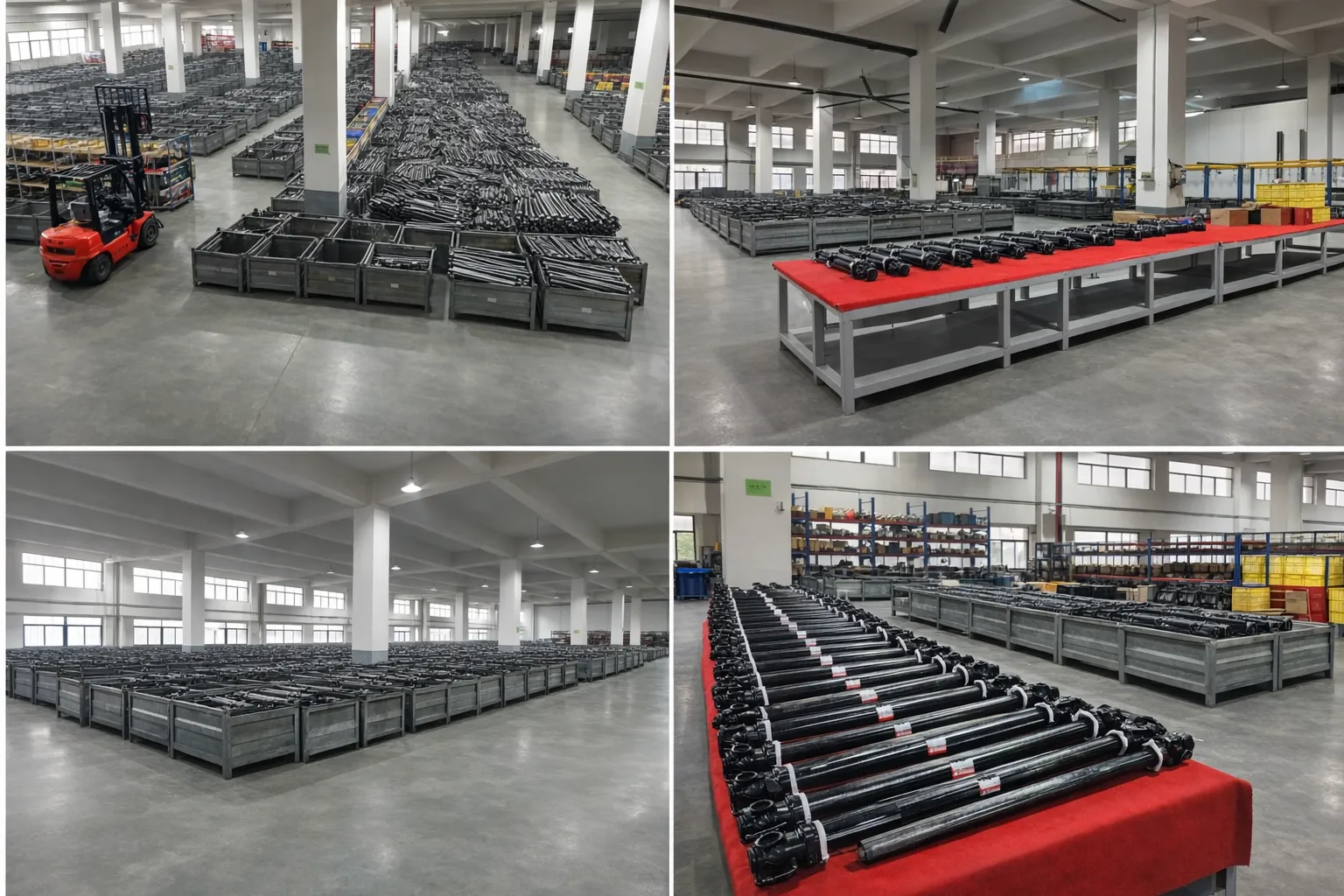
Driveline Selection
Accurate specification is critical to prevent premature mechanical shear or catastrophic failure. Utilize the following parameter checklist prior to procurement.
| Step | Measurement / Consideration | Engineering Rationale |
|---|---|---|
| 1. Power Rating | Determine Tractor HP and output RPM (540 vs 1000). | Dictates the cross-journal size (e.g., Series 4 vs Series 6). Undersizing leads to immediate cross bearing implosion. |
| 2. Cross Bearing Size | Measure cap diameter and overall width. | Standardizes the repair kit required. E.g., 27×74.6mm indicates a Series 4 shaft. |
| 3. Overall Length (Lz) | Measure center-to-center of U-joints in compressed state. | Prevents “bottoming out” which can destroy the tractor’s internal PTO thrust bearings. |
| 4. Connection Profiles | Verify spline count (6, 20, 21) and diameter (1-3/8″ or 1-3/4″). | Ensures positive engagement with the tractor drawbar and implement input shaft. |
| 5. Safety Implement | Select Free-wheel, Shear Bolt, or Friction Clutch. | For Hose Reels, Shear Bolts or Friction Clutches are mandatory to handle high inertia starts and snag events. |
Rigorous Installation Protocol
Step 1: Length Validation
Park the tractor and hose reel on level ground. Align the shafts parallel. Ensure at least 1/3 of the tube length overlaps. If cutting is required, cut an equal amount from both the inner and outer metal tubes and the plastic guards. Deburr all edges meticulously.
Step 2: Lubrication Baseline
Before initial engagement, pump high-quality lithium complex grease into all cross bearing zerks until a slight purge is visible at the seals. Apply a thin film of grease to the sliding profile tubes to prevent galling.
Step 3: Secure Attachment
Depress the quick-release pin fully. Slide the yoke onto the tractor’s splined shaft until the pin positively locks into the groove. Pull back sharply on the yoke to confirm engagement. Repeat for the implement (hose reel) side, ensuring the torque limiter is on the implement side.
Step 4: Safety Shield Guarding
Attach the anti-rotation chains attached to the plastic guard to stationary points on the tractor and the implement. The chains must have enough slack to allow for turning, but be tight enough to prevent the guard shell from rotating with the shaft.

Diagnostic & Troubleshooting
Excessive Vibration During Operation
Diagnosis: The shaft may be out of phase (yokes not aligned), the profile tubes are bent, or the cross bearings are worn creating play.
Resolution: Realign inner and outer tubes so the yoke ears are perfectly parallel. Check for runout on the tubes. Replace worn cross journals.
Shear Bolt Constantly Breaking
Diagnosis: The bolt grade is incorrect, the tractor RPM is being engaged too aggressively, or the hose reel is physically jammed/drag is too high.
Resolution: Verify you are using the exact tensile strength bolt specified (e.g., 8.8 vs 10.9). Do not substitute with standard mild steel bolts. Engage PTO at lowest idle before ramping up RPM.
Telescopic Tubes Seizing / Hard to Slide
Diagnosis: Lack of lubrication, intrusion of dirt/mud, or torsional twisting of the inner tube due to a torque overload event.
Resolution: Separate the halves. Clean thoroughly with solvent. Inspect for twist (if twisted, scrap and replace). Apply fresh graphite or lithium grease to the sliding profiles.
Friction Clutch Smoking
Diagnosis: The clutch is continually slipping due to an overload condition or the spring tension is incorrectly set too low.
Resolution: Stop immediately. Allow to cool. Check the hose reel for blockages. Recalibrate the clutch springs to the specified compression height (refer to manual) to restore correct torque transfer.
Comprehensive Powertrain Ecosystem
Beyond driveshafts, the mechanical integrity of an agricultural implement relies on a synchronized network of gearboxes, chains, and sprockets. We manufacture the complete kinetic chain.
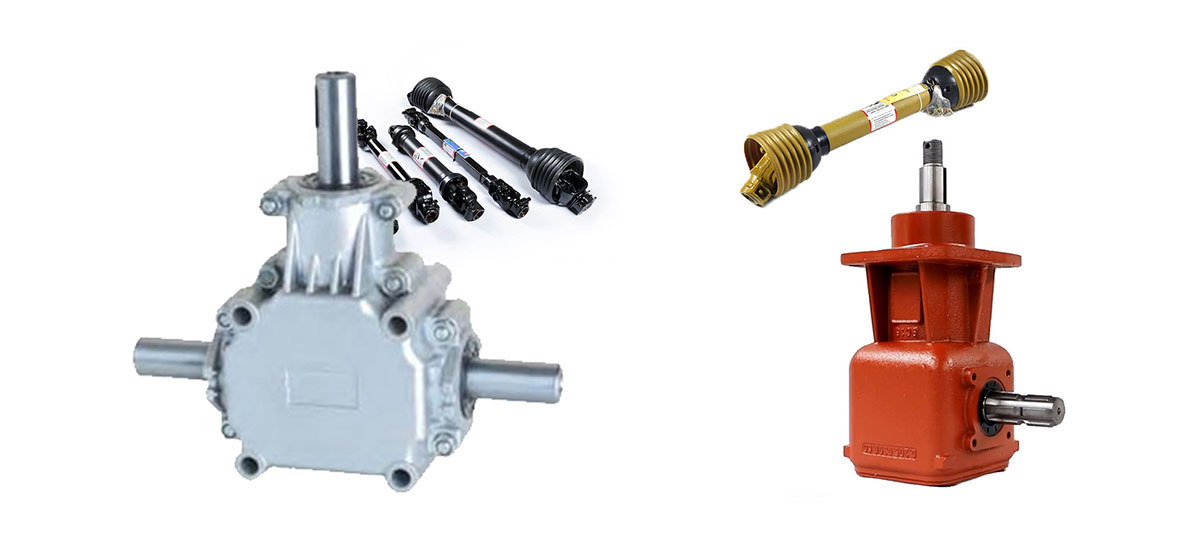
Heavy-Duty Agricultural Gearboxes
The perfect mate to our drive shafts. Our agricultural gearboxes are designed for speed reduction or multiplication, translating the 540 RPM input into precise, high-torque output needed for the hose reel drum. Housed in ductile iron (QT450-10) casings, they feature precision-cut bevel gears that undergo carburizing and quenching to achieve a surface hardness of 58-62 HRC. This ensures negligible wear even under the continuous, high-tension drag of reeling 400 meters of water-filled pipe. Available in various ratios (1:1.5, 1:2.83, etc.) with integrated anti-reversing mechanisms.
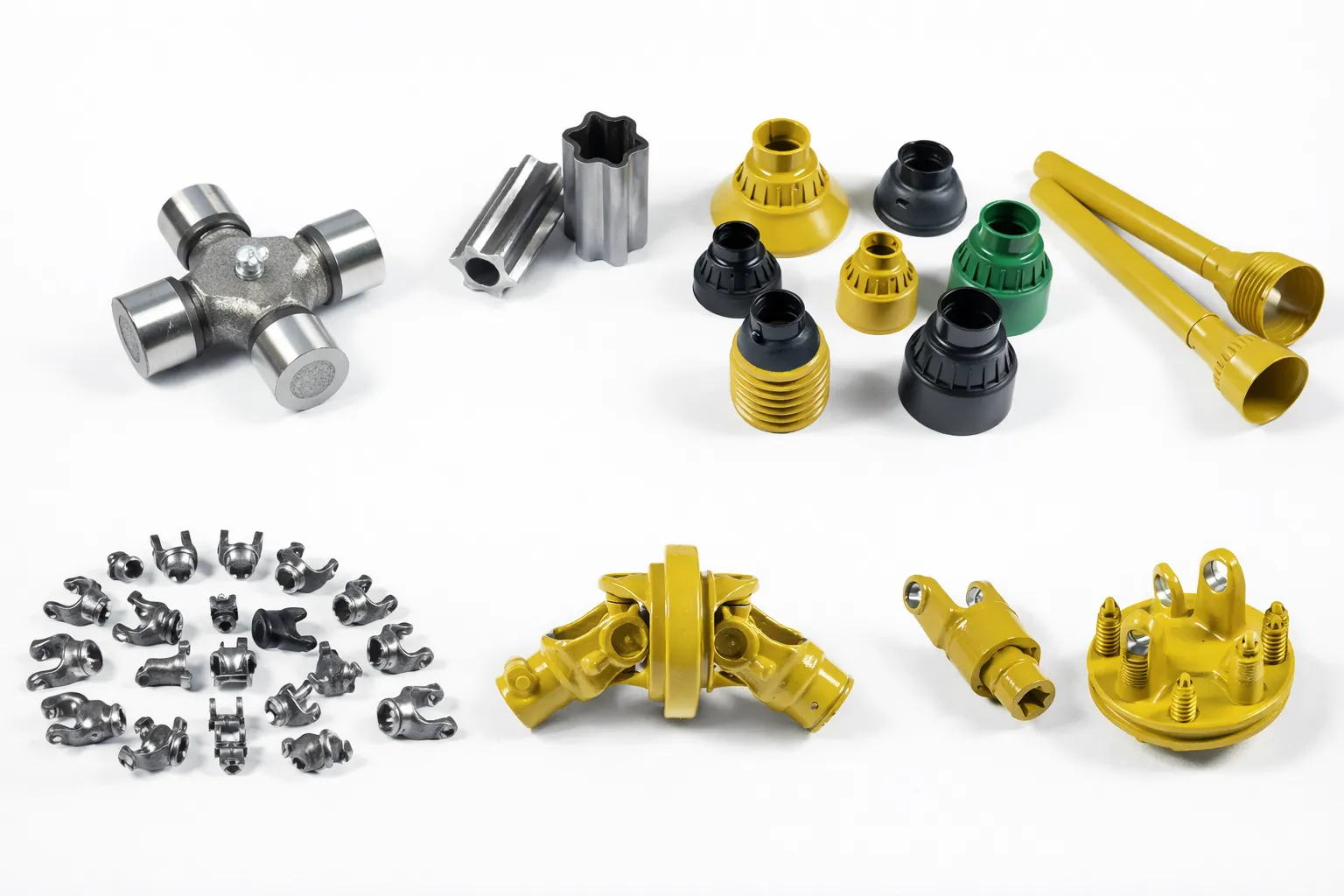
Modular PTO Spare Parts & Yokes
Downtime is not an option during peak irrigation season. We stock a comprehensive library of individual components. From precisely forged inner and outer yokes, star-profile steel tubes cut to metric tolerances, to replacement cross bearing kits equipped with multi-lip nitrile seals. Our quick-release push pins and shear bolt yokes are designed for rapid field replacement. By maintaining strict metallurgical standards, our replacement parts seamlessly integrate with existing drivelines, ensuring your machinery returns to the field immediately.
Industrial Agricultural Sprockets & Roller Chains
Many hose reels utilize a chain and sprocket final drive to rotate the massive drum. We manufacture ANSI and DIN standard heavy-duty roller chains (e.g., 80H, 100H, 120H) designed specifically to resist elongation under the extreme tension of wet pipe retraction. Paired with our induction-hardened sprockets, this system ensures slip-free transmission. The sprockets are available in taper-lock or bored-to-size configurations, machined with mud-clearing root reliefs to prevent chain binding in field conditions.
Additionally, we supply V-belt pulleys and sheaves for turbine-driven models, dynamically balanced to prevent bearing wear on the high-speed turbine input shafts. All components are treated with black oxide or zinc plating for maximum environmental endurance.
Frequently Asked Questions (Technical Support)
1. How do I determine if I need a Series 6 or Series 8 shaft for my irrigator?
It depends entirely on the required input horsepower and dynamic torque. For standard reels (up to 90mm hose), a Series 6 (rated ~830 Nm at 540 RPM) is typically sufficient. For larger diameter pipes (110mm+) traversing heavy soils, a Series 8 (rated ~1450 Nm) is engineered to handle the massive retraction resistance without yielding.
2. Why does my shear bolt keep breaking during the initial hose pull?
The initial static friction of a water-filled pipe creates a massive torque spike. If the bolt shears immediately, ensure you are using the correct tensile grade (often Grade 8.8 or 10.9). Do not use soft hardware store bolts. Alternatively, engage the tractor PTO at the lowest possible idle, allowing tension to build slowly before ramping up RPM.
3. Can I use a standard U-joint shaft instead of a Wide-Angle CV joint?
For hose reels, if the tractor remains stationary and perfectly aligned with the machine, a standard joint (max 35 degrees) is fine. However, if the implement requires power while turning (e.g., navigating headlands), an 80-degree CV joint is mandatory to prevent joint binding and catastrophic vibration.
4. Are your components compatible with my existing Italian-made machinery?
Yes. Our profiles (lemon, triangular, star) and cross-bearing dimensions adhere strictly to metric ISO/DIN standards. They are dimensionally compatible with major European brands. Always measure the cross bearing cap diameter and width to verify the exact Series match.
5. How much tube overlap is structurally safe when extended?
Engineering best practice dictates a minimum of 1/3 (one-third) of the total tube length must remain overlapped during the maximum extension of operation. Less overlap severely compromises torsional rigidity and can lead to tube bending or vibration.
6. What is the recommended greasing interval for the cross journals?
Under standard conditions, pump lithium grease into the zerks every 50 operating hours. However, in extremely dusty environments (like dry Australian summers) or wet, muddy conditions, purge the bearings with fresh grease every 25 hours to push out contaminants.
7. The plastic safety guard is spinning with the shaft. Is this dangerous?
Yes, this is highly dangerous and a severe safety violation. The guard must remain stationary. Ensure the internal nylon bearing rings are lubricated and free of debris, and that the anti-rotation chains are securely fastened to both the tractor and implement chassis.
8. How do I adjust a friction slip clutch that has been sitting idle over winter?
Friction discs can bond to the metal plates during storage. Loosen the spring tension bolts, run the PTO under load briefly to intentionally slip and polish the discs, then re-tighten the springs to the exact manufacturer-specified compressed length (e.g., 32mm) using calipers.
9. What does the balancing rating G6.3 mean?
ISO 1940 G6.3 is an industrial standard for dynamic balancing. It ensures that mass distribution along the rotating axis is uniform, keeping vibrations below 2.5 mm/s at 1000 RPM. This protects both the tractor and gearbox input bearings from fatigue.
10. Can I cut a drive shaft down if it is too long for my setup?
Yes. Measure the required compression length carefully. Cut an identical length from the inner plastic guard, outer plastic guard, inner metal profile, and outer metal profile. Meticulously file off all sharp burrs inside and out before reassembly to prevent the tubes from jamming.
Engineering Power for Global Agriculture
EVER-POWER stands at the forefront of mechanical powertrain engineering. While we offer an exhaustive catalog of standardized drivetrains, our true strength lies in bespoke manufacturing capabilities. Whether you require non-standard lengths, unique spline configurations, specialized torque limiters, or complete assembly engineering based on your blueprints, our factory delivers.
Equip your agricultural fleet with components engineered for the harsh realities of the Australian outback.