
Heavy-Duty PTO Shafts for Reaper-Binders
Engineered for Australian Agricultural Excellence. Delivering uncompromising torque, enduring severe weather, and ensuring seamless crop harvesting.
Core Powertrain Selection Summary
The modern reaper-binder demands continuous, pulsation-free power delivery from the tractor’s power take-off to the harvesting mechanism. As crop densities vary across the Australian wheatbelt and coastal regions, a standard pto shaft often fails under sudden load spikes. Our engineering framework at Ever-power focuses on high-torsion resistance, advanced lubrication retention, and dynamic balancing to overcome the specific vibrations inherent to reciprocating cutter bars and binding decks.
Engineer’s Field Notes
“During our 2024 field evaluations across the Darling Downs, we observed that traditional standard-duty drive shafts were experiencing catastrophic universal joint failure within 150 hours of operation due to the abrasive dust and stalk residue wrapping. By upgrading the cross-bearing seals to a multi-lip nitrile design and incorporating a dedicated friction slip clutch, our redesigned tractor pto shaft achieved a 300% lifespan increase in the exact same field conditions.”
Operational Dynamics in Reaper-Binders
The reaper-binder is a complex mechanical assembly where timing and continuous power flow are critical. The pto drive shaft serves as the primary artery of power transfer from the tractor to the implement’s main gearbox. The power is then distributed through secondary belts and chains to three crucial areas:
- The Cutter Bar: Requiring rapid, oscillating motion to slice through thick crop stems cleanly.
- The Conveyor Canvas: Moving the cut crops laterally towards the binding mechanism.
- The Knotter Assembly: A highly synchronized module that compresses the sheaf and ties the twine without hesitation.
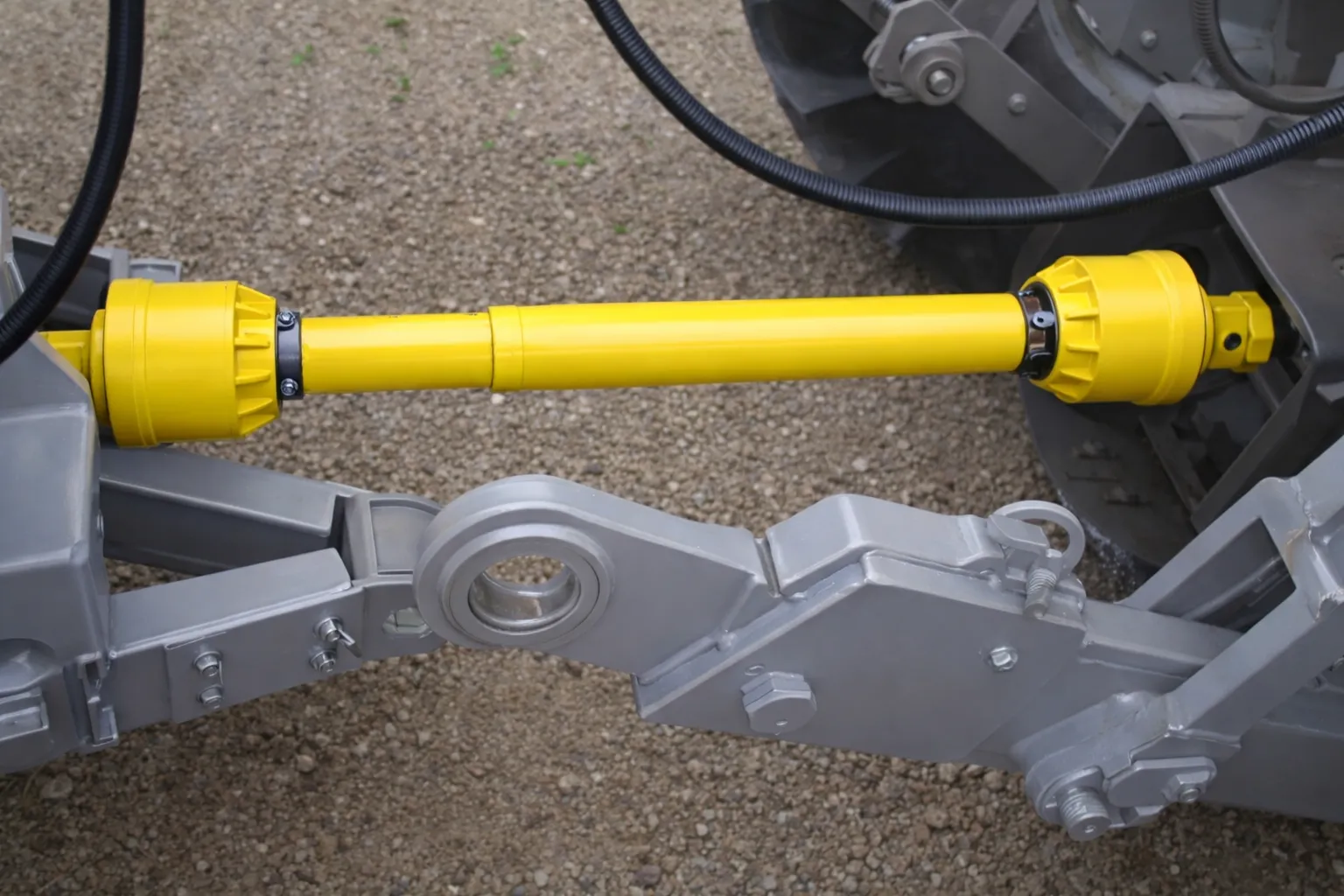
When a dense patch of crop enters the cutter bar, a shock load travels back through the driveline. Our shafts incorporate engineered shear bolts or heavy-duty slip clutches designed explicitly to absorb these torque spikes, preventing damage to both the tractor’s internal gearing and the binder’s delicate knotting mechanism.
Engineering Specifications & Operational Parameters
Below is the definitive data matrix for our reaper-binder specific series. Every dimension and rating has been validated under rigorous laboratory and field testing.
| Parameter | Standard Value / Range | Customization Options |
|---|---|---|
| Series Classification | Series 4 / Series 5 / Series 6 | Up to Series 8 for extreme density crops |
| Tractor HP Range | 35 HP – 90 HP | Scalable for multi-implement setups |
| Continuous Torque Rating | 460 Nm – 830 Nm | Enhanced forging for >1000 Nm |
| Max Operating Angle | 25° (Standard) | Wide Angle CV Joint (up to 80°) |
| Operating RPM | 540 / 1000 RPM | Dual-speed compatible yokes |
| Tube Profile Geometry | Lemon / Triangular / Star | Splined or Hexagonal profiling |
| Universal Joint Size | 27mm x 74.6mm / 30.2mm x 80mm | Over-sized U-joints available |
| Cross Bearing Material | 20CrMnTi Alloy Steel | Cryogenic treated bearing steel |
| Lubrication Interval | 50 Hours (Standard) | Extended 250H Maintenance-Free seals |
| Overall Closed Length | 800mm – 1210mm | Cut-to-length factory service (500mm-2000mm) |
| Telescopic Travel (Stroke) | 250mm – 400mm | Extended stroke configurations |
| Implement Yoke Type | 1-3/8″ 6 Spline Push Pin | Clamp bolt, Taper pin, Flange mount |
| Tractor Yoke Type | 1-3/8″ 6 Spline Quick Disconnect | 21-spline / 20-spline custom interface |
| Overload Protection | Shear Bolt Yoke (Grade 8.8) | Friction Slip Clutch (2-disc or 4-disc) |
| Overrunning Clutch | Optional Ratchet Free-wheel | Integrated RA clutch for high-inertia |
| Safety Guard Material | UV-stabilized Polyethylene | Heavy-wall composite for extreme heat |
| Guard Certification | CE / ISO 5674 | AS/NZS compliant rigid shields |
| Dynamic Balancing Grade | G16 (Standard Ag) | G6.3 for high-speed operation |
| Anti-Corrosion Coating | Powder Coated / Zinc Plated | Electrophoretic deposition (E-coating) |
| Operating Temp Range | -20°C to +65°C | High-temp grease (-40°C to +120°C) |
| Yield Strength (Tube) | > 350 MPa | High-carbon steel tube > 500 MPa |
| Shear Torque Limit | 900 Nm | Adjustable via bolt diameter calculation |
| Slip Clutch Setting Range | 600 Nm – 1200 Nm | Pre-set at factory based on implement spec |
| Weight (Approx) | 12.5 kg – 18 kg | Lightweight aluminum tube options |
| Noise Level at 540 RPM | < 75 dB | Acoustic damping internal sleeves |
Australian Territory Extreme Condition Adaptability
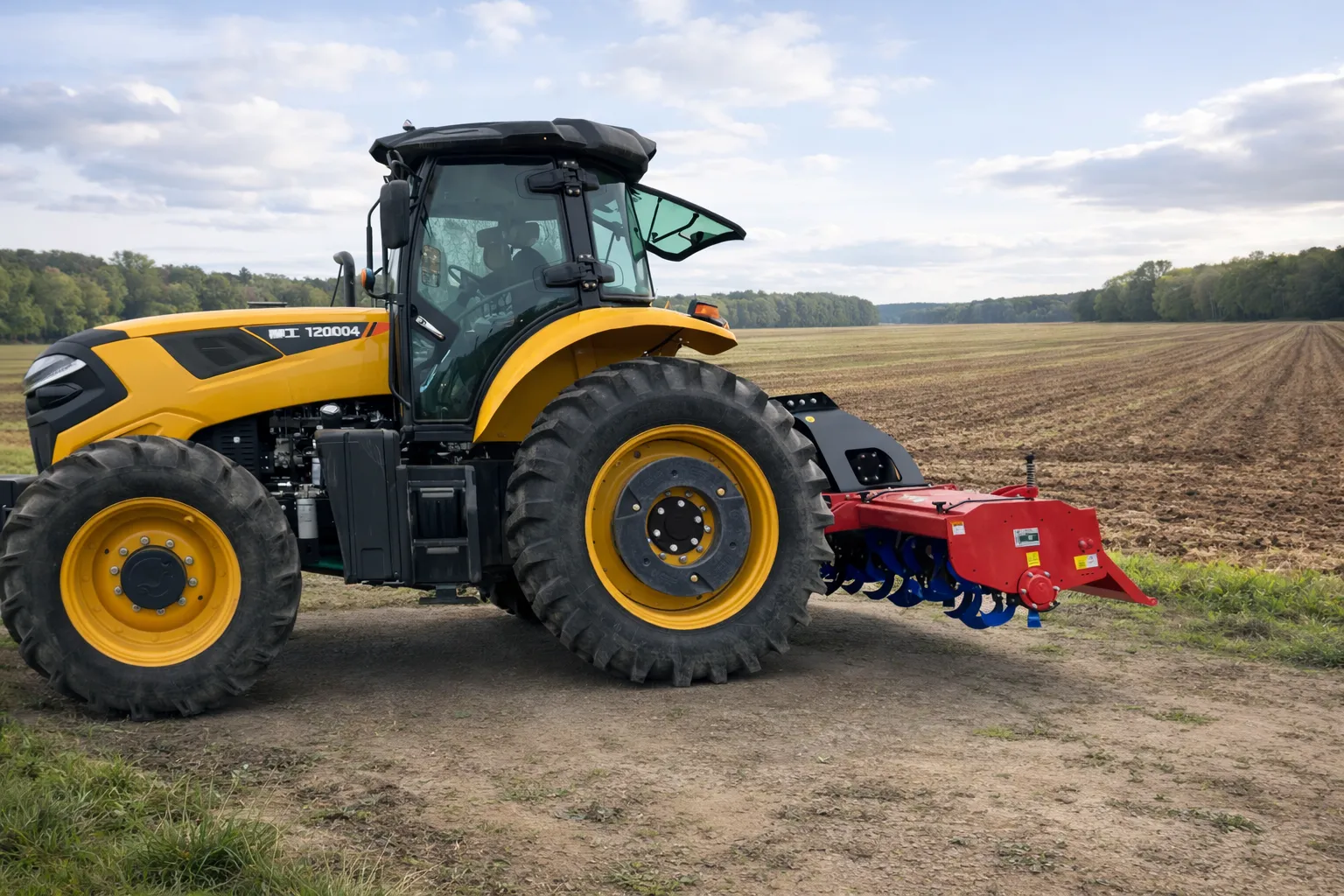
The agricultural landscape in Australia demands mechanical resilience that goes beyond standard European or North American specifications. Whether operating a reaper-binder in the undulating terrains of New South Wales or facing the intense dry heat during the Western Australian harvest window, the pto shaft must perform flawlessly.
Safety Compliance: SafeWork NSW & WorkSafe Victoria
Australian workplace health and safety (WHS) regulations are among the strictest globally. Specifically, AS 1121.4 specifies guarding requirements for agricultural PTO drivelines. Every shaft manufactured by Ever-power for the Australian market features a continuous, robust plastic shield covering the entire length of the rotating shaft, including the universal joints. The anti-rotation chains are reinforced to withstand severe field snagging, ensuring zero operator exposure to rotating hazards.
Thermal and Dust Resistance for the Outback
Operating temperatures in regions like Queensland can push implement operating temperatures well beyond normal thresholds. Our pto drive shafts utilize specialized high-temperature polyurea grease and UV-stabilized shield plastics that resist degradation under the harsh Australian sun. This prevents the guards from becoming brittle and shattering, a common failure point in inferior aftermarket shafts.
Cross-Reference Brand Compatibility
Integrating replacement components into existing mechanical fleets requires exact dimensional matching and equivalent torque handling capabilities.
Our engineering team has meticulously matched the profiles, spline counts, and torque ratings to provide seamless drop-in replacements for standard equipment found on vintage and modern reaper-binders.
- Comer System Replacements: Direct interchangeability with Italian-style triangular tube profiles (e.g., Series 2 through Series 8).
- Walterscheid System Replacements: Exact dimensional matches for German-style lemon-profile tubes, ensuring the sliding members interface without binding under load.
- Bondioli & Pavesi Compatibility: Comprehensive matching for CV joints and specialized safety clutches used in high-end harvesting equipment.

Accurate Shaft Sizing and Selection Protocol
Selecting the incorrect tractor pto shaft can lead to severe equipment damage or unsafe operating conditions. Follow this engineering checklist before procurement:
| Verification Step | Measurement Focus | Reaper-Binder Specific Implication |
|---|---|---|
| 1. Power Requirements | Identify Tractor PTO HP & RPM (540 or 1000) | Binders typically operate at 540 RPM. Ensure the shaft series matches the torque load. |
| 2. Yoke Spline Configuration | Count splines and measure shaft diameter at both ends. | Usually 1-3/8″ 6-spline. Confirm implement side is not a smooth bore with a keyway. |
| 3. Collapsed Length | Measure distance between locking grooves (tractor to implement) fully raised. | A shaft that bottoms out will destroy the tractor’s internal bearings instantly. |
| 4. Extended Length overlap | Calculate minimum tube overlap (usually 1/3 of total length). | Insufficient overlap during sharp turns causes tube buckling and separation. |
| 5. Overload Device | Select Shear Bolt or Friction Clutch. | Crucial for binders. Slip clutches are preferred to absorb cutter bar blockages without stopping work to replace bolts. |
Field Installation Sequence for Reaper-Binders
Correct installation guarantees maximum longevity. Always ensure the tractor engine is completely shut off and the key is removed before handling drivetrain components.
- Length Verification & Cutting (If necessary): Hitch the binder to the tractor. Maneuver to the position where the distance between the two PTO stubs is at its absolute minimum. If the shaft bottoms out, remove equal lengths of both the plastic shielding and the inner/outer metal tubes. Deburr all cut edges aggressively.
- Greasing Profiles: Apply a generous coating of lithium-based grease along the entire length of the inner sliding tube. Dry tubes create extreme axial thrust loads that destroy U-joints.
- Yoke Attachment: Slide the implement end yoke (usually containing the slip clutch or shear pin) onto the binder’s input shaft. Ensure the locking pin clicks securely into the retaining groove. Repeat for the tractor side yoke.
- Phasing Verification: Verify that the yokes at opposite ends of the complete shaft are perfectly aligned (in phase). Misalignment causes severe non-canceling velocity fluctuations and aggressive vibration.
- Shield Chain Securing: Anchor the anti-rotation chains to rigid, stationary points on both the tractor and the implement. The chains must have enough slack to permit full turning angles but tight enough to prevent the guard shell from spinning.

Comprehensive Powertrain Solutions: Agricultural Gearboxes & Parts
The power transmission cycle does not end at the universal joint. The kinetic energy generated by the tractor must be precisely stepped up, stepped down, or redirected by 90 degrees to drive the complex mechanisms of a reaper-binder. This is where high-precision agricultural gearboxes become the critical command center of the implement.
The Symbiosis of Shafts and Gearboxes
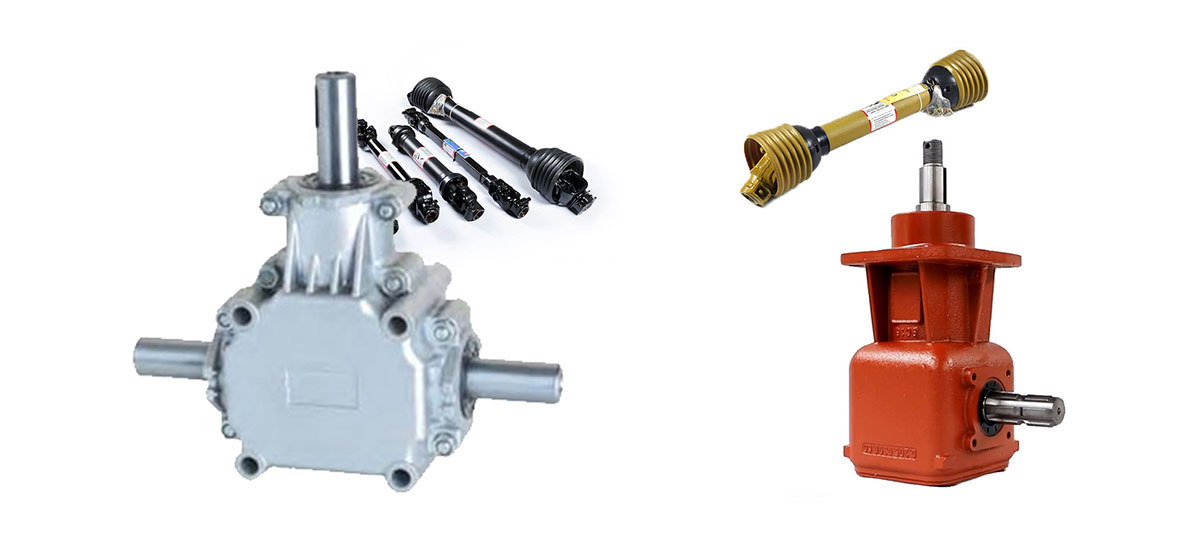
A pto shaft is only as effective as the gearbox it drives. If the implement’s input gearbox suffers from excessive backlash, poor bearing seating, or housing flex, the resulting vibration will back-feed through the driveline, shattering the PTO cross bearings prematurely. Conversely, a poorly balanced shaft will hammer a high-quality gearbox into early failure. At Ever-power, we manufacture both. We design our driveshafts and gearboxes concurrently to ensure perfect harmonic resonance compatibility.
For reaper-binders, the main input bevel gearbox dictates the rhythm of the entire harvest. Our gearboxes feature forged alloy steel bevel gears, carburized and quenched for maximum surface hardness while maintaining a ductile core to absorb shock loads from the cutter bar.
Critical Consumables & Driveline Components
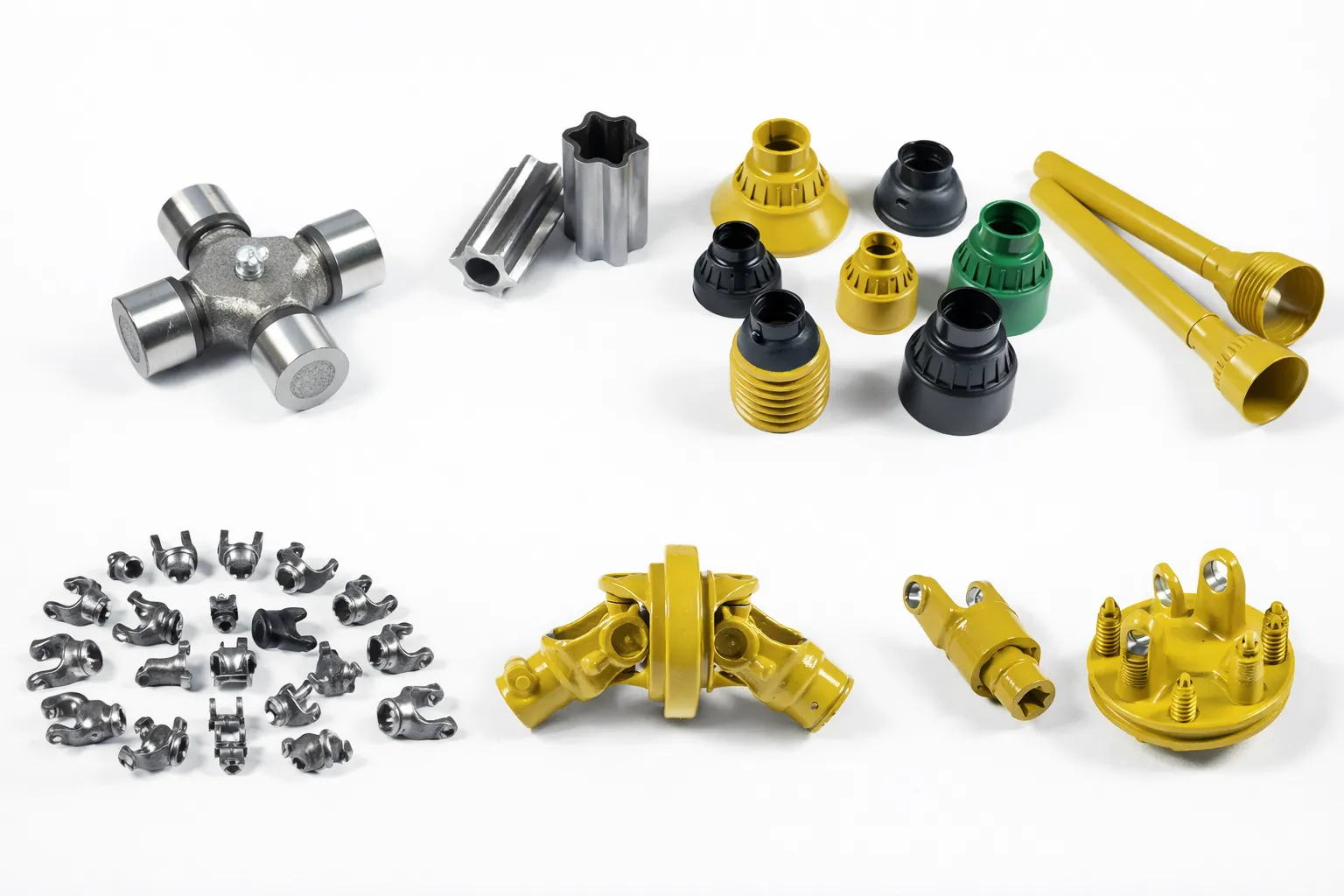
Beyond complete driveline assemblies, maintaining a robust inventory of high-wear parts is essential during the narrow harvesting window. A single broken chain or worn sprocket can halt a multi-million-dollar operation.

Operational Diagnostics & Mechanical Recovery
Recognize the acoustic and physical indicators of mechanical distress before a catastrophic separation occurs.
Issue: Extreme Shaft Vibration and Clattering Noise
Resolution Protocol: Disconnect the two shaft halves. Examine the profile tubes. Align the indicator markings (or align the yokes visually so they are parallel) and slide the tubes back together.
Issue: Slip Clutch Continuously Smoking / Free-spinning
Resolution Protocol: Check the implement for jams. If clear, measure the compression spring length and tighten the retaining nuts equally in a star pattern to the specified torque. If plates are glazed, replace them.
Issue: Telescopic Tubes Jammed / Cannot Compress
Resolution Protocol: Attempt to inject penetrating fluid. If the tubes are visibly bent, the entire assembly must be replaced immediately. Never attempt to heat and straighten a bent PTO tube.
Field Engineering Case Studies: Australian Operations
Raw data translates to field reliability. Here are direct excerpts from our technical deployment teams across the Australian continent.
📍 Melbourne, Victoria – Oat Harvesting Cooperative
Application Context: Multi-farm cooperative utilizing a high-capacity reaper-binder for animal feed oat processing.
The Hurdle: Frequent shear bolt snapping during early morning harvests when crop moisture was highest, causing unacceptable downtime.
Ever-power Integration: Upgraded the fleet to our Series 6 tractor pto shaft equipped with a 4-disc friction clutch set to slip at 950 Nm, absorbing the dew-heavy crop intake spikes.
Client Feedback: “We eliminated the 30-minute stops to punch out broken bolts. The clutch just chatters slightly under load and keeps cutting. Brilliant upgrade.”
📍 Sydney, NSW (Peri-urban Agricultural Zone) – Specialty Crop Farm
Application Context: Small-plot binder operations requiring highly maneuverable compact tractors.
The Hurdle: Sharp headland turns were causing standard joints to bind and violently shake the transmission housing.
Ever-power Integration: Implemented an 80-degree Wide Angle CV (Constant Velocity) joint on the tractor side.
Client Feedback: “The difference is night and day. I can execute full-lock turns at the end of the rows without disengaging the PTO.”
📍 Brisbane, Queensland – Tropical Forage Operations
Application Context: Binding thick, fibrous tropical grasses in high humidity environments.
The Hurdle: Rapid corrosion of spline yokes and premature guard degradation due to intense UV exposure.
Ever-power Integration: Specified our marine-grade E-coated yokes and heavy-wall AS/NZS compliant black UV-stabilized shield tubes.
Client Feedback: “Two seasons in the tropical sun and the guards haven’t cracked once. The splines still slide on smoothly.”
📍 Perth, Western Australia – Broadacre Contract Harvesting
Application Context: High-acreage continuous operation running 14-hour days.
The Hurdle: Cross bearings failing due to grease liquefaction under sustained thermal loads.
Ever-power Integration: Upgraded bearing crosses to high-temperature synthetic grease specs with double-lip elastomer seals.
Client Feedback: “We pushed these shafts through a brutal 3-week window. Zero thermal failures, completely reliable.”
📍 Adelaide, South Australia – Heritage Grain Preservation
Application Context: Operating a restored, vintage pull-type reaper-binder behind a modern utility tractor.
The Hurdle: Modern tractors output power too abruptly for the cast-iron gearboxes of the vintage binder.
Ever-power Integration: Designed a custom driveline featuring a soft-start overrunning clutch combined with a shear bolt yoke to protect the antique machinery.
Client Feedback: “Ever-power engineering saved our antique equipment from being torn apart. Precise load management.”
Frequently Asked Powertrain Inquiries
1. Can I use a standard rotary slasher shaft on my reaper-binder?
It is highly discouraged. A slasher utilizes rotational kinetic energy, whereas a binder features heavy reciprocating masses (the cutter bar). You need a driveline specifically engineered with a friction clutch to absorb cyclic shock loads, not just a standard shear pin.
2. How often should the universal joints be greased during harvest?
Under intense Australian harvest conditions characterized by extreme dust, we recommend purging the cross bearings with high-quality lithium complex grease every 8 to 10 operating hours until fresh grease is visible at all four seal boundaries.
3. What causes the plastic shielding to melt near the slip clutch?
If the friction clutch is continuously slipping due to an implement jam or loose spring tension, it acts as a severe heat sink. This thermal energy transfers to the yoke and melts the polyethylene guard bearing. Ensure the clutch is properly torqued.
4. Why do the profile tubes telescope with extreme difficulty?
This condition, known as ‘thrust loading’, occurs when the sliding profiles lack grease, become contaminated with soil, or are bent. It exerts immense pressure on the tractor’s PTO bearings. Clean the tubes, inspect for straightness, and grease heavily.
5. Is a Wide Angle CV joint necessary for my setup?
If your field geometry requires sharp headland turning while the power must remain engaged (typical in small plot binding), a CV joint is essential. It allows operational angles up to 80 degrees without vibration.
6. My tractor has a 21-spline output, but the implement is 6-spline. Solutions?
While spline adapters exist, they push the driveline backward, altering geometry and increasing leverage on the tractor shaft. We strongly recommend ordering a custom driveline built with a 1-3/8″ 21-spline tractor yoke and a 6-spline implement yoke.
7. How do I properly size a replacement cross bearing?
Measure the precise outside diameter of the bearing cap (e.g., 27mm) and the total distance across the cross from cap end to cap end (e.g., 74.6mm). Provide these dimensions to our engineers for exact matching.
8. Can I replace a lemon tube with a triangular tube profile?
You must replace the entire shaft assembly. Yokes designed for lemon (German style) tubing cannot be welded or adapted to triangular (Italian style) tubing. Our complete assemblies allow you to upgrade the entire system seamlessly.
9. What is the maximum safe operating angle for a standard universal joint?
For continuous, heavy-load operation like binding, the angle should not exceed 15-20 degrees. Short durations can tolerate 25 degrees. Exceeding this causes the joint to ‘chatter’ and rapidly fail.
10. Are your safety shields compliant with Australian WHS standards?
Absolutely. All Ever-power drivelines destined for Australia are fitted with heavy-duty, UV-stabilized full-coverage guards and retaining chains that meet or exceed AS 1121.4 requirements for agricultural machinery.
Precision Manufacturing & Custom Engineering
At Ever-power, we operate extensive CNC machining centers, robotic welding bays, and dynamic balancing testing rigs to produce world-class powertrain components. While our standard catalog covers 90% of field applications, our true strength lies in solving complex mechanical challenges.
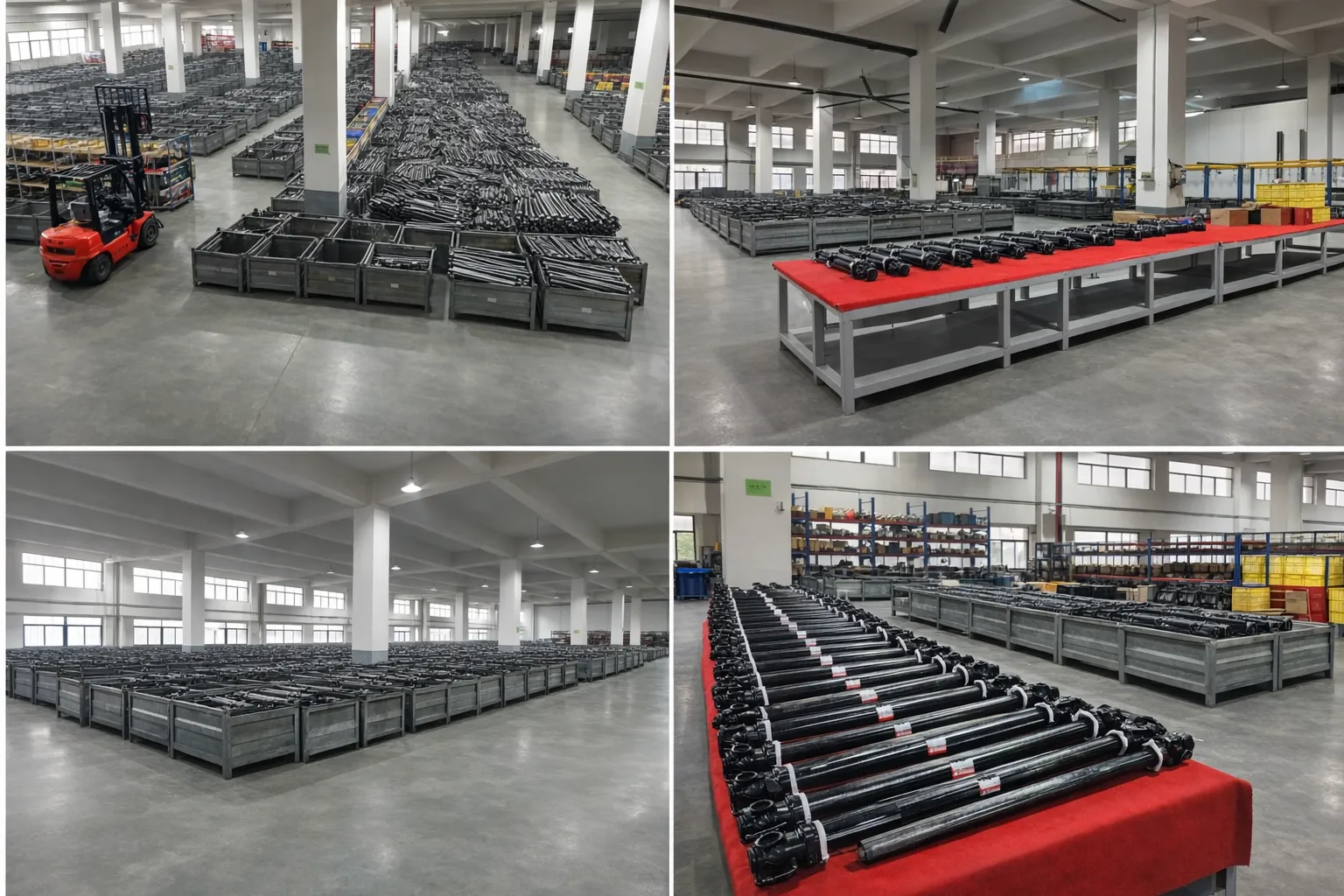
Require a non-standard spline, a specific overall length, or a custom torque-setting slip clutch? Our engineering team excels at interpreting blueprints, CAD models, or physical samples. We provide end-to-end custom fabrication to ensure your agricultural machinery operates without compromise.