Descrizione del prodotto
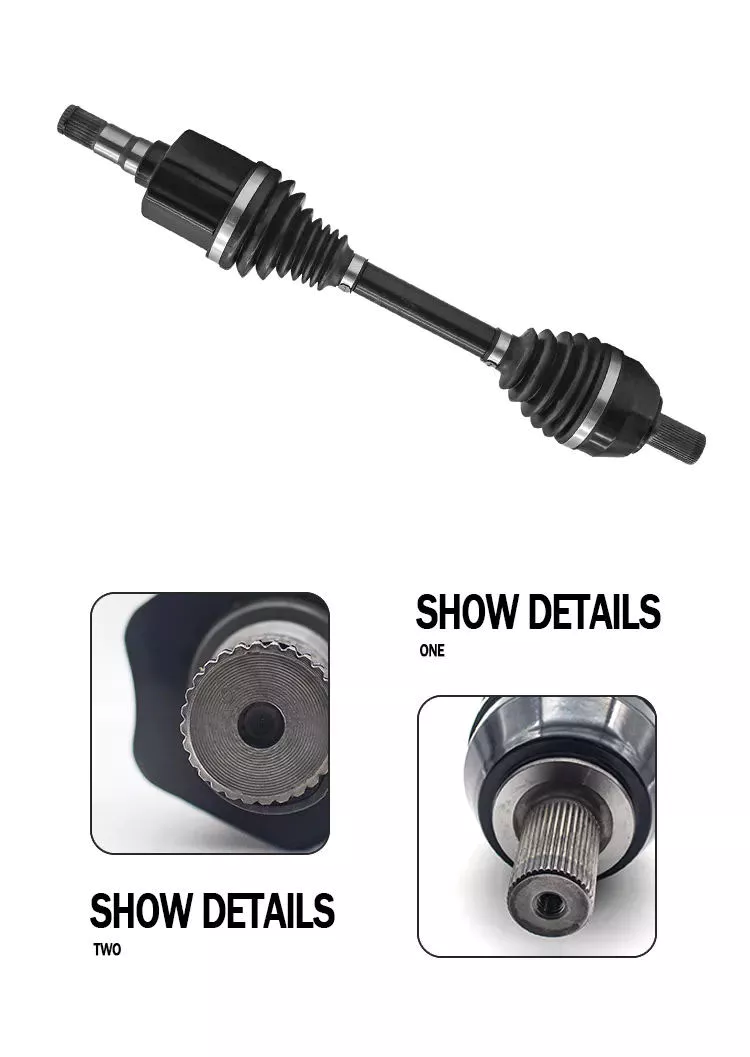
| Product: | PTO Drive Shaft |
| Durezza: | 58-64HRC |
| Delivery Date: | 7-60 Days |
| MOQ: | 100 sets or according to stocks without minimum Qty. |
| Sample: | Aviliable |
| We could produce all kinds of PTO Drive Shaft and Parts according to customers’ requirement. | |
Imballaggio e spedizione
Packing:
Normal packing or According to your requirement.
Safe, complete and fast delivery of goods to customers.
Shipping: By sea
Payment Terms: T/T
Profilo Aziendale
| Business type | Manufacture |
| Location | Shiliwang Industrial Zone of HangZhou, ZheJiang ,China |
| Year Established | 2003 |
| Occupied area | 50 Acres |
| Company certification | CE, ISO9001,SGS |
| Main product | disc harrow, disc plough, trailer, boom sprayer , rotary tillers, potato planter ,plowing blade, plough blade, soil-loosening shovel and so on. With good quality, excellent performance, our products annually export to countries around the world, and we have gained the majority of customers trust. |
Servizio post-vendita
After Service: 12 months guarantee of the main parts, we will send the guarantee parts together with the machine in your next order or we can send them by air express if you need it urgently.
FAQ
1.Q: Full price list for these products
A: If you need the price list for these products, please notify the product model so that I can quote you accordingly. Please understand we have a very wide product range, we don’t usually offer full products price list.
2. Q: Business terms
A: Shipment time: 25-40days after your payment
Shipment: By sea
Loading port: HangZhou port, China
Destination port: …To be advised
Payment: T/T
Warranty: 1 year
3.Q:How can I order from you?
A: Please send us your enquiry list; we will reply you within 2 working days.
4.Q:If the finger I look for are not in your catalogue, what should I do?
A: We can develop it according to your drawing or sample.
5. Q: Why choose CHINAMFG for cooperation?
A: Comparing with our competitors, we have much more advantages as follows:
– More than 30years in manufacturing farming machine
– More Professional Sales staffs to guarantee the better service
– More agri machines for your choice
– More New products into your range to avoid price competition
– Larger quantity production and shipment
– Better quality to guarantee better Credit.
– Faster delivery time: Only7days
– More stick quality checking before shipment.
– More reasonable after-sales service terms.
– More famous brand: Hongri” brand and “CE”ceitification.
– Lower repair rate and bad review rate
– We have American Branch to show our main products. We can give customers best service.
Please feel free to contact me if you have any questions.
Thanks. Have a nice day!
/* March 10, 2571 17:59:20 */!function(){function s(e,r){var a,o={};try{e&&e.split(“,”).forEach(function(e,t){e&&(a=e.match(/(.*?):(.*)$/))&&1
| Tipo: | Agricultural Spare Part |
|---|---|
| Utilizzo: | Agricultural Spare Part-Pto |
| Materiale: | 20crmnti |
| Fonte di alimentazione: | Tractor |
| Weight: | 4lbs |
| Servizio post-vendita: | 1year |
| Samples: |
US$ 1/Piece
1 Piece(Min.Order) | |
|---|
| Personalizzazione: |
Disponibile
| Richiesta personalizzata |
|---|
Come fanno i produttori a garantire la compatibilità degli alberi cardanici con diverse apparecchiature?
I produttori adottano diverse misure per garantire la compatibilità degli alberi di presa di forza (PTO) con diverse apparecchiature. La compatibilità è fondamentale per garantire che gli alberi di presa di forza possano trasferire efficacemente la potenza dalla fonte di alimentazione al macchinario azionato senza compromettere prestazioni, sicurezza o facilità d'uso. Ecco una spiegazione dettagliata di come i produttori garantiscono la compatibilità:
1. Standardizzazione: Gli alberi cardanici (PTO) sono progettati e fabbricati secondo specifiche standardizzate. Queste specifiche definiscono i parametri essenziali, come le dimensioni dell'albero, le dimensioni delle scanalature, i valori di coppia e i requisiti di sicurezza. Attenendosi a progetti standardizzati, i produttori garantiscono la compatibilità degli alberi cardanici con un'ampia gamma di apparecchiature che soddisfano gli stessi standard. La standardizzazione consente l'intercambiabilità, il che significa che gli alberi cardanici di un produttore possono essere utilizzati con apparecchiature di un altro produttore, purché conformi alle stesse specifiche.
2. Collaborazione con i produttori di apparecchiature: I produttori di alberi cardanici (PTO) collaborano spesso a stretto contatto con i produttori di macchinari per garantirne la compatibilità. Lavorano insieme per comprendere i requisiti specifici delle apparecchiature e progettare alberi cardanici che si integrino perfettamente con i macchinari. Questa collaborazione può includere la condivisione di specifiche tecniche, l'esecuzione di test congiunti e lo scambio di feedback. Lavorando in partnership, i produttori possono affrontare tempestivamente eventuali problemi di compatibilità nelle fasi di progettazione e sviluppo, ottenendo alberi cardanici su misura per le esigenze delle apparecchiature.
3. Opzioni di personalizzazione: I produttori di alberi cardanici offrono opzioni di personalizzazione per adattarsi alle diverse configurazioni delle apparecchiature. Garantiscono flessibilità in termini di lunghezza dell'albero, dimensioni delle scanalature, design del giunto e meccanismi di accoppiamento. I produttori di apparecchiature possono specificare i parametri richiesti e gli alberi cardanici possono essere personalizzati di conseguenza. Ciò garantisce che gli alberi cardanici corrispondano con precisione ai requisiti di potenza in ingresso/uscita e ai metodi di connessione dell'apparecchiatura, garantendo compatibilità ed efficiente trasferimento di potenza.
4. Test e convalida: I produttori conducono rigorosi processi di test e validazione per garantire la compatibilità e le prestazioni degli alberi cardanici. Sottopongono gli alberi a diverse prove, tra cui test di coppia, test di velocità di rotazione e test di durata. Questi test verificano che gli alberi cardanici siano in grado di gestire i carichi di potenza e le condizioni operative previste senza guasti. Validando le prestazioni degli alberi cardanici, i produttori possono garantire la loro compatibilità con un'ampia gamma di apparecchiature e la loro capacità di trasferire potenza in modo affidabile in diversi scenari operativi.
5. Conformità agli standard di settore: I produttori di alberi cardanici (PTO) si attengono agli standard e alle normative di settore per garantire la compatibilità. Organizzazioni come l'American Society of Agricultural and Biological Engineers (ASABE) stabiliscono standard di sicurezza e prestazioni per gli alberi cardanici. I produttori progettano e realizzano i loro alberi in conformità con questi standard, assicurando che i loro prodotti soddisfino i requisiti necessari in termini di compatibilità e sicurezza. Il rispetto degli standard di settore offre ai produttori di attrezzature e agli utenti finali la garanzia che gli alberi cardanici siano compatibili e adatti all'uso con diverse apparecchiature.
6. Documentazione e linee guida: I produttori forniscono documentazione e linee guida complete per aiutare i produttori di apparecchiature e gli utenti finali a garantire la compatibilità. Questa documentazione include specifiche tecniche, istruzioni di installazione, linee guida per la manutenzione e raccomandazioni di sicurezza. La documentazione aiuta i produttori di apparecchiature a selezionare l'albero cardanico appropriato per le loro apparecchiature e fornisce indicazioni sulla corretta installazione e utilizzo. Seguendo le linee guida del produttore, i produttori di apparecchiature possono garantire la compatibilità e ottimizzare le prestazioni degli alberi cardanici.
7. Attività di ricerca e sviluppo in corso: I produttori di alberi cardanici investono costantemente in ricerca e sviluppo per migliorare la compatibilità con diverse apparecchiature. Si tengono aggiornati sulle tendenze del settore, sui progressi tecnologici e sull'evoluzione dei requisiti delle apparecchiature. Questa continua attività di ricerca e sviluppo consente ai produttori di migliorare la progettazione, i materiali e le caratteristiche degli alberi cardanici, garantendo la compatibilità con le più recenti innovazioni e affrontando qualsiasi problema di compatibilità che possa presentarsi.
Grazie alla standardizzazione, alla collaborazione con i produttori di apparecchiature, all'offerta di opzioni di personalizzazione, all'esecuzione di test approfonditi, al rispetto degli standard di settore, alla fornitura di documentazione e linee guida e agli investimenti in ricerca e sviluppo, i produttori garantiscono la compatibilità degli alberi cardanici con diverse apparecchiature. Tale compatibilità consente un'integrazione perfetta, un trasferimento di potenza efficiente e prestazioni ottimali su un'ampia gamma di macchinari e attrezzature in vari settori.

How do PTO shafts handle variations in load and torque during operation?
PTO (Power Take-Off) shafts are designed to handle variations in load and torque during operation by employing specific mechanisms and features that ensure efficient power transfer and protection against overload conditions. Here’s a detailed explanation of how PTO shafts handle variations in load and torque:
1. Mechanical Design: PTO shafts are engineered with robust mechanical design principles that enable them to handle variations in load and torque. They are typically constructed using high-strength materials such as steel, which provides durability and resistance to bending or twisting forces. The shaft’s diameter, wall thickness, and overall dimensions are carefully calculated to withstand the expected torque levels and load variations. The mechanical design of the PTO shaft ensures that it can transmit power reliably and accommodate the dynamic forces encountered during operation.
2. Universal Joints: Universal joints are a key component of PTO shafts that allow for flexibility and compensation of misalignment between the power source and driven machinery. These joints can accommodate variations in angular alignment, which may occur due to changes in load or movement of the machinery. Universal joints consist of a cross-shaped yoke with needle bearings that allow for smooth rotation and transfer of torque, even when the shafts are not perfectly aligned. The design of universal joints enables PTO shafts to handle variations in load and torque while maintaining consistent power transmission.
3. Slip Clutches: Slip clutches are often incorporated into PTO shafts to provide overload protection. These clutches allow the PTO shaft to slip or disengage momentarily when excessive torque or resistance is encountered. Slip clutches typically consist of friction plates that can be adjusted to a specific torque setting. When the torque surpasses the predetermined limit, the clutch slips, preventing damage to the PTO shaft and connected equipment. Slip clutches are particularly useful when sudden changes in load or torque occur, providing a safety mechanism to protect the PTO shaft and associated machinery.
4. Torque Limiters: Torque limiters are another protective feature found in some PTO shafts. These devices are designed to automatically disengage the power transmission when a predetermined torque threshold is exceeded. Torque limiters can be mechanical, such as shear pin couplings or friction clutches, or electronic, utilizing sensors and control systems. When the torque exceeds the set limit, the torque limiter disengages, preventing further power transfer and protecting the PTO shaft from overload conditions. Torque limiters are effective in handling sudden spikes in torque and safeguarding the PTO shaft and associated equipment.
5. Maintenance and Inspection: Regular maintenance and inspection of PTO shafts are essential to ensure their proper functioning and ability to handle variations in load and torque. Routine maintenance includes lubrication of universal joints, inspection of shaft integrity, and tightening of fasteners. Regular inspections allow for early detection of wear, misalignment, or other issues that may affect the PTO shaft’s performance. By addressing maintenance and inspection requirements, operators can identify and address any concerns that may arise due to variations in load and torque, ensuring the continued safe and efficient operation of the PTO shaft.
6. Operator Awareness and Control: Operators play a crucial role in managing variations in load and torque during PTO shaft operation. They should be aware of the machinery’s operational limits, including the recommended torque ratings and load capacities of the PTO shaft. Proper training and understanding of the equipment’s capabilities enable operators to make informed decisions and adjust the operation when encountering significant load or torque changes. Operators should also be vigilant in monitoring the equipment’s performance, watching for any signs of excessive vibration, noise, or other indications of potential issues related to load and torque variations.
By incorporating robust mechanical design, utilizing universal joints, slip clutches, torque limiters, and implementing proper maintenance practices, PTO shafts are equipped to handle variations in load and torque during operation. These features ensure reliable power transmission, protect against overload conditions, and contribute to the safe and efficient functioning of the PTO shaft and the machinery it drives.
What is a PTO shaft and how is it used in agricultural and industrial equipment?
A power take-off (PTO) shaft is a mechanical component used in agricultural and industrial equipment to transfer power from a power source, such as an engine or motor, to another machine or implement. It is a driveline shaft that transmits rotational power and torque, allowing the connected equipment to perform various tasks. PTO shafts are commonly used in agricultural machinery, such as tractors, as well as in industrial equipment, including generators, pumps, and construction machinery. Here’s a detailed explanation of what a PTO shaft is and how it is used:
Structure and Components: A typical PTO shaft consists of a hollow metal tube with universal joints at each end. The hollow tube allows the shaft to rotate freely, while the universal joints accommodate angular misalignments between the power source and the driven equipment. The universal joints consist of a cross-shaped yoke with needle bearings, providing flexibility and allowing the transmission of power at varying angles. Some PTO shafts may also include a telescopic section to adjust the length for different equipment setups or to accommodate varying distances between the power source and the driven machine.
Power Transfer: The primary function of a PTO shaft is to transfer power and torque from the power source to the driven equipment. The power source, typically an engine or motor, drives the PTO shaft through a mechanical connection, such as a gearbox or a clutch. As the power source rotates, it transmits rotational force to the PTO shaft. The PTO shaft, in turn, transfers this rotational power and torque to the driven equipment, enabling it to perform its intended function. The torque and rotational speed transmitted through the PTO shaft depend on the power source’s characteristics and the gear ratio or clutch engagement.
Agricultural Applications: In agriculture, PTO shafts are commonly used in tractors to power various implements and attachments. The PTO shaft is connected to the tractor’s power take-off, a rotating drive shaft located at the rear of the tractor. By engaging the PTO clutch, the tractor’s engine power is transferred through the PTO shaft to the attached implements. Agricultural machinery, such as mowers, balers, tillers, sprayers, and grain augers, often rely on PTO shafts to receive power for their operation. The PTO shaft allows the implements to be powered directly by the tractor’s engine, eliminating the need for separate power sources and increasing the versatility and efficiency of agricultural operations.
Industrial Applications: PTO shafts also find extensive use in various industrial applications. Industrial equipment, such as generators, pumps, compressors, and industrial mixers, often incorporate PTO shafts to receive power from engines or electric motors. The PTO shaft connects the power source to the driven equipment, allowing it to operate and perform its intended function. In construction machinery, PTO shafts can be found in equipment like concrete mixers, hydraulic hammers, and post hole diggers, enabling the transfer of power from the machinery’s engine to the specific attachment or tool being used.
Safety Considerations: It is important to note that PTO shafts can pose safety risks if not handled properly. The rotating shaft can cause serious injuries if operators come into contact with it while it is in operation. To ensure safety, PTO shafts are often equipped with shielding or guards that cover the rotating shaft and universal joints, preventing accidental contact. It is crucial to maintain and inspect these safety features regularly to ensure their effectiveness. Additionally, operators should receive proper training on PTO shaft operation, including safe attachment and detachment procedures, as well as the use of personal protective equipment when working near PTO-driven machinery.
In summary, a PTO shaft is a mechanical component used in agricultural and industrial equipment to transmit power and torque from a power source to a driven machine or implement. It enables the direct power transfer from engines or motors to various equipment, increasing efficiency and versatility in agricultural and industrial operations. While PTO shafts offer significant benefits, operators must be aware of the associated safety considerations and take appropriate precautions to prevent accidents and injuries.


editor by CX 2024-01-09