Étude de terrain sur les conditions de travail extrêmes en Nouvelle-Galles du Sud
Au cours des 15 années que nous avons consacrées à l'entretien de vastes plantations de coton à Moree et Narrabri, notre équipe d'ingénieurs a identifié un point de défaillance critique dans les transmissions agricoles standard. arbre de transmission de prise de force Les configurations ont systématiquement cédé dès la première saison de récolte en raison du caractère extrêmement abrasif des fibres de coton microscopiques mélangées à la fine terre végétale sèche australienne. Ce mélange corrosif agit comme une pâte abrasive, court-circuitant les joints en caoutchouc standard et détruisant les roulements à aiguilles des joints universels.
S’appuyant sur une évaluation rigoureuse menée sur le terrain pendant 10 ans, avec le soutien de l’usine et le suivi de plus de 400 récolteuses de coton automotrices, EVER-POWER a entièrement repensé l’architecture d’étanchéité du joug. Nous avons introduit un joint labyrinthe à lèvres multiples exclusif, associé à une graisse fluoropolymère synthétique haute température. Cette modification ciblée empêche totalement la pénétration des fibres. Fonctionnant à des températures ambiantes constantes de 42 °C (107 °F), la transmission repensée a permis d’augmenter le temps moyen entre les pannes (MTBF) de seulement 300 heures à un niveau sans précédent de 1 500 heures, éliminant ainsi quasiment les temps d’arrêt en cours de récolte pour nos partenaires agricoles australiens.
Technologie de base - Lecture rapide
- ⚙️
Étalonnage dynamique du couple : Il supporte un couple de fonctionnement nominal de 4 500 Nm, avec une capacité d’absorption maximale conçue de 7 200 Nm pour gérer sans problème les chocs violents caractéristiques des activations des tambours des cueilleuses de coton lourdes.
- ⚙️
Intégration à vitesse constante (CV) : Il intègre un joint homocinétique à grand angle de 80 degrés côté tracteur, éliminant les vibrations de torsion lors des virages serrés en bout de champ nécessaires dans les rangées de coton australiennes densément plantées.
- ⚙️
Déviation des débris du labyrinthe : Les tubes télescopiques sont protégés par un système de blindage en polymère stabilisé aux UV et résistant aux chocs qui élimine activement les peluches de coton accumulées et la poussière abrasive des champs.
- ⚙️
Isolation instantanée en cas de surcharge : Doté d'un embrayage à friction à 4 disques de haute précision, ce système est capable de bloquer les broches de prélèvement à un couple de 5 000 Nm précisément en cas de blocage par un corps étranger. Ce mécanisme interrompt instantanément le transfert d'énergie cinétique, protégeant ainsi les réducteurs de la tête de prélèvement, dont la valeur se chiffre en milliers de dollars.
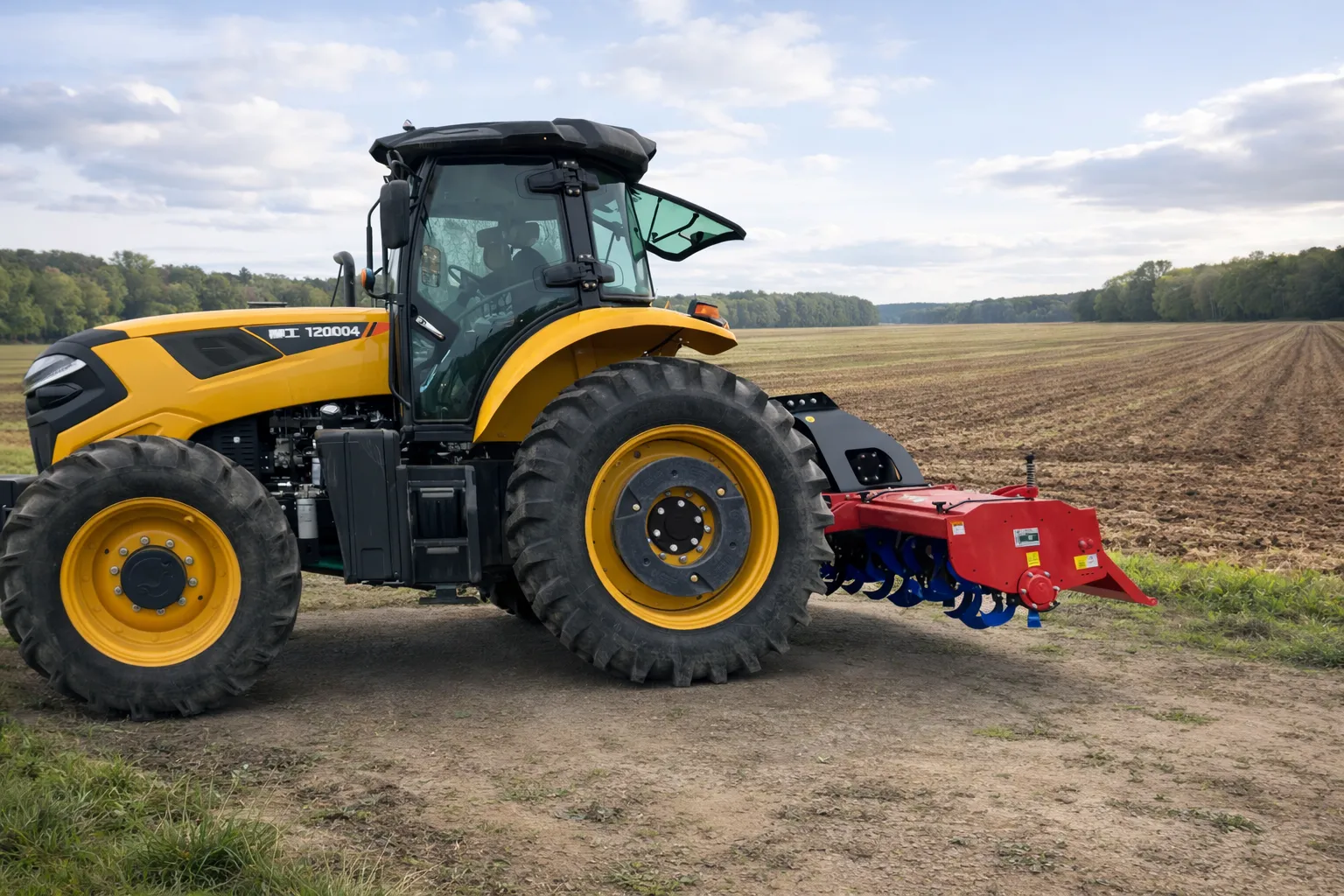
Spécifications techniques approfondies
La fiabilité mécanique des machines de récolte de coton est strictement conditionnée par la densité métallurgique et des tolérances dimensionnelles précises. Le tableau ci-dessous détaille les paramètres d'ingénierie rigoureux de la gamme de transmissions pour cueilleuses de coton EVER-POWER, illustrant à la fois nos caractéristiques standard et nos nombreuses possibilités de personnalisation.
| ID du paramètre | Description technique | Configuration standard (cueilleuse de coton) | Gamme de personnalisation |
|---|---|---|---|
| T-NOM-01 | Couple de fonctionnement nominal | 4 500 Nm | 1 200 Nm – 8 500 Nm |
| T-MAX-02 | Couple de choc maximal | 7 200 Nm (instantané) | Jusqu'à 12 000 Nm |
| RPM-OP-03 | Cible de vitesse de rotation | 1 000 tr/min en continu | 540 tr/min / 1 000 tr/min interchangeable |
| MAT-YOK-04 | Métallurgie du joug | Acier allié 42CrMo forgé à matrice fermée | Fer à graphite sphéroïdal / 20CrMnTi |
| MAT-TUB-05 | Profil du tube télescopique | Profilé en étoile à paroi épaisse (équivalent série 8/9) | Spline citron / triangulaire / en développante |
| ANG-CV-06 | Angle de déflexion maximal (joint homocinétique) | 80° (virage court) | 50° – 80° selon la géométrie de l'attelage |
| ANG-CNT-07 | Angle de travail continu | 25° maximum en continu | Fenêtre de fonctionnement optimisée de 15° à 30° |
| CLU-TYP-08 | Mécanisme de protection contre les surcharges | Embrayage à friction à 4 disques avec roue libre | Boulon de cisaillement / Type came à réarmement automatique / Goupille radiale |
| SPL-TPA-09 | Spline d'interface du tracteur | 1-3/8″ 21 cannelures (conforme à la norme AS 1121.1) | 1-3/4″ 20 cannelures / 1-3/8″ 6 cannelures |
| SPL-IMP-10 | Interface de mise en œuvre (Sélecteur) | Raccord à bride à goupille conique | Alésage avec rainure de clavette / Étrier de type bride |
| LEN-MIN-11 | Longueur comprimée fermée (Lz) | 1 210 mm | 600 mm – 2 800 mm |
| TRV-MAX-12 | Course télescopique maximale | 350 mm (en conservant un chevauchement de 1/3) | Calculé dynamiquement pour chaque profil de tube |
| GRD-TYP-13 | Système de protection | Polyéthylène haute densité (PEHD), traité aux UV | Nylon résistant à la chaleur / Flexibilité par temps froid |
| GRD-RET-14 | Rétention du bouclier | Chaînes anti-rotation doubles (résistance à la traction de 700 lb) | paliers indépendants non rotatifs |
| LUB-INT-15 | Intervalle de relubrification | 250 heures de fonctionnement | Scellé sans entretien et d'une durée de vie prolongée de 500 heures |
| BAL-LVL-16 | Niveau d'équilibrage dynamique | G16 (norme ISO 1940-1) à 1000 tr/min | G6.3 Haute précision pour boîtes de vitesses sensibles |
| TMP-RNG-17 | Plage de fonctionnement thermique | -20°C à +75°C (-4°F à +167°F) | Améliorations des complexes de lithium pour températures extrêmes |
| SUR-TRT-18 | Protection contre la corrosion de surface | Revêtement en poudre époxy (épaisseur de 120 μm) | Galvanisation à chaud / Revêtement Dacromet |
| WGT-NET-19 | Poids net de l'assemblage | 42,5 kg (à la longueur de base de 1210 mm) | Cela varie considérablement en fonction du calibre du tube. |
| VIB-TOL-20 | Tolérance aux vibrations (RMS) | ≤ 4,5 mm/s | Inserts d'amortissement élastomères sur mesure disponibles |
| CRS-DIM-21 | Dimensions transversales du joint universel | 34,9 mm x 106 mm (d'un capuchon à l'autre) | Conçu pour répondre à des besoins énergétiques spécifiques |
| BRG-TYP-22 | Architecture des roulements | Roulements à aiguilles à cage | Ensemble d'aiguilles complet et robuste |
| SEAL-TYP-23 | Conception du joint de tourillon | Caoutchouc nitrile butadiène à triple lèvre (NBR) | Joints haute température Viton® (FKM) |
| LIF-EXP-24 | Durée de vie en fatigue conçue | > 10 000 heures de fonctionnement (charge nominale) | Grenadières grenaillées pour prolonger la durée de vie des cartouches 30% |
| CERT-CMP-25 | Normes de conformité | ISO 500-1, AS 1121.1, Directive Machines CE | Homologations minières/industrielles spécifiques au site |
Déconstruction cinématique : la chaîne cinématique de la cueilleuse de coton
Dans l'architecture d'une cueilleuse de coton automotrice moderne ou d'une cueilleuse tractée, l'arbre de prise de force (PDF) constitue l'élément moteur indispensable. Il est positionné de manière à relier la sortie de transmission principale du châssis (ou du différentiel arrière du tracteur) et le réducteur de distribution principal, monté directement sur l'imposante tête de cueillette articulée.
Mécanismes opérationnels : Le puissant moteur diesel génère une force de rotation qu'il transmet à la boîte de vitesses principale, fournissant un régime constant de 1 000 tr/min à la prise de force cannelée. Le joug cannelé de la transmission s'enclenche sur cette prise. L'énergie de rotation est ensuite transmise aux joints de cardan. La tête de la récolteuse de coton se relevant et s'abaissant constamment grâce à des vérins hydrauliques pour épouser les contours du terrain, la transmission ne peut être rigide et de longueur fixe.
C’est ici que les tubes télescopiques jouent leur rôle crucial. Les tubes intérieur et extérieur coulissent en continu l’un dans l’autre, compensant la variation de distance entre le tracteur et l’outil tout en transmettant un couple de plusieurs milliers de newtons-mètres. L’énergie est finalement transmise au réducteur de la cueilleuse, qui actionne ensuite les milliers de broches barbelées qui extraient efficacement les fibres de coton des capsules. L’embrayage à friction, situé à l’extrémité de l’outil, joue le rôle de fusible mécanique ultime : si des tiges de coton épaisses et ligneuses bloquent les tambours de cueillette, les disques d’embrayage patinent, dissipant l’énergie cinétique sous forme de chaleur plutôt que de provoquer une rupture catastrophique des dents d’engrenage.
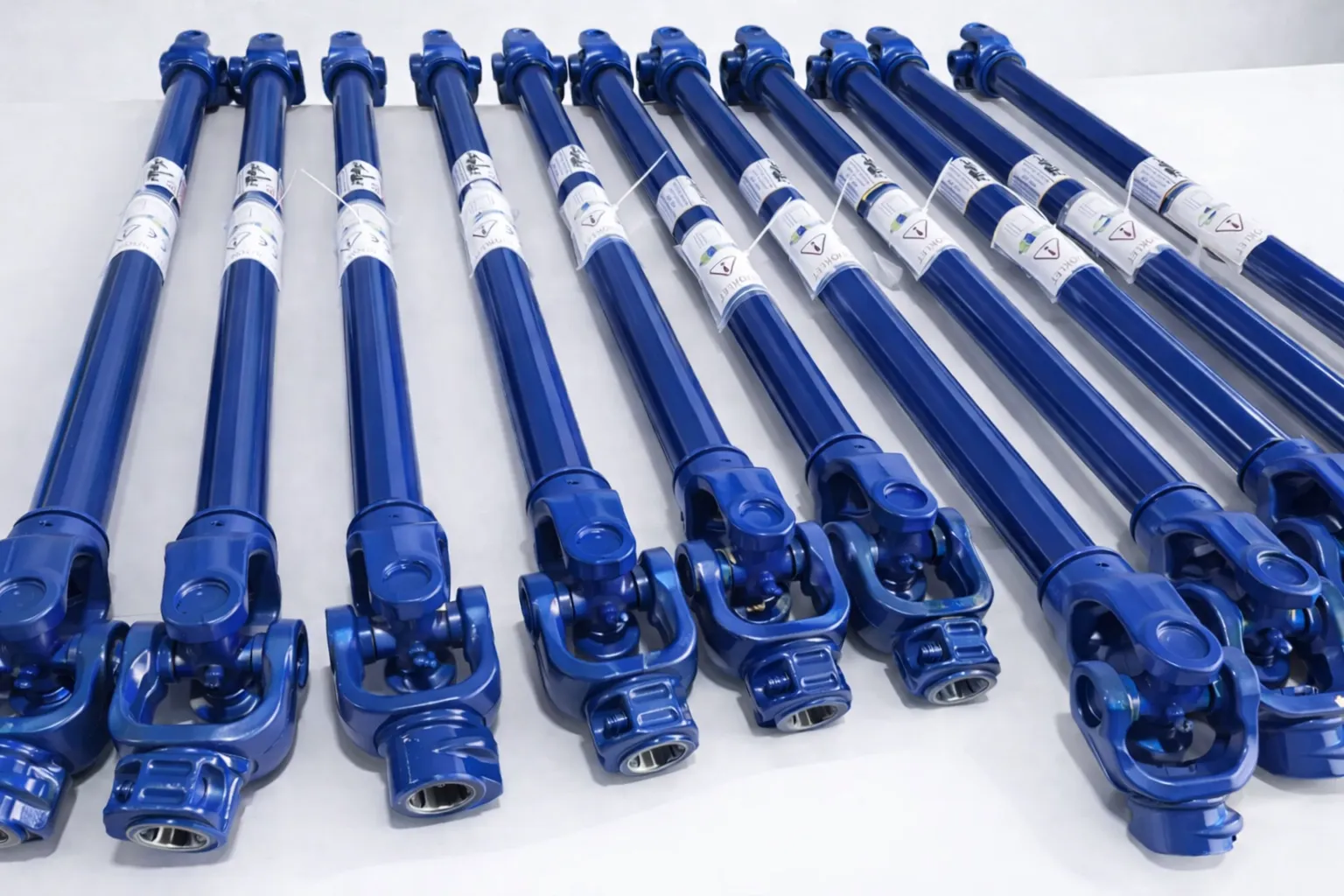
Compatibilité OEM mondiale et supériorité technique
Dans le secteur exigeant de l'agro-industrie commerciale, la standardisation des équipements est primordiale pour minimiser les frictions logistiques. Les responsables d'exploitations agricoles gérant des parcs de machines multimarques ne peuvent se permettre les temps d'arrêt liés à la recherche de géométries de transmission propriétaires et peu courantes.
Déclaration de compatibilité juridique
Nos systèmes de transmission de puissance de pointe sont conçus avec précision pour remplacer directement et sans modification les transmissions standard installées d'usine sur les machines agricoles lourdes. Nos arbres sont compatibles dimensionnellement et mécaniquement avec les spécifications courantes des fabricants tels que Comer Industries™, GKN Walterscheid™ et Bondioli & Pavesi™.
(Avertissement : Tous les noms de fabricants externes, marques de commerce et références mentionnés ici le sont uniquement à titre de référence et pour faciliter la correspondance technique. EVER-POWER est un fabricant totalement indépendant. Nos composants ne sont ni produits, ni approuvés, ni sponsorisés par les marques susmentionnées.)
L'avantage asymétrique d'EVER-POWER
Merely matching dimensions is insufficient. We engineer out the inherent weaknesses found in standard factory-supplied shafts. While a standard European-spec shaft might rely on cast iron yokes, EVER-POWER utilizes closed-die forged 42CrMo steel. This preserves the internal grain structure of the metal, elevating the torsional fatigue resistance by up to 45%. Furthermore, combating the intense Australian sun, our safety shields integrate a 3% specialty UV-inhibiting compound during the injection molding phase, preventing the rapid embrittlement and shattering often observed in competitor plastic guards after just two harvesting seasons in the Queensland heat.
Strict Compliance: Australian Agricultural Power Transmission Safety Regulations
Deploying heavy agricultural machinery components into the Australian market is not merely a matter of mechanical aptitude; it requires an absolute adherence to some of the world’s most stringent operator safety legislations. The Australian Work Health and Safety (WHS) Regulations mandate zero-tolerance policies regarding exposed rotational hazards on tractors and towed implements.
- AS 1121.1 Standard Mandates
Governs the fundamental guarding of agricultural tractor Power Take-Offs. Our proprietary shielding system is independently supported on low-friction nylon bearings, allowing the guard to remain completely stationary while the internal shaft spins at 1,000 RPM. It has passed the required 120 kg direct static load crush test without deflecting into the rotating components. - Safe Work Australia Directives
Dictates that retaining chains must be utilized to prevent the guard cone from spinning. EVER-POWER supplies heavy-duty, zinc-plated anti-rotation chains with quick-clip carabiners as standard on all export models destined for the Australian continent, ensuring compliance right out of the crate. - Machinery Upgrade Subsidies & Audits
State governments, particularly in New South Wales and Victoria, frequently introduce primary producer rebate schemes for safety upgrades. Equipping legacy cotton pickers with modern, CE/AS-compliant EVER-POWER drivelines featuring integrated slip clutches significantly enhances a farm’s safety audit scoring, potentially qualifying operators for state-level financial equipment incentives.

Driveline Architecture Selection Logic
Procuring the incorrect driveline geometry results in immediate catastrophic failure—either through shaft separation during extension or violently “bottoming out” the gearbox bearings upon compression. We have engineered a deterministic 4-step selection framework for procurement managers and maintenance technicians.
| Decision Phase | Crucial Data Acquisition | Typical Cotton Picker Requirement |
|---|---|---|
| Step 1: Interface Profiling | Measure the exact diameter and count the splines on both the tractor output stub and the implement input shaft. | Tractor Side: 1-3/8″ 21-Spline. Implement Side: Heavy-duty flanged hub or 1-3/4″ 20-Spline. |
| Step 2: Kinematic Length Calculation | Measure cross-to-cross distance when the picker head is fully raised and fully lowered. Determine the minimum compressed length (Lz). | Lz typically ranges from 1000mm to 1500mm. Must maintain an absolute minimum of 33% tube overlap at maximum extension. |
| Step 3: Power Class Designation | Determine the prime mover horsepower (HP) and target RPM to calculate the dynamic torque loading. | Requires Series 8 or Series 9 classification. Standard profile tubes will twist under the sheer mass of the picker drums. |
| Step 4: Overload Protection Strategy | Assess the jamming probability. Decide between sheer destruction (Shear Bolt) or thermal slip (Friction Clutch). | Friction Slip Clutch is mandatory. Constant ingestion of heavy stalks requires progressive slipping rather than abrupt bolt snapping. |
Targeted Installation for High-Mass Implements
Bottom-Out Verification & Cutting
Position the tractor and the cotton picker so that the distance between the two PTO stubs is at its absolute shortest (often during an extreme articulating turn or when traversing a deep furrow). Separate the driveline halves. Hold them parallel. Mark the tubes. Cut both the inner and outer metal tubes, and the plastic guard tubes equally. You must leave a minimum clearance gap of 25mm (1 inch) to prevent the shaft from hydraulically dead-heading and destroying the tractor’s internal thrust bearings.
Deburring & Tribological Prep
Aggressively file down the cut ends of the profile tubes. Even a microscopic metal burr can score the inner tube lining during the high-friction sliding motion. Thoroughly clean the steel shavings. Coat the entire length of the inner profile tube with a premium Molybdenum Disulfide (MoS2) extreme-pressure grease to prevent galling under extreme torque.
Yoke Phasing & Engagement
When sliding the two halves together, it is critical that the inner yokes on both ends are perfectly aligned in the same plane (Phasing). Misaligned yokes will induce violent, non-canceling speed fluctuations, resulting in a severe vibration that will rapidly destroy the U-joints. Depress the quick-disconnect pin, slide onto the splines, and forcefully pull back to verify the locking mechanism has fully seated into the annular groove.
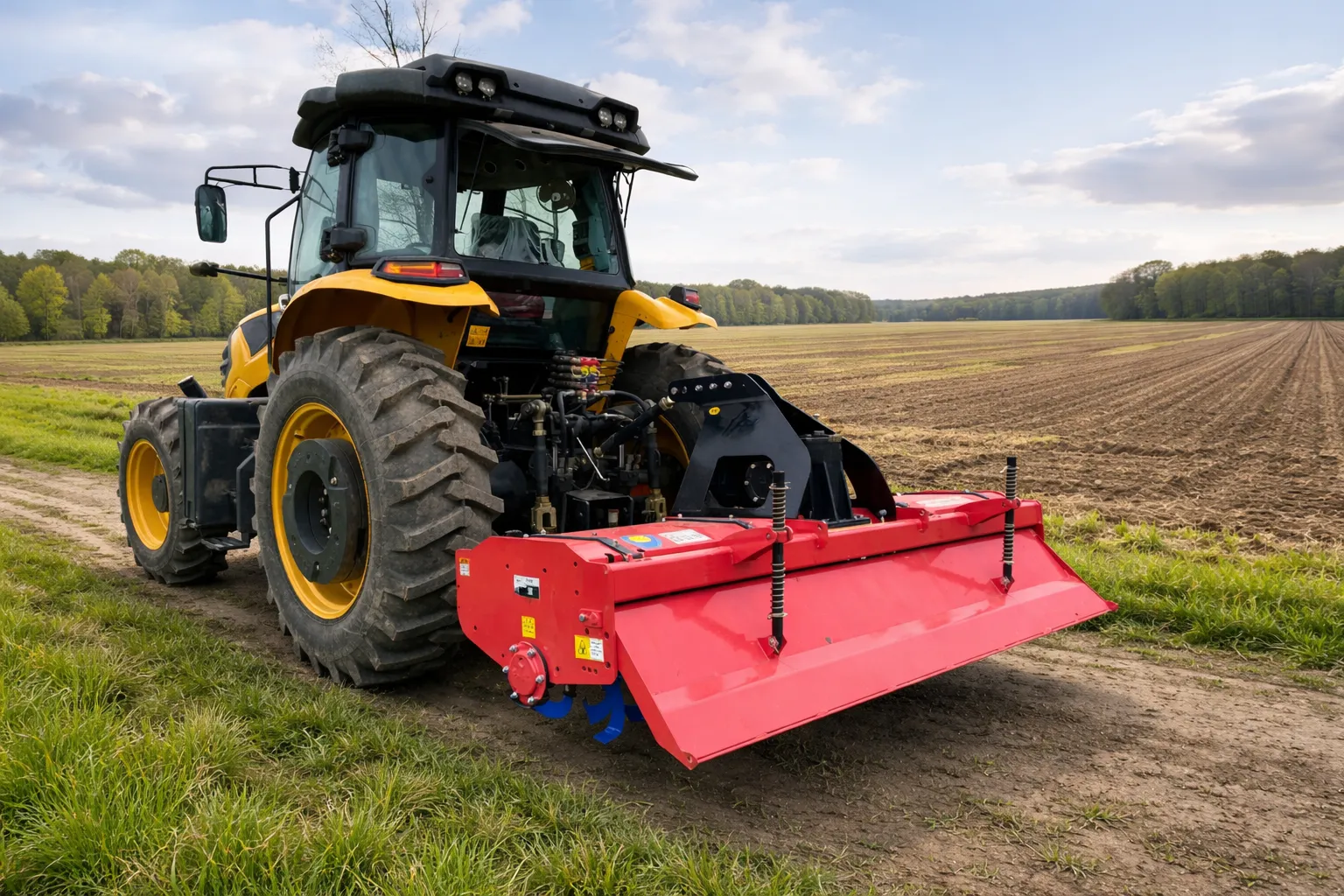
Operational Anomaly Resolution
During peak harvesting windows, diagnostic speed translates directly into preserved capital. Utilize our engineering logic to rapidly isolate and neutralize driveline failures in the field.
⚠️ Anomaly Alpha: Severe Vibration with Metallic Clattering at Operating RPM
Engineering Diagnosis: The needle roller bearings within the U-joint cross have disintegrated due to lack of lubrication or seal failure. Alternatively, the telescopic tubes have worn excessively, creating radial play, or the yokes are installed out-of-phase.
Resolution Protocol: Immediately disengage the PTO. Inspect the bearing caps for excessive heat (blistering paint) or missing snap rings. If the cross is loose, replace the entire U-joint kit using a shop press. If the tubes exhibit radial slop, the entire half-shaft assembly requires replacement to restore dynamic balance.
⚠️ Anomaly Beta: Friction Clutch Emitting Heavy Smoke and Continuous Slipping
Engineering Diagnosis: A massive mechanical blockage exists within the picker head (e.g., deeply jammed woody debris or a seized bearing). Alternatively, the clutch springs have lost tension due to fatigue, or the friction discs have glazed over and carbonized.
Resolution Protocol: Manually clear all blockages in the implement. Measure the compression length of the clutch springs with a vernier caliper and retorque to the manual’s exact specification (e.g., 34.5 mm). If the discs are blackened or crystallized, they cannot grip; you must dismantle the hub and replace the friction lining plates entirely.
⚠️ Anomaly Gamma: Telescopic Tubes Jammed Solid (Hydraulic Lockout)
Engineering Diagnosis: The tubes have suffered a severe impact, causing plastic deformation (bending). Even a 2mm bend will completely seize the sliding mechanism under load. Alternatively, years of dirt mixed with old grease have cemented into a solid mass deep within the female tube.
Resolution Protocol: Attempt to separate the halves using heavy winching on a flat surface. Wash the interior with industrial solvent. If they still bind tightly, the structural integrity is compromised. Discard the tubes and rebuild using new profile sections.
Australian Regional Application Profiles: Interstate Reliability Evidence
Data without context is noise. The following field studies demonstrate how EVER-POWER drivelines adapt to the hyper-specific agronomic challenges found across the Australian cotton belt.
📍 Moree, New South Wales
“Our 5,000-hectare irrigated cotton farm operates around the clock. The OEM shafts we used previously would melt their plastic guards during the 45°C afternoon shifts, leading to the guards tangling in the U-joints.”
The EVER-POWER Solution: We supplied an upgraded arbre de transmission de prise de force featuring our heat-deflecting poly-carbon shielding and specialized high-temp NLGI-3 grease. The client reported zero thermal deformations across two full harvesting seasons, effectively increasing their continuous operational window by 40%.
📍 Dalby, Queensland
“The heavy black vertosol soils here become incredibly sticky after rain. Tractor tire slip was causing violent, jerky torque spikes that constantly sheared the protection pins on our picker heads.”
The EVER-POWER Solution: We transitioned the client away from rigid shear-bolt yokes to a progressive 4-disc friction slip clutch. This mechanism absorbed the irregular chassis shocks smoothly, safeguarding the delicate bevel gears within the picker’s input transmission.
📍 Emerald, Queensland
“As a massive contracting firm, we run three different generations of cotton pickers. Our parts shed was a nightmare of incompatible proprietary drivelines.”
The EVER-POWER Solution: We delivered a fleet-wide standardized Series 8 driveline utilizing a modular quick-change interface. By simply swapping the terminal flange, our single shaft model achieved 85% backward compatibility across their fleet, drastically streamlining their maintenance inventory.
📍 Griffith, New South Wales
“Our field layouts require incredibly tight headland turnarounds. The conventional joints were screeching, binding, and fracturing crosses within weeks.”
The EVER-POWER Solution: Deployment of a dual 80-degree Constant Velocity (CV) architecture. This allowed the rotational speed to remain absolutely constant even when the tractor was articulated at severe angles relative to the implement, completely eliminating torsional chatter.
📍 Toowoomba, Queensland
“We are an agricultural equipment repair hub. What we demand is batch-to-batch consistency. A vibrating shaft at 1000 RPM will destroy a tractor’s rear seal in days.”
The EVER-POWER Solution: Every custom heavy-duty unit shipped to this repair facility was supplied with a serialized Dynamic Balancing Certificate (Grade G16). The absolute lack of high-speed resonance proved to the local farming community that our manufacturing precision is uncompromising.
Procurement & Engineering Insight Database
1. How does the immense startup inertia of a cotton picker dictate U-joint selection?
The sudden engagement of massive picking drums generates a violent torque spike. We counter this by utilizing oversized, deep-carburized steel needle bearings that possess a vastly superior shock-absorption threshold compared to standard utility tractor shafts.
2. Is it permissible to operate the driveline if the plastic shielding has sustained a minor crack?
Absolutely not. Under the Australian WHS legal framework, any degradation of the guard instantly renders the equipment non-compliant. A cracked guard can catch loose clothing, leading to fatal entanglement. The entire AS1121.1 certified guard must be replaced immediately.
3. Does the friction slip clutch require an annual calibration procedure?
Yes. During the off-season storage, ambient humidity causes the clutch friction plates to rust and fuse to the steel separators. Before the harvest begins, you must loosen the tension bolts, deliberately slip the clutch for 3 seconds to clear the rust, and then recalibrate to the precise spring height.
4. In ultra-high torque applications, why prioritize the star tube profile over the lemon profile?
The star (or multi-lobed) profile geometry provides significantly more surface area for load distribution between the inner and outer tubes. This results in superior torsional rigidity and prevents the tubes from “bellying” or twisting under extreme heavy-duty loads.
5. What dictates the necessity of integrating a Constant Velocity (CV) joint?
If your operational logistics require the tractor and implement to maintain powered engagement while navigating articulation angles exceeding 25 degrees, a standard U-joint will destroy itself. A 50-degree or 80-degree CV joint is mandatory to equalize the rotational velocity during tight maneuvers.
6. Can EVER-POWER manufacture obscure or obsolete splined interfaces for older harvesters?
Yes. Leveraging our extensive CNC machining capabilities and vast blueprint repository, we routinely manufacture non-standard configurations, including rare 10-spline or 13-spline yokes, provided the client supplies accurate dimensional schematics.
7. What causes the high-pitched harmonic humming noise at 1000 RPM?
This acoustical signature almost always indicates a loss of dynamic balance. It is usually triggered by a slight bend in the telescopic tubing resulting from an impact, or the operator assembling the two shaft halves with the inner yokes misaligned (a phasing error).
8. Do newly shipped units require initial lubrication upon unboxing?
While our U-joints and bearings are factory-packed with premium NLGI-2 extreme pressure lithium complex grease, we strongly mandate that the technician applies a liberal coating of grease to the sliding profile tubes prior to the first engagement to ensure optimal break-in tribology.
9. What are the typical lead times for bulk shipments to the Port of Brisbane?
For standard, high-volume production runs, our lean manufacturing matrix dictates a 25 to 30-day factory completion window. Highly specialized, non-standard engineering requests will require an additional 7 to 10 days for rigorous 3D CAD modeling, prototyping, and metallurgical validation.
10. Statistically, what is the most frequent catalyst for catastrophic shaft rupture?
Based on our forensic engineering data, over 80% of explosive shaft fractures occur because the implement was raised to a height where the driveline exceeded its minimum compressed length, causing it to structurally “bottom out” and instantaneously crush the universal joints.
Comprehensive Powertrain Integration: Advanced Gearboxes & Precision Peripherals
The kinetic integrity of heavy agricultural machinery does not exist in isolation. A hyper-resilient arbre de prise de force du tracteur is merely the conduit; it must interface flawlessly with equally robust speed-reduction and torque-multiplication mechanisms to unleash its true operational potential. As a globally recognized authority in dynamic power transmission, EVER-POWER extends its engineering mastery far beyond the driveline. Our profound metallurgical expertise is heavily invested in the development and production of the boîte de vitesses agricole ecosystem, alongside a vast portfolio of highly specialized peripheral components that complete the mechanical chain.
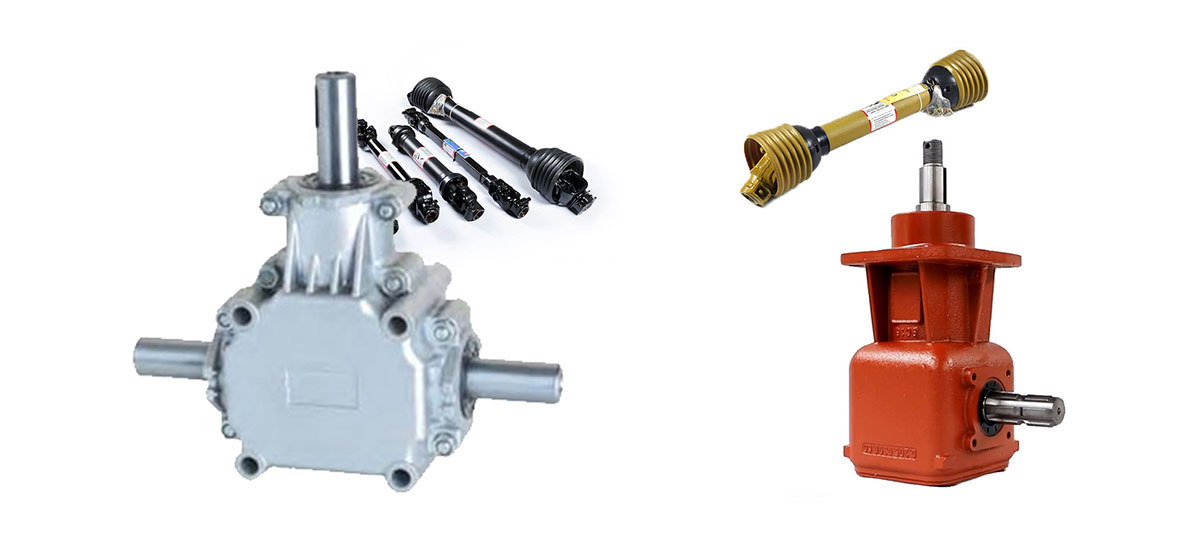
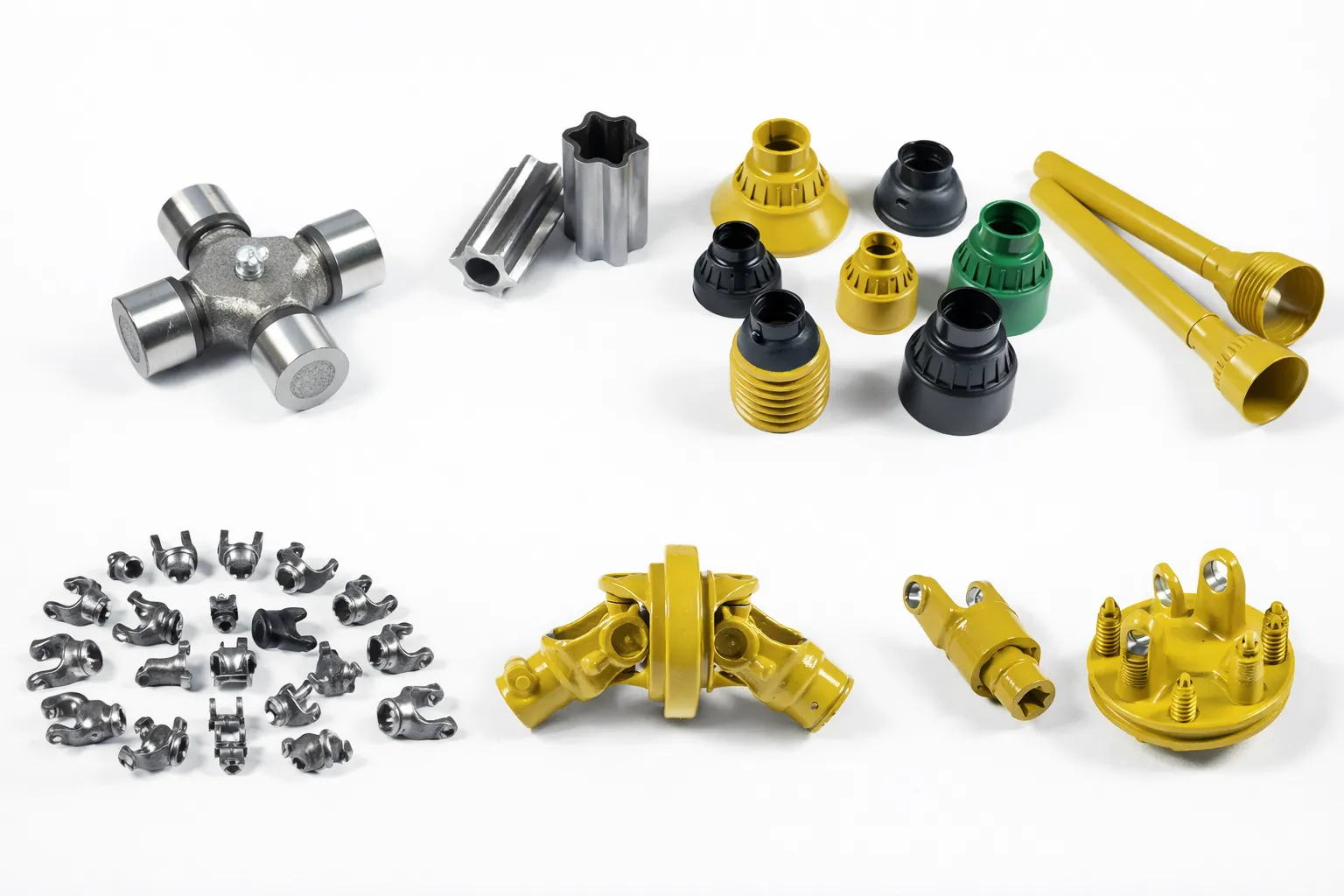
Industrial Might Meets Bespoke Engineering
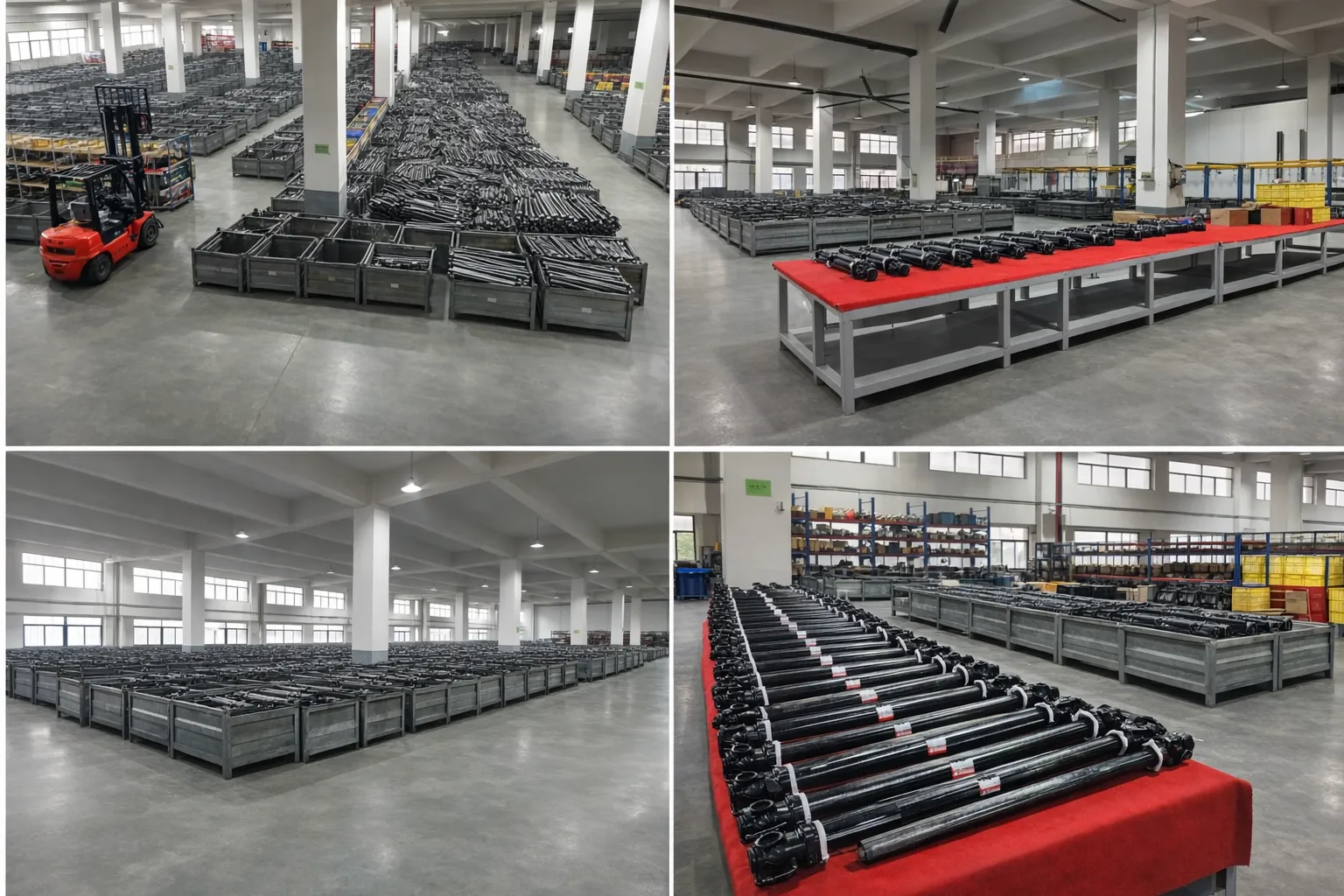
Within the brutal arena of large-scale agriculture, the concept of a “one-size-fits-all” driveline is a catastrophic myth. Fluctuating soil densities across varying latitudes, fiercely guarded proprietary tractor geometries, and highly localized maintenance philosophies all demand a customized kinetic approach. EVER-POWER commands a state-of-the-art manufacturing campus spanning over 20,000 square meters. Our facility is armed with an armada of 5-axis CNC machining centers, fully automated mesh-belt atmosphere heat-treatment furnaces, and aerospace-grade dynamic balancing rigs.
This immense capital infrastructure does not merely support our massive global volume of standardized components; it empowers our profound capacity for rapid, non-standard custom engineering. Whether you are a lead mechanical engineer validating the prototype of next-generation harvesting equipment, or an aftermarket distributor urgently seeking a superior alternative to cost-prohibitive OEM replacements, we stand ready. From initial conceptual stress-testing and topological 3D CAD optimization to rapid physical prototyping and full-scale consistent production, EVER-POWER is your definitive engineering partner.
Initiate Your Engineering Consultation
Transmit your operational parameters or technical CAD blueprints directly to our lead engineers at: [email protected]