
Heavy-Duty PTO Shafts for Agricultural Dusters: Mastering High-Velocity Particle Environments in Australia
Engineered specifically for the extreme abrasive conditions of powder and sulfur dusting. Featuring advanced triple-lip labyrinth seals and integrated overrunning clutches to manage massive blower inertia and protect your tractor’s driveline.
Power System Selection Fundamentals & Core Technology Quick Read
Agricultural dusters (powder sprayers) represent a unique mechanical challenge. Unlike liquid sprayers, dusters rely on massive, high-speed centrifugal blowers to generate the air volume necessary to fluidize and project dense chemical powders, such as micronized sulfur or copper fungicides, deep into crop canopies. This operation presents two primary engineering threats to a standard tractor pto shaft: microscopic abrasive particle ingress and extreme blower flywheel inertia.
As a premier pto shaft manufacturer, EVER-POWER has entirely re-architected the driveline for dusting applications. Our dedicated duster series mandatorily integrates a precision Overrunning Clutch (Freewheel). Because the heavy duster fan spins at extremely high RPMs, abruptly disengaging the PTO would normally cause the fan’s momentum to back-drive the tractor, severely damaging the transmission. Our freewheel decouples this energy instantly. Furthermore, to combat the abrasive sulfur dust that destroys standard bearings within weeks, we utilize proprietary triple-lip labyrinth seals on all universal joint cross kits.
- ✓ Inertial Decoupling: RA-Type Overrunning Clutches protect the tractor from massive fan backlash.
- ✓ Abrasive Exclusion: Labyrinth-sealed bearings physically block micronized chemical powders from grinding internal needle rollers.
- ✓ Resonance Elimination: ISO 1940-1 Grade G6.3 dynamic balancing guarantees zero-whip operation at continuous 540/1000 RPM speeds.
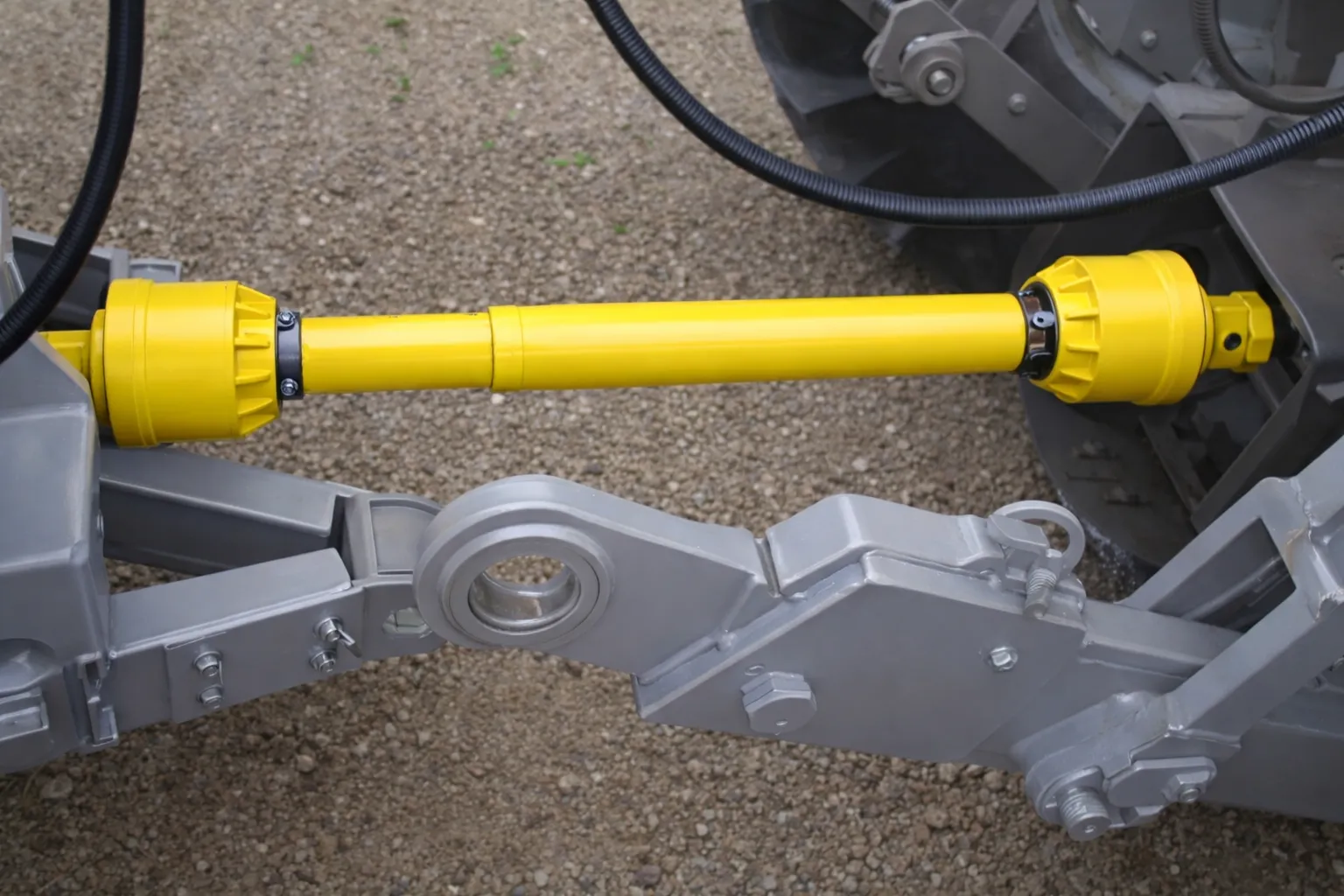
Driveline Integration in Powder Dusters
The pto drive shaft is the central artery of power transfer between the tractor’s splined output and the duster’s primary agricultural gearbox. In a typical tractor-mounted or trailed duster, the mechanical routing is split:
Upon receiving 540 or 1000 RPM from the tractor, the driveline channels rotational torque into a specialized step-up gearbox. This gearbox multiplies the speed to drive the massive centrifugal blower fan (often exceeding 3000 RPM internally) while a secondary reduction drive slowly turns the hopper agitator to prevent the powder from clumping. During field operation, particularly in undulating orchards or vineyards, the telescopic profile tubes of the PTO shaft continuously extend and retract to compensate for linkage movement. The precision-forged yokes and universal joints articulate seamlessly to maintain a constant velocity torque delivery, ensuring that the fan speed remains absolutely stable—a critical requirement for maintaining an even, unbroken cloud of chemical dust over the crop canopy.

Engineering Parameter Matrix & Customization Tolerance
For original equipment manufacturers and large-scale agricultural contractors, precise driveline specifications dictate the operational lifespan of the implement. Review our specialized duster application parameters below:
| Technical Parameter | Standard Duster Specification | Heavy-Duty Custom Limits |
|---|---|---|
| Dynamic Torque Capacity | 460 Nm – 1,000 Nm | Up to 2,400 Nm for Multi-Row Dusters |
| Primary Inertia Protection | Right-Hand Overrunning Clutch (Freewheel) | Combined Freewheel + Friction Slip Clutch |
| U-Joint Sealing Architecture | Double-Lip Nitrile Rubber | Triple-Lip Labyrinth Seal (Extreme Dust Exclusion) |
| Yoke Metallurgy | Forged 45# Carbon Steel | 20CrMnTi Carburized & Quenched Alloy |
| Tractor Input Spline | 1-3/8″ 6-Spline Quick Disconnect | 1-3/8″ 21-Spline / 1-3/4″ 20-Spline |
| Implement Connection | 1-3/8″ 6-Spline with Taper Pin | Flange Mount integrated with Freewheel |
| Operating Speed Calibration | 540 RPM | 1000 RPM (Precision Dyno-Balanced) |
| Telescopic Profile Tube | Lemon / Triangular Profile | Rilsan-Coated Splined Star Profile |
| Max Continuous Articulation | 25 Degrees | 80 Degrees via Wide-Angle CV Joint |
| Safety Shielding Polymer | Standard Polyethylene Cone | UV-Stabilized HDPE with Nylon Wear Rings |
| Dynamic Balancing Quality | ISO 1940-1 Grade G16 | ISO 1940-1 Grade G6.3 (Vibration-free) |
| Surface Defense Coating | Industrial Enamel Paint | Electrophoretic Deposition (E-Coat) |
| Cross Bearing Hardness | 58-60 HRC | 60-64 HRC with Cryogenic Treatment |
| Tube Wall Thickness | 3.2 mm – 4.0 mm | 4.5 mm – 6.0 mm |
| Tractor Horsepower Class | 25 HP – 60 HP (Series 4) | 70 HP – 120 HP (Series 6/8) |
| Thermal Operating Envelope | -20°C to +65°C | -40°C to +105°C (High-Temp Polyurea Grease) |
| Anti-Rotation Restraint | Standard Zinc-Plated Chain | Nylon-Coated High Tensile Anchor Chain |
| Freewheel Pawl Material | Standard Forged Steel | Heat-Treated Alloy with Extended Wear Life |
| Closed Length Benchmark | 800 mm – 1,200 mm | Precision custom cut to OEM geometry |
| Legislative Compliance | CE Basic Directive | AS 1121.1-2007 (Australia Strict Compliance) |
Performance Dominance: Defeating Abrasive Wear
✖ The Catastrophe of Inferior Sealing
Budget aftermarket driveshafts utilize basic single-lip rubber seals on their cross bearings. In a duster application, clouds of abrasive sulfur or micronized copper envelop the tractor implement area. These fine particles easily bypass cheap seals, mixing with internal grease to form a highly destructive grinding compound. Within weeks, the needle rollers are pulverized, leading to complete joint failure, extreme vibration, and potential detachment under load.
✔ EVER-POWER Labyrinth Defense System
We refuse to compromise on bearing integrity. Our dedicated duster drivelines are equipped with proprietary Triple-Lip Labyrinth Seals. This complex geometric barrier completely excludes micro-abrasives while retaining extreme-pressure lubrication within the forged trunnions. Coupled with our Rilsan-coated telescopic tubes that prevent dust from binding the sliding mechanism, our shafts deliver up to 400% longer operational life in severe dusting environments.
Seamless Integration: Cross-Brand Compatibility Matrix
Whether operating specialized Italian vineyard dusters or heavy-duty broadacre powder spreaders, maintaining fleet uptime requires universal driveline adaptability. As an elite pto shaft supplier, we manufacture components with exact geometric parity to global standards.
⚖ Engineering Compatibility Disclaimer:
Our advanced PTO assemblies are engineered as precision replacement upgrades for driveline systems manufactured by Comer Industries™, GKN Walterscheid™, Bondioli & Pavesi™, and Weasler™.
Note: All manufacturer names, trademarks, and series part numbers are cited strictly for reference purposes to assist fleet managers in specification matching. EVER-POWER operates as a completely independent manufacturer and is not legally affiliated with, nor endorsed by, these entities.
- Italian Implement Standards (Comer / Bondioli)
Flawless 1:1 dimensional matching for Series 2, 4, 6, and 8 triangular profile tubes. Our RA overrunning clutches bolt directly onto original input flange configurations. - German Dimensional Parity (Walterscheid)
Exact replication of W-Series Lemon and Star profile geometries. We provide direct plug-and-play 80-degree wide-angle CV joint replacements for extreme cornering.
Australian Extreme Terrain Analysis and AS 1121.1 Legislative Compliance
The Australian agricultural landscape dictates unforgiving parameters for dusting equipment. From sulfur applications in the intense heat of South Australian vineyards to the sprawling macadamia plantations of Queensland, equipment must withstand a lethal combination of high ambient temperatures, abrasive chemical dust, and extreme UV radiation.
AS 1121.1-2007 Safety Compliance: Regulatory bodies such as SafeWork NSW and WorkSafe Victoria enforce zero-tolerance policies regarding exposed PTO shafts. Operating a duster with a cracked, sun-bleached, or missing plastic guard not only invites crippling financial penalties but risks instantaneous fatal entanglement. The extreme Australian UV Index causes standard European plastics to become dangerously brittle within a single season.
EVER-POWER actively neutralizes this threat. Every driveline exported to the Australian market features a master shielding system manufactured from heavily UV-stabilized High-Density Polyethylene (HDPE). Utilizing low-friction internal nylon bearing rings, these non-rotating guards endure the abrasive dusting environment and blistering sun for years without embrittlement, ensuring your operation remains 100% compliant and your operators stay safe.
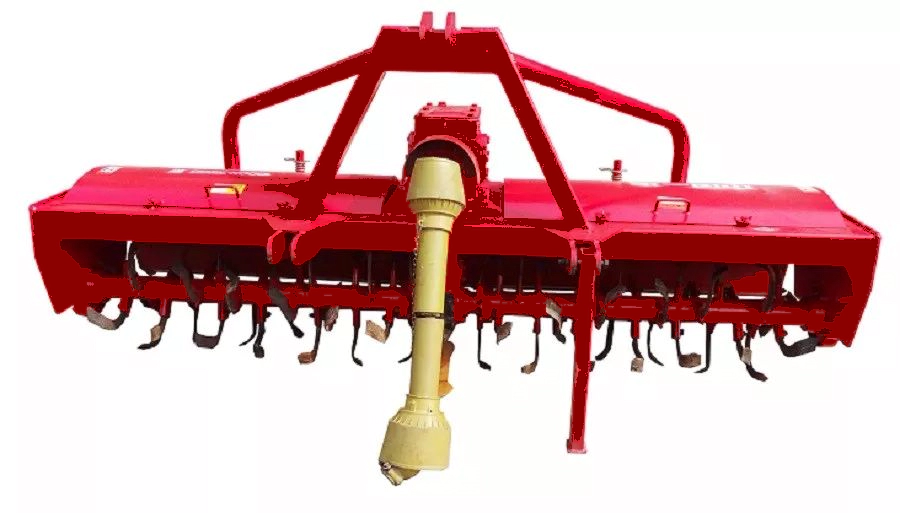
Rapid Engineering Selection Guide: Driveline Specification
Selecting the wrong shaft for a duster can destroy your tractor’s PTO clutch pack in minutes. Utilize this logic matrix to isolate your required parameters:
| Selection Criteria | Data Acquisition Requirement | EVER-POWER Engineering Specification |
|---|---|---|
| 1. Inertia Decoupling | Does the duster utilize a large, high-speed centrifugal blower? | Mandatory: Right-Hand Overrunning Clutch (Freewheel) on the implement end to absorb fan run-down inertia. |
| 2. Power / Torque Rating | Tractor PTO Output Horsepower. | 30-50HP: Series 4. 60-90HP: Series 6. Match tube thickness to prevent torsional twist on startup. |
| 3. Connection Interface | Count splines and measure OD on Tractor and Duster Gearbox. | Specify exact native yokes (e.g., 1-3/8″ 6-spline). Never use cheap adapter sleeves that cause run-out vibration. |
| 4. Articulation Geometry | Is the tractor making tight headland turns with the PTO running? | If operating angle exceeds 25°, upgrade the tractor end to an 80° Wide-Angle Constant Velocity (CV) Joint. |
| 5. Closed Length | Measure the absolute minimum straight-line distance between locking grooves when implement is lifted. | The provided ‘closed length’ MUST be shorter than this distance to prevent bottoming out and crushing the gearbox. |
Precision Driveline Calibration and Installation Protocol
- Safe Length Modification: Hitch the duster to the tractor and articulate the linkage to find the absolute shortest distance between the PTO stub and implement gearbox. Separate the new shaft. Connect one half to the tractor, the other to the implement. Hold them parallel. The steel tubes and plastic guards must be cut by the exact same amount to fit, ensuring at least 1/3 overlap remains. Carefully file and deburr all cut steel edges.
- Freewheel Orientation: The Overrunning Clutch (Freewheel) mechanism must be installed on the implement (duster gearbox) side. Installing it on the tractor output shaft completely negates its ability to protect the tractor from the blower’s massive inertia.
- Yoke Phasing Synchronization: When re-inserting the inner profile tube into the outer profile tube, you must ensure that the inner yokes at both ends of the shaft are perfectly aligned in the same geometric plane. Out-of-phase installation induces massive torsional vibration that will shatter the duster’s gearbox bearings within hours.
- Lubrication & Anti-Rotation Guard Fixation: Apply a light coat of extreme-pressure grease to the sliding profile tubes. Fasten the safety chains to rigid, stationary points on both the tractor chassis and the duster. The chain must have enough slack to allow cornering, but must actively prevent the plastic bell cones and tubes from rotating.

Operational Diagnostics & Advanced Troubleshooting
Swift identification of mechanical anomalies prevents catastrophic collateral damage to the high-speed duster gearbox.
▶ Symptom: The tractor is violently pushed forward when the PTO is disengaged.
Resolution Action: Verify orientation immediately. If correctly mounted, separate the clutch housing and inspect the internal pawls. If seized, replace the entire clutch assembly.
▶ Symptom: Severe driveline vibration, but only when operating at 540/1000 RPM.
Resolution Action: First, check the phasing marks on the profile tubes to ensure proper alignment. Next, disconnect the shaft and run the duster manually; if the fan is clean but the shaft shakes, the factory balancing has failed. Replace with an EVER-POWER ISO 1940-1 Grade G6.3 balanced shaft.
▶ Symptom: The telescopic tubes are binding; extremely difficult to pull apart.
Resolution Action: Forcefully separate the tubes, aggressively wire-brush the interiors, and flush with solvent. Apply a dry-film graphite lubricant instead of wet grease if operating in extremely powdery environments, or upgrade to a completely sealed profile architecture.
Local Industry Application Cases: Engineer’s Field Diagnostics
“Over my two decades of engineering drivelines for the unique extremes of the Australian agricultural sector, we have systematically eliminated failure points across the continent. Dusters present a brutal combination of high RPM and abrasive ingress. Below are authentic field interventions resolving critical downtime issues for local operators.”
📍 Victoria (Mildura) – Viticulture Sulfur Dusting
Application Context: Specialized vineyard dusters applying micronized sulfur for powdery mildew control.
Client Pain Point: The incredibly fine sulfur dust was penetrating the standard U-joint seals. Within 3 weeks, the needle bearings were grinding themselves to dust, causing catastrophic joint failure mid-row.
EVER-POWER Solution: We retrofitted their fleet with Series 4 assemblies featuring proprietary Triple-Lip Labyrinth Seals. The physical barrier completely excluded the sulfur powder. “Since the upgrade, bearing replacements have dropped to zero for the entire season.”
📍 Queensland (Bundaberg) – Macadamia Plantations
Application Context: High-canopy air-blast dusting requiring massive, high-inertia centrifugal blowers.
Client Pain Point: Inexperienced operators throttling down too quickly caused the immense fan momentum to violently back-drive the tractor, snapping the PTO brake bands internally.
EVER-POWER Solution: Mandated the installation of RA Radial Pin Overrunning Clutches on the implement gearbox input. This decoupled the fan instantly upon deceleration, saving the client thousands in tractor transmission rebuilds.
📍 New South Wales (Riverina) – Broadacre Citrus
Application Context: Continuous, 12-hour high-speed dusting operations across vast acreage.
Client Pain Point: Cheap aftermarket shafts were poorly balanced. At 1000 RPM, the harmonic whipping was so severe it literally vibrated the duster’s gearbox mounting bolts loose.
EVER-POWER Solution: Deployed precision dyno-balanced shafts adhering to ISO 1940-1 Grade G6.3 standards. The vibration was entirely eliminated, extending the life of the entire implement chassis.
📍 Western Australia (Margaret River) – Undulating Organic Vineyards
Application Context: Dusting over steep, uneven terrain requiring continuous sharp turns.
Client Pain Point: Standard U-joints were chattering and breaking due to the extreme articulation angles required to navigate the tight, hilly headlands while the PTO was still engaged.
EVER-POWER Solution: Integrated an 80-degree Wide-Angle CV joint on the tractor side. This allowed operators to execute continuous, smooth power transmission through 60+ degree headland turns without destructive velocity fluctuations.
📍 Tasmania (Huon Valley) – Apple Orchard Early Morning Dusting
Application Context: Cold, damp morning applications where chemical dust adheres aggressively to surfaces.
Client Pain Point: The chemical dust combined with heavy morning dew to form a corrosive paste on the profile tubes, causing them to rust and bind solid.
EVER-POWER Solution: Upgraded the client to Rilsan-coated (nylon-infused) profile tubes. The low-friction, non-metallic surface prevented the chemical paste from adhering, allowing flawless telescopic action regardless of damp conditions.
Drive System Technical Queries (FAQ)
1. Why is an overrunning clutch (freewheel) strictly necessary for my duster?
The massive centrifugal blower fan acts as a heavy flywheel. When you disengage the PTO or rapidly decelerate the tractor, the kinetic energy of that fan wants to keep rotating. Without a freewheel to decouple this energy, the fan will drive the tractor forward, causing dangerous loss of braking control and severe transmission damage.
2. My new shaft vibrates violently at 540 RPM. What did I do wrong?
You most likely assembled the telescopic tubes “out of phase”. The inner yokes on both halves of the shaft must be perfectly aligned in the same geometric plane. If you slid them together misaligned, it creates severe velocity fluctuations. Pull them apart and align the indicator arrows.
3. How frequently should I lubricate the driveline operating in chemical dust?
While standard agricultural use dictates greasing every 50 hours, the highly abrasive nature of powder dusting requires purging the U-joints with extreme-pressure lithium grease every 20 operational hours. This physically pushes out any contaminated grease before it damages the needle rollers.
4. Are your protective guards compliant with Australian WHS regulations?
Yes. Every complete shaft assembly we export meets or exceeds AS 1121.1-2007 requirements. They feature full-coverage, UV-resistant HDPE cones and tubes, equipped with certified anti-rotation safety chains to completely isolate the operator from the rotating steel.
5. How do I determine the correct “closed length” when ordering a replacement?
Measure from the locking groove on the tractor PTO stub to the locking groove on the implement input shaft while the duster is hitched and lifted to its absolute closest point to the tractor. The ordered ‘closed length’ of the new shaft must be 1-2 inches shorter than this distance to prevent bottoming out.
6. Can I upgrade my standard 6-spline shaft to match a 21-spline 1000 RPM tractor?
Yes. However, you must ensure your duster’s reduction gearbox is rated for 1000 RPM input. Do not use cheap adapter sleeves, as they induce dangerous vibrations at high speeds. We supply custom asymmetrical shafts (e.g., 21-spline on the tractor end, 6-spline on the duster end) for a perfect native connection.
7. Why do my profile tubes bind and get stuck together?
In dusting applications, micro-fine powders bypass standard shields and mix with the grease on the profile tubes, creating an abrasive, cement-like paste. You must clean the tubes regularly and consider upgrading to our Rilsan-coated tubes which resist dust adhesion.
8. What is a Wide-Angle CV Joint and do I need one?
A Constant Velocity (CV) joint uses a double-yoke centering mechanism to allow smooth power transmission at angles up to 80 degrees. If you operate in tight orchards where you cannot disengage the PTO during sharp headland turns, a CV joint is absolutely mandatory to prevent driveline destruction.
9. Can I replace a broken cast-iron yoke with your forged steel yoke?
Yes, provided the dimensional series matches (e.g., replacing a Series 4 cast yoke with a Series 4 forged yoke). Our forged 20CrMnTi yokes are dimensionally interchangeable with major European brands and offer over 300% more fracture resistance.
10. The plastic safety guard on the front of my shaft keeps spinning. Is this okay?
No, this is a severe safety hazard. The guard is designed to remain stationary while the shaft spins inside it. If it is spinning, the internal nylon bearing rings have seized or the anti-rotation chain is broken. Cease operations immediately and repair the guard system.
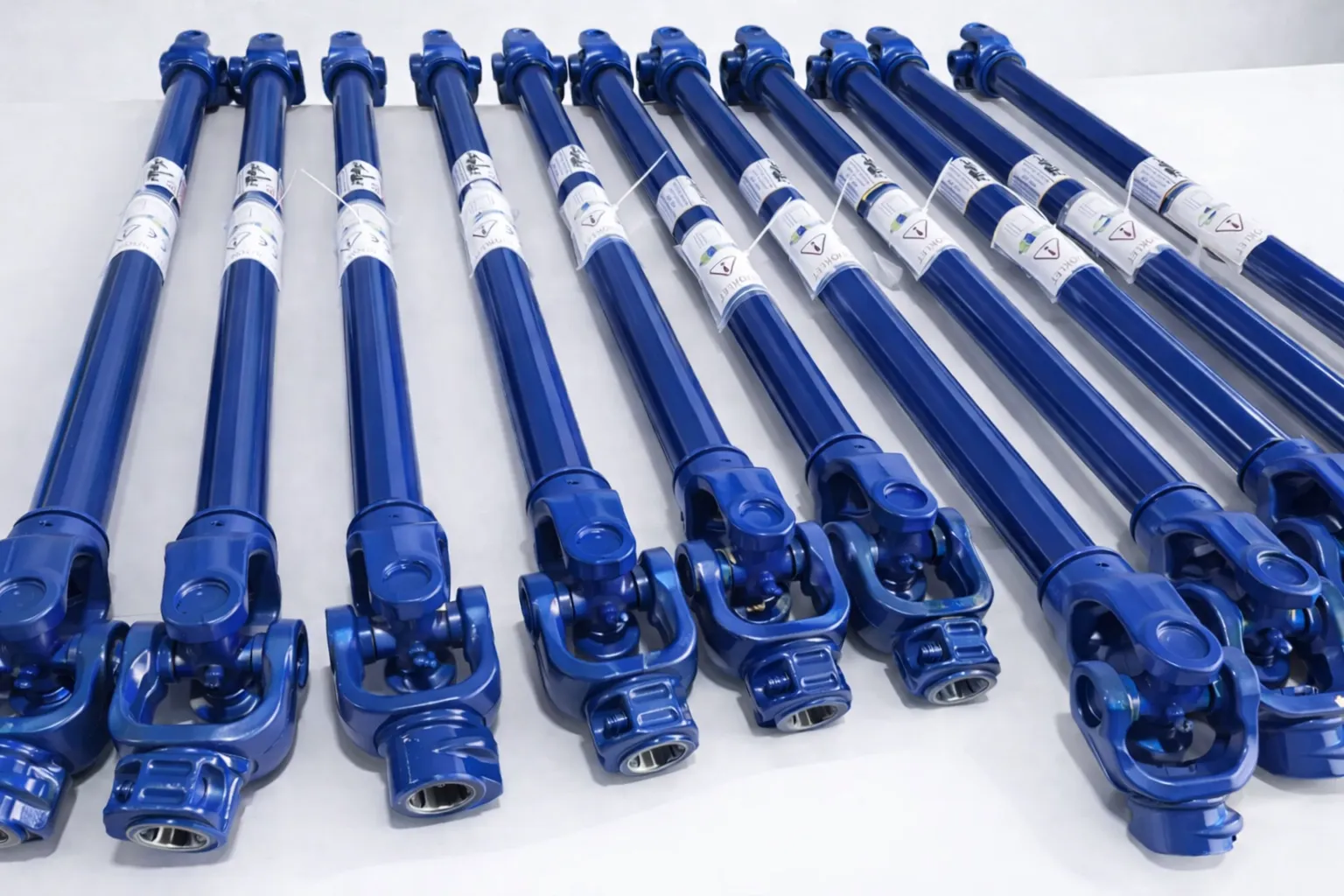
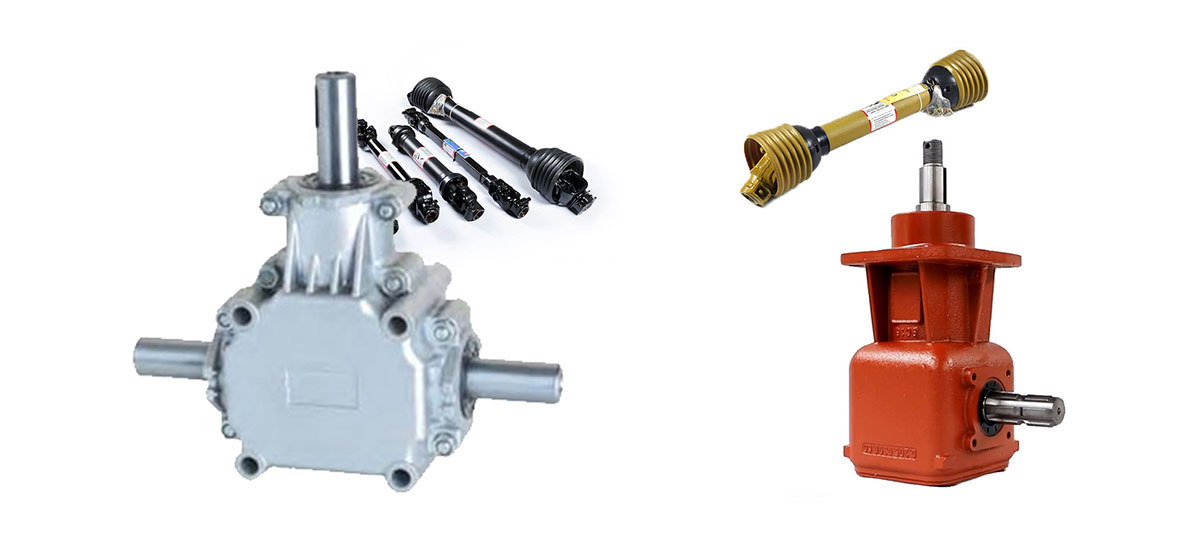
Complete Driveline Ecosystem: Gearboxes & Power Components
The PTO shaft is only the initial phase of power transmission. EVER-POWER designs and manufactures the terminal high-speed step-up units and secondary drive systems that physically generate the duster’s air blast.
Unyielding Power for Abrasive Environments
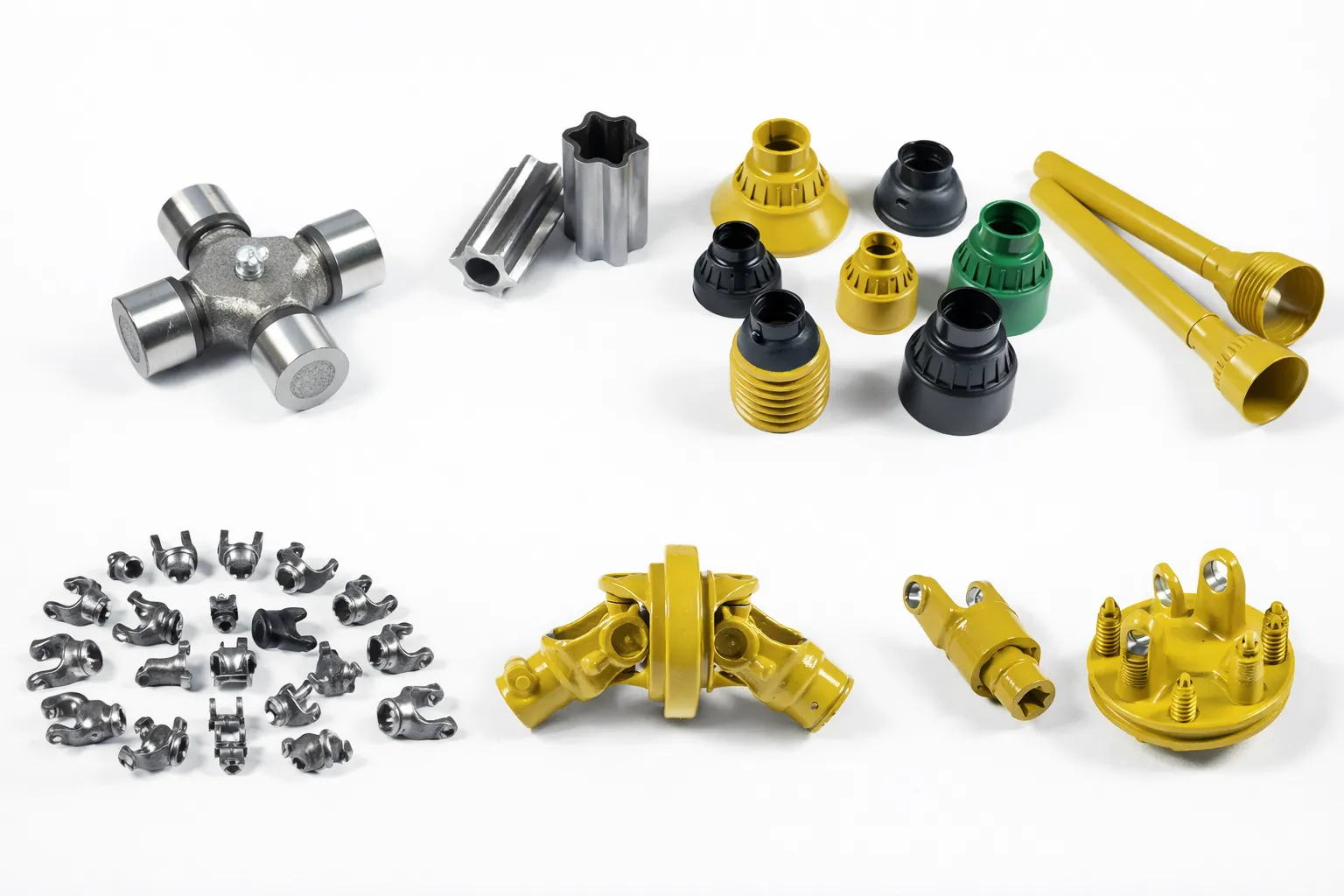
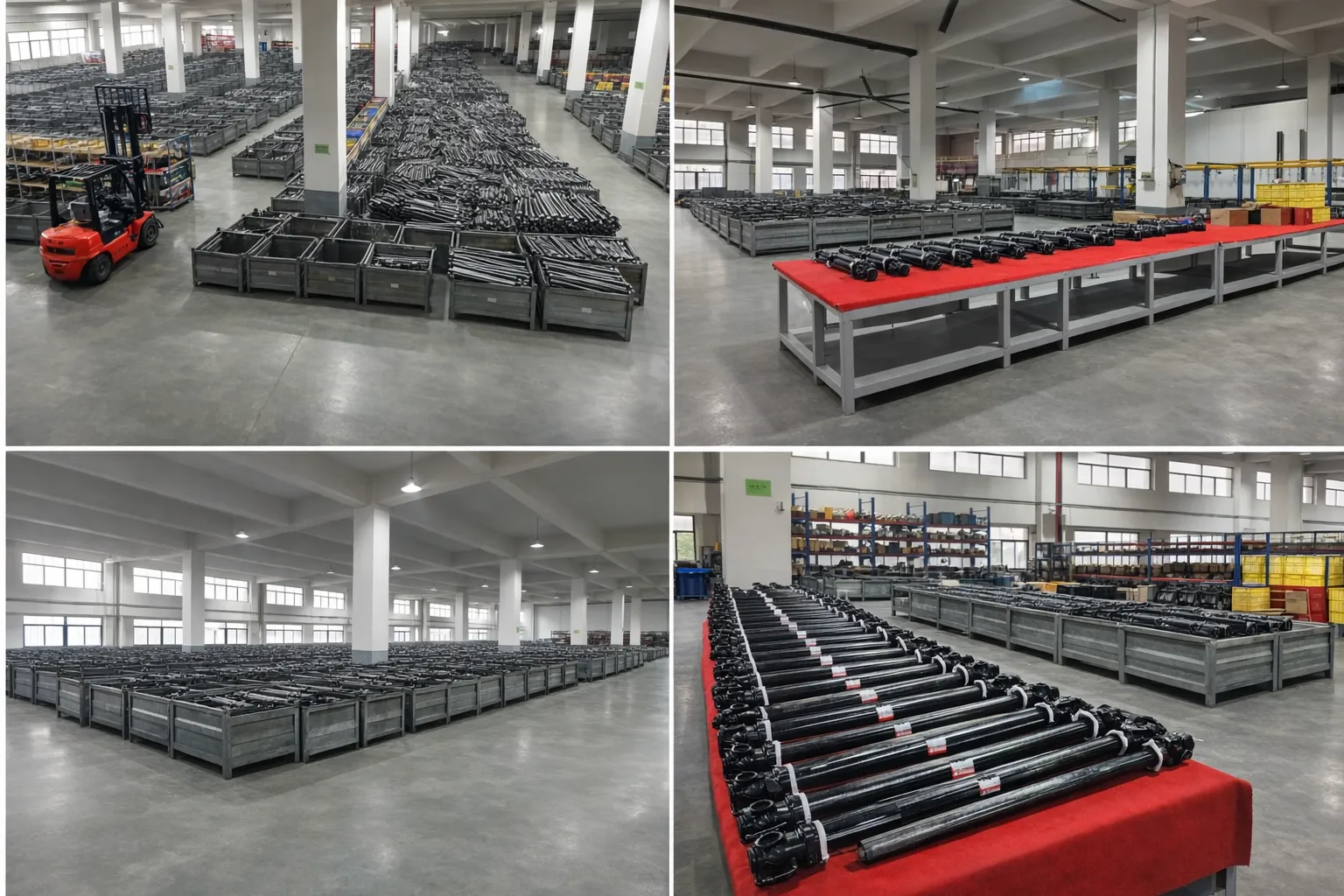
EVER-POWER commands absolute authority in agricultural metallurgy. Equipped with vast CNC machining centers and advanced thermodynamic heat-treatment kilns, we do not merely assemble standard components; we forge primary driveline solutions engineered to dominate the harshest chemical dust and high-inertia mechanical extremes.
⚙ Specialized Custom Engineering Services
Agricultural equipment manufacturers (OEMs) and commercial dealers are not limited to catalogue standards. If your heavy-duty duster architecture requires extended telescopic travel limits, proprietary flange configurations, extreme-torque freewheel calibrations, or advanced chemical-resistant coatings, submit your blueprints. Our engineering division operates rapidly from technical CAD drawings or physical samples, delivering precision-machined prototypes directly to your facility.